

So, you’re a Claims Processor looking to move on? A “Claims Processor resignation letter” is your official goodbye to your current employer. It’s a formal document. It informs your company of your departure. This letter is important. It also helps with a smooth transition.
This article is for you. We understand writing these letters can be tricky. We’ve got your back. We’ll share different templates and examples. These are for Claims Processor resignation letters.
Need a simple template? Looking for something more specific? We have you covered. Use these samples as your starting point. Make the process easier and less stressful. Let’s get you ready for your next adventure!
Claims Processor Resignation Letter
Below is a sample of a Claims Processor Resignation Letter:
[Your Name]
[Your Address]
[Your Phone Number]
[Your Email Address]
[Date]
[Hiring Manager Name] (If known, otherwise use title)
[Hiring Manager Title]
[Company Name]
[Company Address]
Dear [Mr./Ms./Mx. Last Name],
Please accept this letter as formal notification that I am resigning from my position as Claims Processor at [Company Name]. My last day of employment will be [Your Last Day of Employment].
I would like to express my gratitude for the opportunities I have been given during my time here. I have learned a great deal and appreciate the experience I have gained.
I am committed to assisting with the transition process in any way I can to ensure a smooth handover of my responsibilities. Please let me know how I can be of assistance during this time.
I wish you and the company all the best in the future.
Sincerely,
[Your Signature]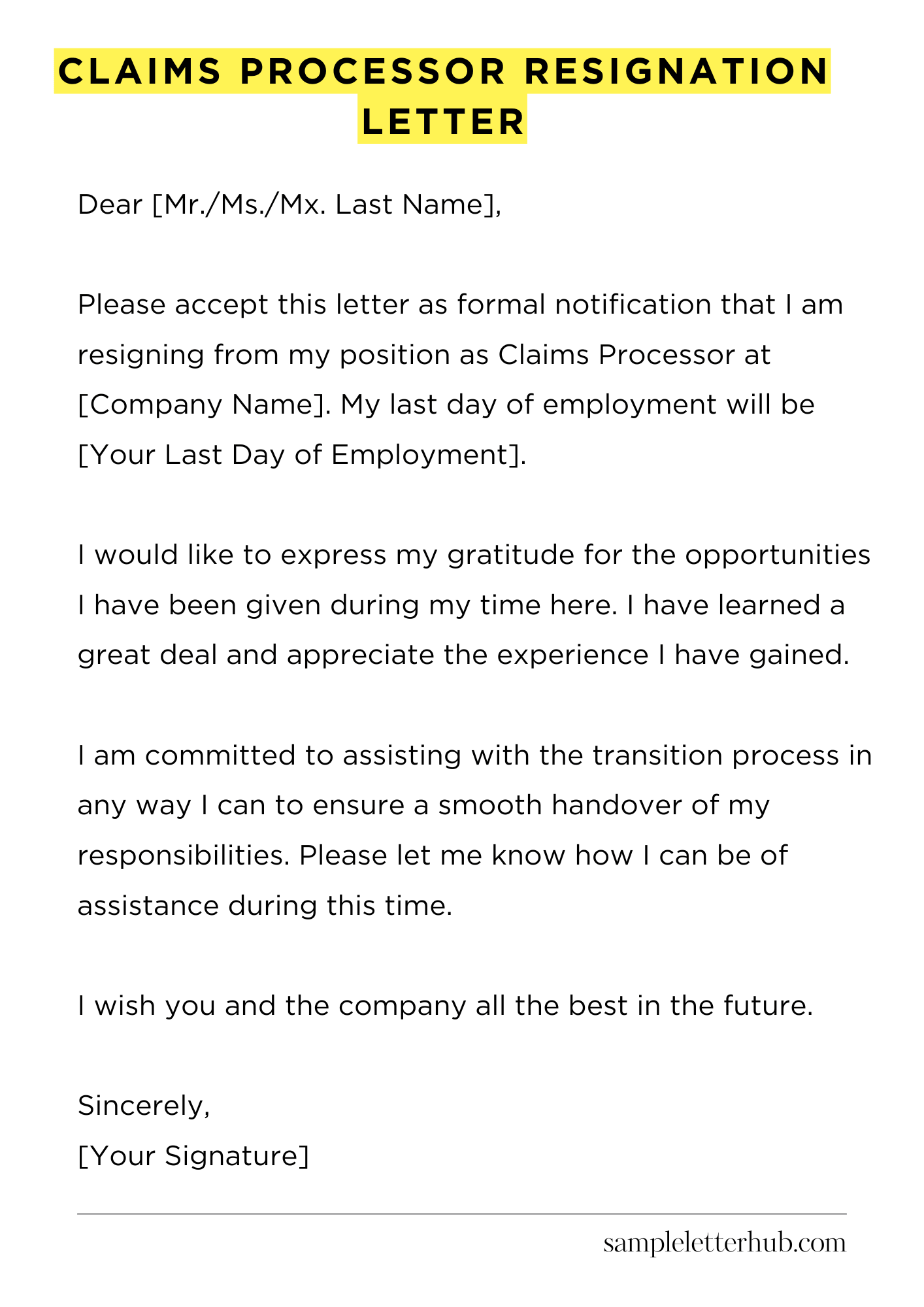
How to Write a Claims Processor Resignation Letter
Know When It’s Time to Go
Leaving a job is a big decision, and it’s important to make sure it’s the right one. Are you feeling constantly stressed? Are you no longer learning or growing in your role? Have you found a better opportunity? These are all valid reasons to move on. Once you’ve made the decision to resign, it’s time to craft your letter.
Think carefully. Analyze your situation. Consider everything.
The Anatomy of a Great Resignation Letter
A good resignation letter is brief, professional, and to the point. Start with a clear statement of your intention to resign. Then, state your last day of employment. You should also express your gratitude for the opportunity, even if the experience wasn’t perfect. Keep it positive. Focus on the future.
Keep your language formal. Avoid negativity. Avoid making demands. A simple, well-crafted letter is the most effective.
Key Things to Include (and Exclude)
What to include: Start with a proper salutation, addressing your supervisor or HR department. Clearly state your resignation and last day of employment. Briefly express gratitude for your time at the company. Consider offering to assist with the transition. Be sure to include your contact information.
What to exclude: Don’t air grievances or complain about the job, the people, or the company. Avoid negativity. Don’t include excessive personal details. Don’t go into extensive explanations for why you’re leaving. Do not burn bridges.
Formatting and Tone: Making It Readable
Use a professional font like Times New Roman or Arial. Keep the font size between 10-12 points. Use standard margins. The letter should be easy on the eyes. The tone should be formal and respectful. You want to maintain a positive and professional image. Proofread carefully before sending!
Brevity is key. Keep it concise. Focus on the facts. Ensure your professionalism shines through in every word.
Finalizing and Delivering Your Letter
Before you send it, proofread your letter several times. Check for any errors in grammar and spelling. Ensure all the information is accurate. Once you are satisfied, print a hard copy. Then, provide it to your supervisor. Following company policy, you may also need to submit it digitally.
Consider requesting a meeting to discuss your departure. This can allow for a smooth and respectful handover. Do not delay your resignation letter; plan ahead. Ensure everything is done properly and professionally.
FAQs about Claims Processor Resignation Letter
What information should I include in my Claims Processor resignation letter?
Your resignation letter should clearly state your intention to leave the company. Include your full name, the date, your job title (Claims Processor), and the date of your last day of employment. Also, it is common courtesy to express gratitude for the opportunity and briefly mention your reason for leaving, if you choose to. Always keep the tone professional and positive.
How much notice should I give my employer in my resignation letter?
The standard notice period is typically two weeks. However, this can vary based on your employment contract or company policy. Review your employment agreement or employee handbook to determine the required notice period. If nothing is specified, two weeks is generally considered acceptable. Providing more notice is always appreciated.
Should I provide a reason for resigning in my Claims Processor resignation letter?
While not mandatory, briefly stating your reason for leaving can be helpful. This can range from pursuing a new opportunity to personal reasons. Keep the explanation concise and professional. You can simply state something like “I am pursuing a new opportunity” or “I am resigning for personal reasons.” Avoid including overly negative details.
What tone and format are best for a Claims Processor resignation letter?
Maintain a professional and polite tone. Use a formal business letter format, including your name, address, the date, the employer’s name, and the company address. Keep the letter concise, clear, and focused on the key information: your intent to resign, your last day, and a brief statement of gratitude. Proofread carefully for any errors in grammar or spelling.
Can I provide a reference in my Claims Processor resignation letter?
It’s not standard practice to offer a reference within your resignation letter. It is more appropriate to provide this information during the interview process. However, if you have a great relationship with your supervisor, you could express your willingness to help with the transition or to assist in any way you can.
Related:
Resignation letter due to rude boss
Resignation letter moving to another state
Resignation letter due to illness of family member
Resignation letter due to study