

A civil engineer resignation letter is a formal document. It informs your employer of your intention to leave your job. The letter officially marks the end of your employment. It is a crucial step in the departure process.
This article provides helpful examples. We’ve compiled different templates. They cover various scenarios and situations. You’ll find options for different reasons for leaving. Consider it your guide to crafting the perfect letter.
Need to say goodbye to your current role? We’ve got you covered. Use our samples as a foundation. They’ll make writing your resignation letter simple. Let us help you navigate this transition smoothly.
Civil Engineer Resignation Letter
Below is a sample of a Civil Engineer Resignation Letter:
[Your Name]
[Your Address]
[Your Phone Number]
[Your Email Address]
[Date]
[Employer’s Name]
[Company Name]
[Company Address]
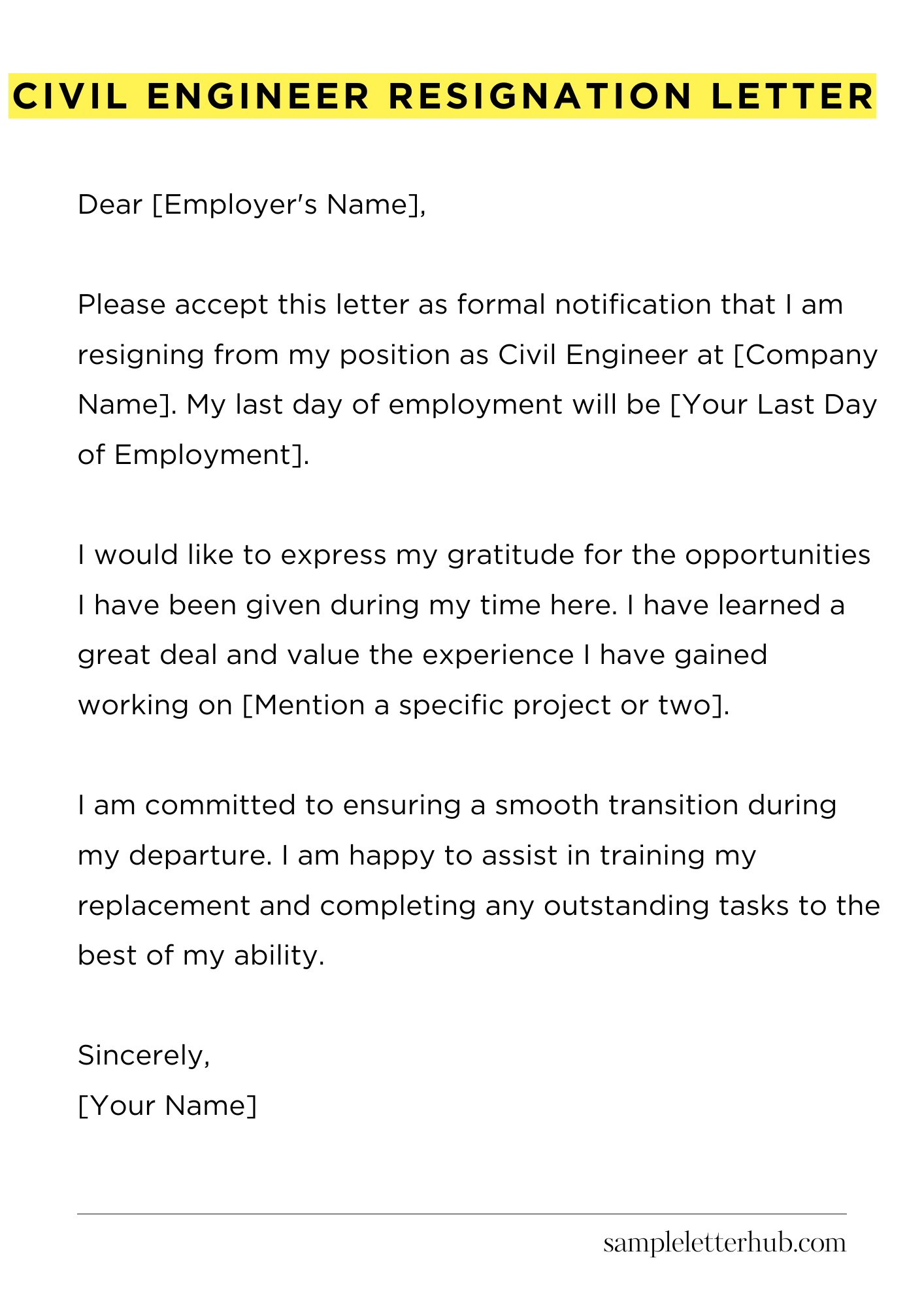
Dear [Employer’s Name],
Please accept this letter as formal notification that I am resigning from my position as Civil Engineer at [Company Name]. My last day of employment will be [Your Last Day of Employment].
I would like to express my gratitude for the opportunities I have been given during my time here. I have learned a great deal and value the experience I have gained working on [Mention a specific project or two].
I am committed to ensuring a smooth transition during my departure. I am happy to assist in training my replacement and completing any outstanding tasks to the best of my ability.
I wish you and the company continued success in the future.
Sincerely,
[Your Name]
How to Write a Civil Engineer Resignation Letter
Understanding the Basics
Resigning from a job is a big deal. For a civil engineer, it’s particularly important to handle it professionally. Your resignation letter is more than just a formality; it’s a reflection of your work ethic and a crucial step in maintaining a positive professional reputation.
This letter officially communicates your departure to your employer. Make sure you get it right. It needs to be clear, concise, and respectful.
You want to leave on good terms, especially in the civil engineering field. Networking is key, and you never know when you might cross paths with former colleagues or supervisors again.
Crafting the Perfect Format
The format of your letter matters. Use a standard business letter format. Start with your contact information (name, address, phone number, and email address) at the top. Next, include the date and then the employer’s information (name, title, company name, and company address).
Address the letter to your immediate supervisor or the person you directly report to. A simple “Dear [Manager’s Name]” is perfect. The body of the letter needs to be well-structured.
Writing the Body of Your Letter
This is the core of your resignation letter. Begin by clearly stating your intention to resign and your last day of employment. Be specific about the date! This avoids any confusion. A phrase like, “Please accept this letter as formal notification that I am resigning from my position as Civil Engineer, effective [Your Last Day of Employment]” is a good starting point.
Keep the language professional. Avoid unnecessary drama or negativity. Briefly express gratitude for the opportunity. While optional, you could offer a brief and positive reason for leaving, such as pursuing new career opportunities or a better work-life balance.
Offering to assist with the transition is a smart move. This demonstrates your commitment and professionalism. State your willingness to help train your replacement, complete ongoing projects, or anything else to ensure a smooth handover.
Key Elements to Include
There are some essential things you should incorporate in your letter. First, state the date of your resignation. Second, express your gratitude for the opportunity. Third, offer to help with the transition. These elements are non-negotiable!
Also, double-check your letter for any errors. Proofread it carefully before sending. Check grammar, spelling, and punctuation. A well-written letter reflects positively on your attention to detail.
Do not include any negative comments about your current employer or colleagues. This is not the place for complaints. Keep your tone positive and professional.
Finalizing and Delivering Your Letter
Once you’ve written your letter, review it again. Make sure everything is correct. Then, decide how you will deliver it. Generally, submitting a printed copy to your supervisor is the best practice. Depending on your company culture, you might also email a digital copy for their records.
Always hand in your resignation letter in person, if possible. This allows you to have a face-to-face conversation. This is your chance to discuss your departure and answer any questions your employer may have. A well-written and professionally delivered resignation letter sets the stage for a positive future. Good luck!
FAQs about Civil Engineer resignation letter
How do I start a Civil Engineer resignation letter?
The standard approach involves a clear and concise opening. Begin by stating your intention to resign, explicitly mentioning your position (e.g., “I am writing to formally resign from my position as Civil Engineer at [Company Name]”). Include the effective date of your resignation. Maintain a professional tone throughout.
What key information should be included in a Civil Engineer resignation letter?
Essential details encompass your job title, the company’s name, and the final date of employment. It’s also customary to express gratitude for the opportunities you’ve been afforded during your tenure. Optional additions may include a brief, positive statement about your experience or reasons for leaving, if you choose to share them, and an offer to assist with the transition.
Is it necessary to provide a reason for resigning in the letter?
While not always mandatory, offering a brief, professional reason can be beneficial. It’s generally best to keep the explanation concise and positive, focusing on broader career goals or personal circumstances. Examples include pursuing a new opportunity, seeking career advancement, or relocating. Avoid negative comments about the company or colleagues.
How should I end a Civil Engineer resignation letter?
Conclude your letter by reiterating your final day of employment, expressing your willingness to assist with the transition process (e.g., training a replacement, completing outstanding projects), and thanking your employer and colleagues. A formal closing, such as “Sincerely” or “Respectfully,” followed by your full name, is appropriate.
What are some common mistakes to avoid in a Civil Engineer resignation letter?
Steer clear of negativity, complaints, or unprofessional language. Avoid burning bridges by remaining positive and professional. Do not include excessive personal details or lengthy justifications. Ensure the letter is free of grammatical errors and typos. Avoid sending the resignation via informal channels like instant messaging; a formal letter is always preferred.
Related:
Resignation letter due to rude boss
Resignation letter moving to another state
Resignation letter due to illness of family member
Resignation letter due to study