

A “Cinematographer resignation letter” is a formal document. It is written by a cinematographer. Its purpose is to officially inform an employer of their intention to leave their job. This letter marks the beginning of their departure process.
Need to resign? This article is for you. We understand writing this type of letter can be tough. We’ve got you covered. We’ll share several templates. There are also examples and samples included.
These will help you. They will guide you to craft your own resignation letter. We’ve made it simple. Writing a letter just got easier.
Cinematographer Resignation Letter
Below is a sample of a Cinematographer Resignation Letter:
[Your Name]
[Your Address]
[Your Phone Number]
[Your Email Address]
[Date]
[Employer’s Name]
[Company Name]
[Company Address]
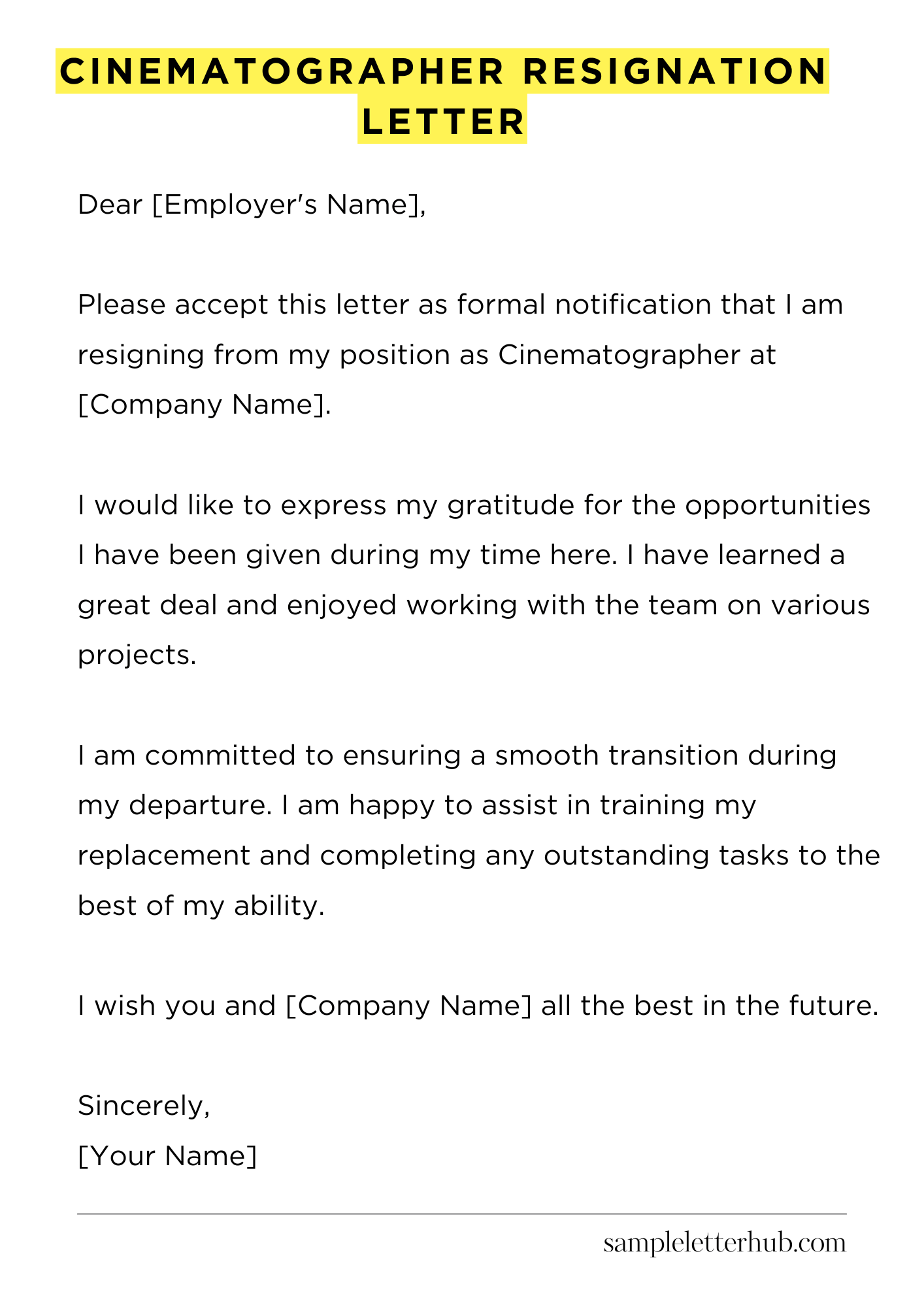
Dear [Employer’s Name],
Please accept this letter as formal notification that I am resigning from my position as Cinematographer at [Company Name]. My last day of employment will be [Your Last Day of Employment].
I would like to express my gratitude for the opportunities I have been given during my time here. I have learned a great deal and enjoyed working with the team on various projects.
I am committed to ensuring a smooth transition during my departure. I am happy to assist in training my replacement and completing any outstanding tasks to the best of my ability.
I wish you and [Company Name] all the best in the future.
Sincerely,
[Your Name]
How to Write a Cinematographer Resignation Letter
1. Grasping the Basics: Why a Resignation Letter Matters
So, you’re moving on from your role as a cinematographer. Great! But before you pack up your gear and head off to your next adventure, there’s a crucial step: the resignation letter. This isn’t just a formality; it’s a professional document. Think of it as your final bow, a way to leave a lasting positive impression.
A well-crafted letter ensures a smooth transition, protects your reputation, and can even open doors for future opportunities. It also prevents any confusion. Simple, yet powerful words are the key here.
2. Structure is Key: Formatting Your Farewell
Let’s get down to the practicalities. The structure of your letter should be clear and concise. Start with your contact information. Then, the recipient’s information, followed by a formal salutation like “Dear [Manager’s Name]”.
The body should include your intention to resign, your last day of employment, and a brief statement of gratitude. Keep it focused and professional. Don’t ramble. Use short paragraphs.
Finally, close with a professional closing, such as “Sincerely” or “Best Regards,” followed by your name and signature. Remember to keep the tone positive and respectful, even if your experience wasn’t ideal.
3. Content Clarity: What to Include and What to Avoid
Now, let’s look at the content. Clearly state your intention to resign. Specify your last day of employment, making sure it aligns with your contract or company policy. Express gratitude for the opportunities you’ve been given. Briefly mention any skills or experience you gained, highlighting positive aspects of your time there.
Avoid negativity. Don’t go into detail about problems you had. Keep it professional. Avoid burning bridges. Steer clear of long, overly emotional explanations or criticisms. The goal is to leave on a good note. Your words have power; choose them wisely.
4. Tailoring it to Your Situation: Customizing Your Letter
While the basic structure remains the same, you can tailor the letter to your specific circumstances. If you’re leaving for a new job, a short mention is okay.
For example, “I am excited to be pursuing a new opportunity.” If you have any ongoing projects, offer assistance during the transition phase. This shows your commitment.
If you had a great experience, you can add more personal touches of gratitude. If there were particular colleagues you enjoyed working with, a brief mention of them shows appreciation. Consider your relationship with the employer, but always maintain a professional tone.
5. Proofreading and Delivery: The Final Steps
Before sending, proofread your letter meticulously. Check for grammar and spelling errors. Errors can make you appear unprofessional.
Read it out loud to ensure the tone is appropriate. Save a copy for your records. Consider your delivery method. Most companies prefer a digital copy via email, but some may want a physical letter.
If you’re unsure, check company policy. Always provide your letter to your immediate supervisor and keep it polite until the end. Now, you are ready to move on. Good luck in your new cinematic adventures!
FAQs about Cinematographer Resignation Letter
What is the primary purpose of a cinematographer resignation letter?
The primary purpose of a cinematographer resignation letter is to formally notify the employer (e.g., film studio, production company) of the employee’s intent to leave their position. This document serves as an official record of the resignation, the effective date of departure, and sometimes, a brief explanation or expression of gratitude.
What essential information should be included in a cinematographer resignation letter?
A well-crafted resignation letter for a cinematographer should include: a clear statement of resignation, the date of resignation, the last day of employment (effective date), the name of the recipient (e.g., the direct supervisor, HR department).
What is the typical tone and style of a cinematographer resignation letter?
The tone of a cinematographer’s resignation letter should be professional and courteous. The style should be concise, clear, and respectful. Avoid any negativity or criticism of the employer or the working environment. The focus should be on formally announcing the resignation and providing the necessary information.
Should a cinematographer include a reason for resignation in the letter?
While not mandatory, providing a reason for resignation can be beneficial, particularly if the cinematographer wants to maintain a positive relationship with the employer.
Reasons can range from pursuing new opportunities, personal reasons, or career advancement. However, the explanation should be brief and positive. It’s perfectly acceptable to simply state that you are pursuing a new opportunity or that you have decided to move on.
How far in advance should a cinematographer submit a resignation letter?
The amount of notice required for a cinematographer’s resignation usually depends on the employment contract or company policy. A common standard is two weeks’ notice, but it’s essential to review the employment contract or consult with the employer or HR department to determine the specific requirements.
Providing adequate notice demonstrates professionalism and allows for a smooth transition.
Related:
Resignation letter due to rude boss
Resignation letter moving to another state
Resignation letter due to illness of family member
Resignation letter due to study