

A Chief Administrative Officer (CAO) resignation letter is a formal document. It is written by a CAO to announce their departure from an organization. This letter serves to officially notify the employer of the resignation. It also often includes the last day of employment.
So, you’re a CAO and need to resign? Don’t worry. We’ve got you covered. This article offers several resignation letter templates. These are tailored for different situations.
Whether you’re moving on to a new opportunity or retiring, we’ll help. We’ll provide examples and samples. Use them as a starting point. Make writing your resignation letter simple and straightforward.
Chief Administrative Officer Resignation Letter
Below is a sample of a Chief Administrative Officer Resignation Letter:
[Your Name/Address]
[Your Phone Number]
[Your Email Address]
[Date]
[Chief Administrative Officer’s Name]
[Company Name]
[Company Address]
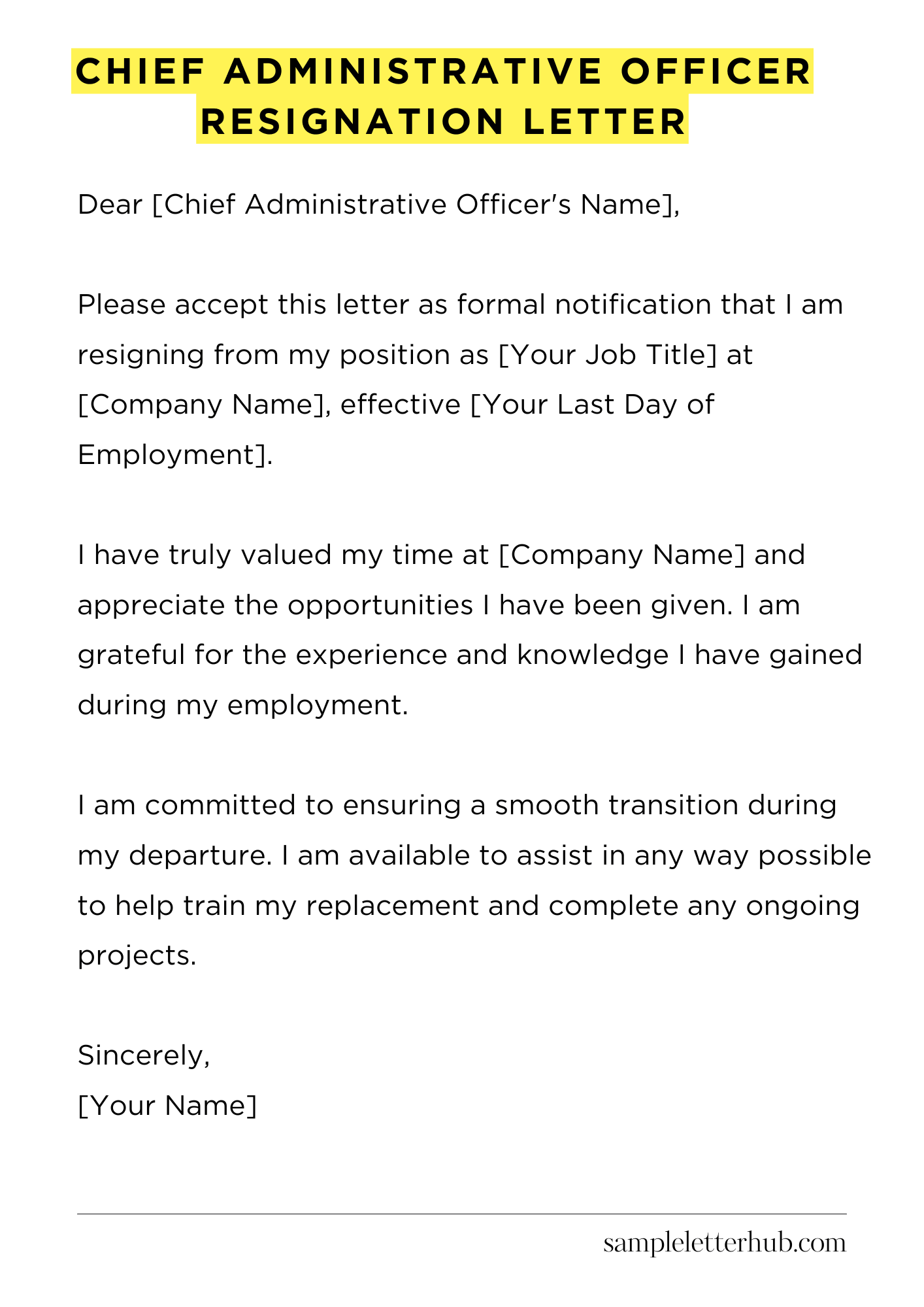
Dear [Chief Administrative Officer’s Name],
Please accept this letter as formal notification that I am resigning from my position as [Your Job Title] at [Company Name], effective [Your Last Day of Employment].
I have truly valued my time at [Company Name] and appreciate the opportunities I have been given. I am grateful for the experience and knowledge I have gained during my employment.
I am committed to ensuring a smooth transition during my departure. I am available to assist in any way possible to help train my replacement and complete any ongoing projects.
I wish [Company Name] continued success in the future.
Sincerely,
[Your Name]
How to Write a Chief Administrative Officer Resignation Letter
Resigning from any high-level position is a significant step. Doing so as a Chief Administrative Officer (CAO) requires a particularly thoughtful and professional approach. This isn’t just about quitting a job; it’s about preserving your reputation and ensuring a smooth transition for the organization. Following some easy steps can help you succeed here.
1. Plan Your Departure Carefully
Before you even think about putting pen to paper (or fingers to keyboard), you need a plan. Figure out your last day of employment. Consider the company’s policies regarding notice periods.
Most importantly, have your next steps lined up, be it a new job or personal pursuits. This will help you feel more confident. Then, think about how you will address the staff as a whole. You might need to have a meeting or a general email.
Your resignation letter is a formal document. Make sure you avoid any impulsive decisions. You may regret it.
2. Crafting the Content: A Step-by-Step Approach
Begin with a clear and concise statement of your intention to resign. State your position and the effective date of your departure. Keep it direct. This is the core of your letter, so make sure it is perfect.
Next, express your gratitude for the opportunity to have served in the role. Acknowledge the experience and any positive aspects of your tenure. This shows professionalism and consideration for the organization. Briefly mention any projects or accomplishments you’re proud of. This can subtly showcase your value without boasting.
Offer assistance with the transition. This is crucial for maintaining a positive relationship and ensuring a smooth handover. Offer to train a replacement or help with the ongoing projects. Provide your contact details for any final questions. This is always appreciated.
Finally, end the letter on a positive note, reiterating your appreciation and best wishes for the organization’s future. Keep the language optimistic.
3. The Structure and Formatting: Make It Clean
Keep your letter brief, usually one page maximum. Use a professional business letter format.
Your letter should consist of your name and contact information, the date, and the recipient’s name and address. Use a standard font like Arial or Times New Roman, and ensure the text is well-spaced. Proper formatting is essential for readability and professionalism. Proofread carefully before sending it.
It sounds easy enough, right? Absolutely.
4. Things to Avoid: Stay Professional
Do not include any negative comments about your current employer, colleagues, or reasons for leaving that could be perceived as complaints. Avoid overly emotional language. Focus on facts. Even if you’re leaving due to dissatisfaction, it’s best to keep your letter objective.
Never share confidential information. The resignation letter is not the appropriate place for it. Avoid making any demands or ultimatums.
5. Delivery and Follow-Up: The Final Steps
Deliver your letter to the appropriate person, usually the Board Chair, CEO, or your direct supervisor. Provide a copy to Human Resources. Understand the company’s specific protocols.
Consider requesting a meeting to discuss your departure and transition plan, depending on your relationship with the management. After submitting your resignation letter, prepare for any questions or follow-up conversations. Stay professional until your last day of employment.
FAQs about Chief Administrative Officer resignation letter
What is the typical format for a Chief Administrative Officer resignation letter?
The standard format includes a clear statement of resignation, the effective date of resignation, a brief expression of gratitude for the opportunity, and optional acknowledgment of a positive experience or future intentions. Contact information for the departing officer may also be included. The tone should remain professional and courteous.
What key information must be included in a Chief Administrative Officer resignation letter?
Essential elements include the formal declaration of resignation, the specific date the resignation takes effect, and the name and title of the resigning individual. It is also common to mention the recipient (typically the Board of Directors, CEO, or relevant supervisor) and to briefly acknowledge the employment period.
What are some common reasons cited in a Chief Administrative Officer’s resignation letter?
While some letters may provide specific reasons (e.g., pursuing other opportunities, personal reasons, or relocation), many CAOs opt for a more general statement. Common phrasing includes seeking new challenges, focusing on personal or family matters, or pursuing a different career path. The level of detail often depends on company culture and the individual’s comfort level.
Should a Chief Administrative Officer offer assistance during the transition period in their resignation letter?
Offering assistance during the transition is generally considered a professional courtesy. The letter can include a willingness to help with training a successor, transferring knowledge, or completing ongoing projects. The specific type and duration of assistance offered should be clarified if desired and should be done according to agreement from both parties.
What are the legal considerations related to a Chief Administrative Officer resignation letter?
Legal aspects often involve referencing any contractual obligations, such as notice periods or non-compete clauses. The letter should adhere to any existing employment agreements. Reviewing these agreements before submitting the letter is crucial. It’s generally advisable to consult with legal counsel if there are any doubts or complex issues involved.
Related:
Resignation letter due to rude boss
Resignation letter moving to another state
Resignation letter due to illness of family member
Resignation letter due to study