

A Chaplain resignation letter is a formal document. It is written to inform an organization of a Chaplain’s decision to leave their position. The letter officially ends the Chaplain’s employment. This process is respectful and professional.
Need to resign as a Chaplain? It can be tricky. Don’t worry, we are here to help. We provide examples and templates. These will help you create your own letter.
We have gathered different letter samples. These will cover various situations. You can adapt them to your specific needs. Get ready to craft your resignation with ease!
Chaplain Resignation Letter
Below is a sample of a Chaplain Resignation Letter:
[Your Name/Chaplain’s Name]
[Your Address]
[Your Phone Number]
[Your Email Address]
[Date]
[Recipient’s Name/Supervisor’s Name]
[Recipient’s Title]
[Organization Name]
[Organization Address]
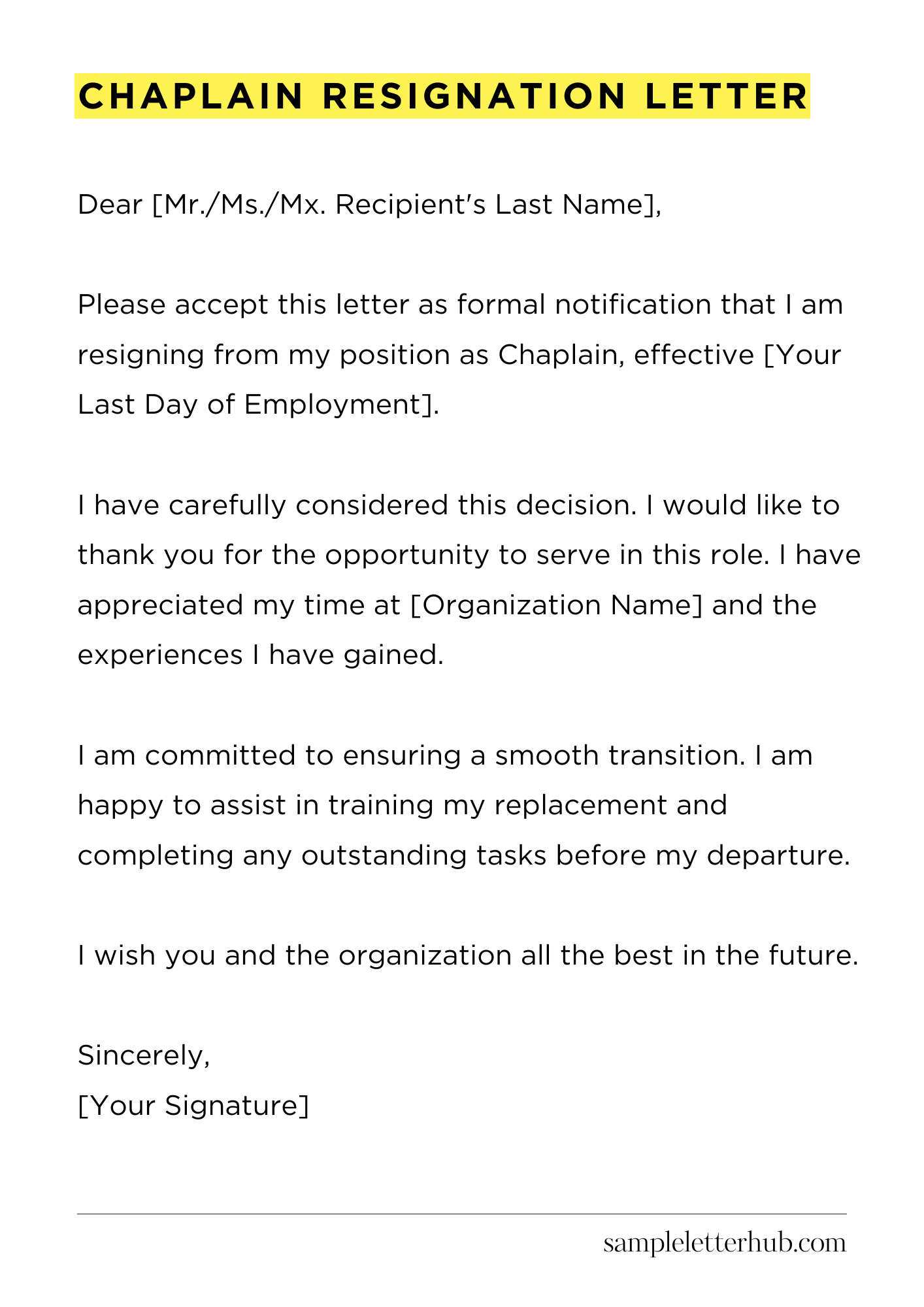
Dear [Mr./Ms./Mx. Recipient’s Last Name],
Please accept this letter as formal notification that I am resigning from my position as Chaplain, effective [Your Last Day of Employment].
I have carefully considered this decision. I would like to thank you for the opportunity to serve in this role. I have appreciated my time at [Organization Name] and the experiences I have gained.
I am committed to ensuring a smooth transition. I am happy to assist in training my replacement and completing any outstanding tasks before my departure.
I wish you and the organization all the best in the future.
Sincerely,
[Your Signature]
How to Write a Chaplain Resignation Letter
Getting Started: Your Initial Thoughts
So, you’re ready to move on. That’s a big decision! Before you even begin to type, take a moment to reflect. This is crucial. Consider your reasons for leaving your chaplaincy position. What factors led you to this choice? Are you pursuing a new opportunity? Perhaps you’re seeking a different kind of ministry? Or maybe it’s something personal.
These thoughts form the foundation of your letter. They’ll guide your tone and help you articulate your departure effectively. Think about the impact your resignation will have on the individuals and organizations you serve. Remember, professionalism is key here, regardless of your reasons.
Crafting the Core: The Essential Elements
Now, let’s get into the nitty-gritty. Your letter needs to be clear, concise, and professional. Start with a formal salutation. Address the appropriate person – usually your supervisor, the head of the organization, or the committee overseeing the chaplaincy program.
The first paragraph is vital. Clearly state your intention to resign. Include your official resignation date. This is non-negotiable. Next, briefly mention your reasons without going into excessive detail.
Focus on the facts. Keep it respectful, even if your departure stems from difficult circumstances. State your gratitude for your time served there. Did you have a mentor? Was it a good work environment? A brief, heartfelt expression of appreciation goes a long way. This is important.
Expressing Gratitude and Providing Assistance
Moving on, demonstrate your commitment to a smooth transition. Offer your assistance in the handover process. This shows consideration and professionalism. Mention your willingness to help train your replacement, complete pending tasks, or provide any necessary documentation.
This not only benefits the organization but also reflects positively on your character. It’s the right thing to do. Think about what you would want if someone left your team.
Include any pertinent details. Think about this point very carefully. Offer to help out where you can. Make sure it makes sense.
Formatting and Polishing: The Finishing Touches
Formatting matters. Use a professional business letter format. Ensure correct grammar and spelling. Proofread your letter meticulously. A single error can undermine your message. Review the letter at least twice. Ask a trusted colleague or friend to read it over for a second opinion. They may catch anything you missed.
Keep the tone respectful and positive, even if your experience hasn’t always been positive. Focus on what you *will* do, rather than what you *won’t* do. Focus on the positive.
Finalizing and Delivering Your Letter
Once you’re satisfied, it’s time to finalize your letter. Make sure you know how to deliver it. Print a hard copy and keep a copy for yourself. Then, deliver the letter in person, if possible.
If not, send it via certified mail or email. Follow any specific procedures outlined by your organization’s policies. Then, be prepared to answer questions. Be prepared for a conversation.
Remember, a well-written resignation letter leaves a lasting impression. It’s a final act of service. It’s a statement about you. Make it count.
FAQs about Chaplain resignation letter
Understanding the nuances of a chaplain resignation letter is crucial for a smooth and professional transition. Here are some of the most frequently asked questions on the topic.
What are the essential elements of a chaplain resignation letter?
A well-crafted chaplain resignation letter should include your formal resignation, the effective date of your departure, a concise and professional statement of your reason for leaving (optional but often included), expressions of gratitude for the opportunity to serve, and any relevant information regarding the handover of your responsibilities.
It is also common to offer assistance during the transition period. Ensure your letter is addressed to the appropriate authority, such as the head of the organization or the governing board.
What is the appropriate timeframe for submitting a chaplain resignation letter?
The standard practice is to provide ample notice. The timeframe may vary depending on the organizational policies, typically ranging from two weeks to a month or more.
It is advisable to review your employment contract or organizational handbook for specific guidelines. Giving sufficient notice demonstrates professionalism and allows time for a smooth transition, including finding a replacement and addressing outstanding responsibilities.
Should I provide a reason for my resignation in the letter, and if so, what is the best approach?
While not always mandatory, offering a brief reason for your resignation can be helpful, especially if it’s related to professional growth or family commitments.
Keep it concise, positive, and avoid overly detailed explanations or negativity. Focusing on your future endeavors or personal circumstances is often best. If the reason is a conflict, consider discussing it separately with the appropriate authority rather than detailing it in the letter.
How should I handle the handover of my responsibilities as a chaplain?
Your resignation letter should indicate your willingness to assist in the transition. Prepare a comprehensive handover plan, including any ongoing projects, contact information for individuals you serve, and essential documents. Offer to train your replacement and be available for any necessary consultations during the transition period.
A well-organized handover demonstrates professionalism and commitment to ensuring the continuity of spiritual care for those you serve.
Are there any legal or ethical considerations I should be aware of when resigning as a chaplain?
Yes. You must adhere to all relevant legal and ethical standards, especially regarding patient confidentiality, religious freedom, and non-discrimination. Respect any legal requirements regarding contract termination.
Be mindful of your professional conduct, especially regarding the confidentiality of any information you have obtained through your work. It’s often advisable to consult with a legal professional and review the ethical guidelines of your professional organization.
Related:
Resignation letter due to rude boss
Resignation letter moving to another state
Resignation letter due to illness of family member
Resignation letter due to study