

A “Bartender Server resignation letter” is a formal document. It is written by a bartender server. Its main purpose is to officially inform their employer of their departure. This letter starts the resignation process. It also helps to establish a professional record.
Leaving a job can be tricky. Writing the perfect resignation letter is essential. We’ve got you covered. This article offers helpful templates. They serve as examples for your own letter.
These samples provide easy-to-follow guidance. They will help you craft a letter. Your letter will be clear and professional. You can adapt them to your specific situation.
Bartender Server Resignation Letter
Below is a sample of a Bartender Server Resignation Letter:
[Your Name]
[Your Address]
[Your Phone Number]
[Your Email Address]
[Date]
[Employer’s Name]
[Restaurant Name]
[Restaurant Address]
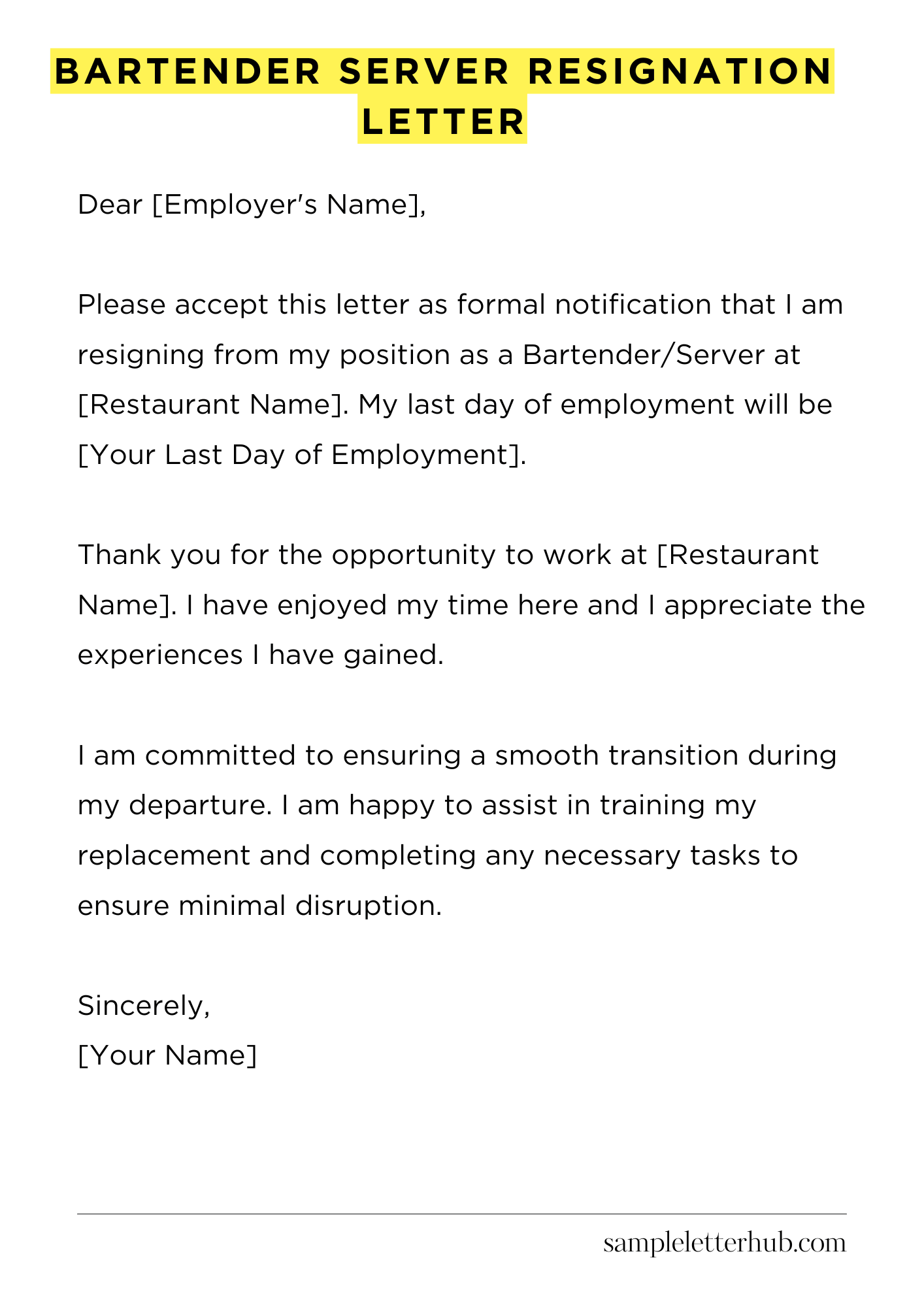
Dear [Employer’s Name],
Please accept this letter as formal notification that I am resigning from my position as a Bartender/Server at [Restaurant Name]. My last day of employment will be [Your Last Day of Employment].
Thank you for the opportunity to work at [Restaurant Name]. I have enjoyed my time here and I appreciate the experiences I have gained.
I am committed to ensuring a smooth transition during my departure. I am happy to assist in training my replacement and completing any necessary tasks to ensure minimal disruption.
I wish you and the restaurant continued success in the future.
Sincerely,
[Your Name]
How to Write a Bartender/Server Resignation Letter
Quitting your job as a bartender or server? You’ve made a decision. A well-written resignation letter is a crucial step in the process. It’s not just a formality; it’s a professional courtesy and a way to protect your future prospects. Let’s get down to the essential elements of crafting a resignation letter that leaves a positive impression, even as you move on.
1. Keep It Concise and Clear
Get straight to the point. The first line should clearly state your intention to resign. Avoid rambling or unnecessary information. State your position, the name of the establishment, and your last day of employment. Simplicity is key. A brief, polite declaration is all that’s needed to start. No need for drama or lengthy explanations at this stage.
For example: “Please accept this letter as formal notification that I am resigning from my position as a bartender at The Tipsy Turtle, effective two weeks from today, [Date].”
2. Express Gratitude (Always!)
Even if you’re leaving due to negative circumstances, expressing gratitude is always a good move. It demonstrates professionalism and leaves the door open for future references.
Briefly acknowledge the opportunity you were given. Mention any positive experiences or skills you gained during your employment. This small act of kindness goes a long way. Think about the positive aspects of your time there.
Consider something like: “I am grateful for the opportunity to have worked as a server at your establishment for the past [Number] years. I’ve learned a great deal about customer service and [mention a skill].”
3. Provide a Valid Date of Departure
Specify your last day of employment. This is critical for your employer to plan accordingly. Typically, a two-week notice is standard. This timeframe allows for the transition of your responsibilities and for the restaurant to find your replacement.
Make sure the date you provide aligns with the restaurant’s policy and any applicable labor laws. Being precise minimizes confusion and ensures a smooth handover.
Double-check the date you provide, and make sure to adhere to the time frame specified in your employment agreement or any company policy.
4. Offer Assistance with the Transition
Show your willingness to help during the transition period. This not only demonstrates professionalism but can also make a positive impression. You can offer to train your replacement, complete any outstanding tasks, or answer any questions your employer may have. Showing this initiative speaks volumes about your work ethic and character.
This can often prevent any awkwardness on your final day.
You might write: “I am happy to assist in training my replacement and to ensure a smooth transition during my final two weeks.”
5. Keep It Professional and Proofread!
Maintain a professional tone throughout the letter. Avoid any negativity or personal attacks. Proofread carefully for any typos or grammatical errors. This demonstrates your attention to detail and respect for your former employer. The letter is a representation of you. Double-check for grammar and spelling. Remember, a well-written letter is a lasting impression.
Example: “Thank you for the opportunity. I wish you and the restaurant continued success. Sincerely, [Your Name].”
FAQs about Bartender Server resignation letter
How much notice should I give when resigning as a bartender or server?
The standard recommendation is to provide at least two weeks’ notice. This timeframe allows your employer sufficient time to find a replacement and ensure a smooth transition. However, your employment contract or local laws might specify a different notice period. It’s always best to review any existing agreements or consult with legal counsel if unsure.
What should be included in a bartender or server resignation letter?
Your resignation letter should be concise and professional. It should include a clear statement of your resignation, the effective date of your last day of employment, and a brief expression of gratitude for the opportunity.
You may also include a sentence or two acknowledging your willingness to assist in the transition, if applicable. Avoid negative comments about your employer or colleagues.
Should I provide a reason for resigning in my letter?
While not mandatory, you may choose to include a brief, neutral reason for your resignation if you wish. This could be to pursue another opportunity, relocate, or focus on personal commitments. Keep the explanation brief and positive, focusing on the future rather than any issues with your current role.
How should I deliver my resignation letter?
It’s best to deliver your resignation letter in person to your manager or supervisor, if possible. This allows for a more personal touch and the opportunity to briefly discuss your departure. If an in-person meeting isn’t feasible, you can deliver the letter via email. Always retain a copy of your resignation letter for your records.
What should I do after submitting my resignation letter?
After submitting your letter, be prepared to discuss your departure with your manager. You may be asked about your reasons for leaving or to assist in training your replacement. Maintain a professional demeanor and fulfill your job responsibilities diligently until your last day of employment. This is crucial for maintaining a positive relationship with your previous employer.
Related:
Resignation letter due to rude boss
Resignation letter moving to another state
Resignation letter due to illness of family member
Resignation letter due to study