

An Assistant Branch Manager resignation letter is a formal document. It informs your employer of your intention to leave the job. This letter officially marks the end of your employment.
Writing a resignation letter can be tricky. We’re here to help you get it right. We’ll share ready-to-use templates. These are samples and examples. They are designed for your convenience.
Use these as your guide. Customize them to fit your specific situation. You can craft the perfect letter. Your resignation process will be smoother.
Assistant Branch Manager Resignation Letter
Below is a sample of a Assistant Branch Manager Resignation Letter:
[Your Name]
[Your Address]
[Your Phone Number]
[Your Email Address]
[Date]
[Manager’s Name]
[Manager’s Title]
[Branch Name]
[Branch Address]
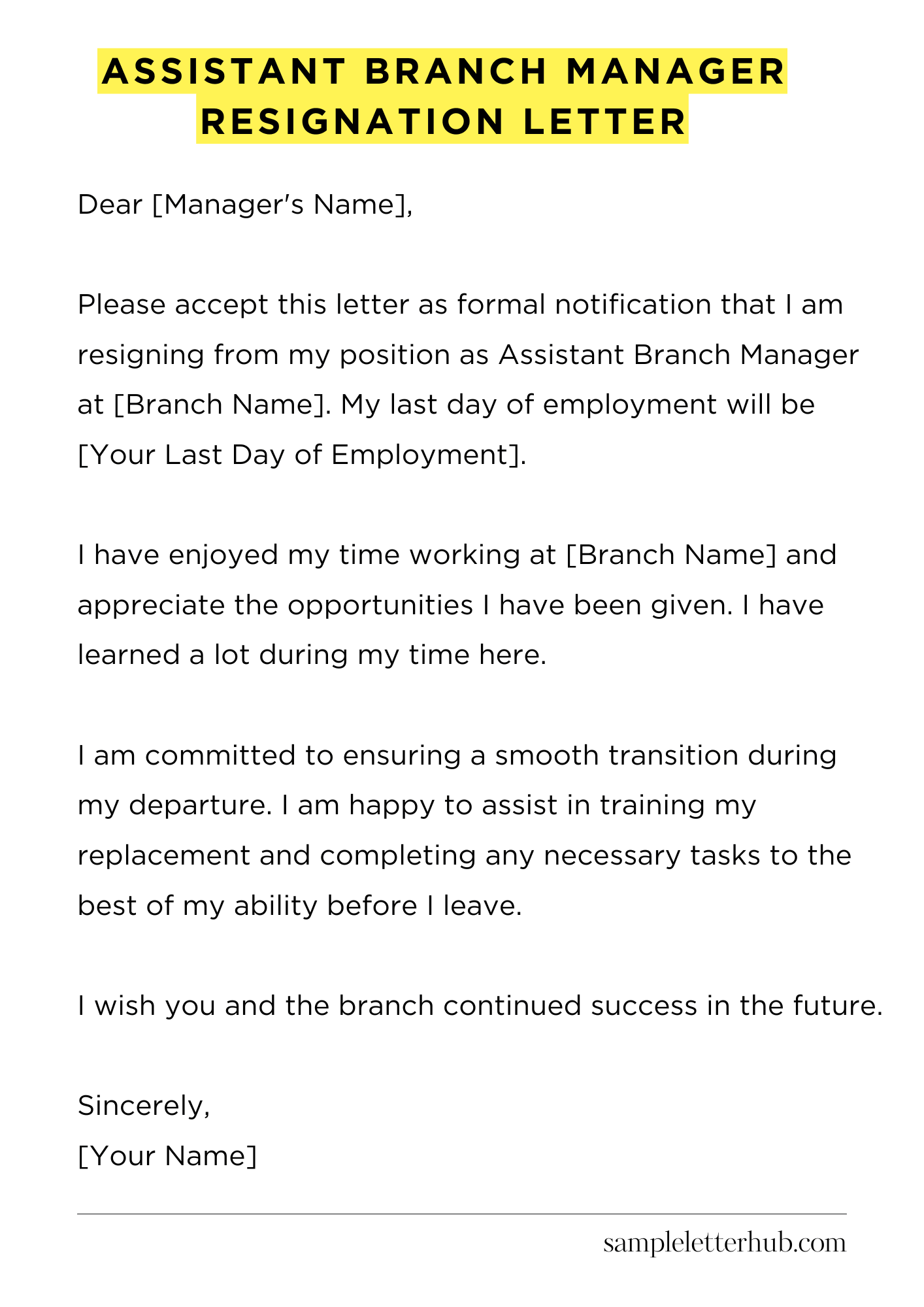
Dear [Manager’s Name],
Please accept this letter as formal notification that I am resigning from my position as Assistant Branch Manager at [Branch Name]. My last day of employment will be [Your Last Day of Employment].
I have enjoyed my time working at [Branch Name] and appreciate the opportunities I have been given. I have learned a lot during my time here.
I am committed to ensuring a smooth transition during my departure. I am happy to assist in training my replacement and completing any necessary tasks to the best of my ability before I leave.
I wish you and the branch continued success in the future.
Sincerely,
[Your Name]
How to Write an Assistant Branch Manager Resignation Letter
Knowing When it’s Time to Go
So, you’ve made the decision. You’re ready to move on from your role as Assistant Branch Manager. That’s a huge step! Before you do anything else, be absolutely certain this is the path you want.
Analyze your current situation. Think about the job, the company, and your future goals. Are there opportunities for growth? Are you feeling fulfilled? Reflect on your career objectives. Once you’re sure, it’s time to craft a resignation letter. This is more than just a formality; it is an important step.
A well-written letter communicates your intentions professionally and respectfully. It also leaves a positive impression, regardless of the reasons for your departure. After all, you might need a reference later down the line.
Formatting Your Letter for Maximum Impact
Let’s get down to the basics. The format of your resignation letter matters. First things first: Use a formal business letter format. This shows respect for your employer and the position.
This includes your contact information (name, address, phone number, and email address), the date, and the recipient’s information (name, title, and company address) at the top.
Keep your letter concise and to the point. Aim for one page; it’s generally best. Employ a clear and readable font such as Arial or Times New Roman.
Use standard 1-inch margins, making sure everything is easy to read. This is a business document, so professionalism is key. Ensure your grammar and spelling are impeccable. Proofread meticulously. You do not want mistakes in such a significant communication.
The Essential Elements of a Powerful Letter
Now, let’s look at the actual content. Start with a clear and direct statement of your intent to resign. State your position (Assistant Branch Manager) and the effective date of your resignation. Be specific about this date. For example, “I am writing to inform you of my resignation from the position of Assistant Branch Manager, effective two weeks from today, [Date].”
Next, express your gratitude for the opportunity. This is a professional courtesy. Acknowledge what you have learned and the experiences you have gained. Keep it brief but sincere. Consider adding a sentence or two thanking your manager or the company for the experience.
You may also offer assistance with the transition. If you are willing, offer to help train your replacement or assist with the handover process. This shows you are committed to making the departure as smooth as possible. Finally, end with a polite closing, such as “Sincerely” or “Respectfully,” followed by your typed name.
What to Include (and What to Avoid)
There are some things you absolutely *should* include and things you should leave out. Include your effective resignation date; this is extremely important. It sets the timeframe for your departure.
State your position clearly. Make sure the title is correct. Expressing gratitude to your employer is a must. It keeps things professional. Offer assistance, if possible. Offering help is a thoughtful gesture.
Now, what should you avoid? Do not dwell on negative aspects of the job. Resist the urge to complain or air grievances. Keep the tone positive and professional, even if you are unhappy.
Avoid going into excessive detail about your reasons for leaving. Unless there’s a specific reason your employer should know (and that’s rare), a brief statement is enough.
Avoid burning bridges. No matter how you feel, remember to maintain a professional tone. You never know when you might need a reference in the future.
Final Steps Before You Submit
Before you send your resignation letter, take a few more steps. Proofread the letter one last time. Have a friend or colleague read it over as well.
A fresh pair of eyes can often catch errors that you’ve missed. Make sure you understand your company’s policy regarding resignation. Are there any specific procedures you need to follow? Confirm the process with your supervisor or HR department.
Deliver the letter in person. If possible, hand your resignation letter to your manager directly. This shows respect and allows for a more personal goodbye.
Be prepared to answer any questions, but stick to the points in your letter. Finally, keep a copy of your letter for your records. This can be important for future reference. Following these steps helps ensure a smooth and respectful departure.
FAQs about Assistant Branch Manager resignation letter
How much notice should I give in my Assistant Branch Manager resignation letter?
The standard notice period for an Assistant Branch Manager is typically two weeks, but this can vary depending on your employment contract and company policy.
Review your contract or employee handbook to determine the required notice period. Some companies may require a longer period, such as 30 days, especially for managerial roles. It’s always best to err on the side of caution and provide the notice period outlined in your contract to avoid any potential issues.
What should I include in my Assistant Branch Manager resignation letter?
Your resignation letter should be concise and professional. Begin by stating your intention to resign from your position as Assistant Branch Manager. Include your last day of employment, ensuring it aligns with your notice period. Briefly express your gratitude for the opportunity to work at the company (optional but recommended).
You can also provide a brief, professional reason for your departure (optional), such as pursuing another opportunity. Keep the tone positive and respectful. Finally, offer assistance with the transition process.
Should I provide a reason for resigning in my letter?
Providing a reason for your resignation is optional. You’re not legally obligated to disclose the details. If you choose to, keep it brief, positive, and professional.
Common reasons include accepting a new job, seeking a career change, or pursuing personal goals. Avoid negative comments about your employer or colleagues. If you prefer not to state a reason, you can simply state that you are resigning to pursue other opportunities.
Who should I address my Assistant Branch Manager resignation letter to?
Your resignation letter should be addressed to your direct supervisor or the Branch Manager. If you report directly to the Regional Manager or a higher-level executive, address the letter to them. It’s crucial to follow the chain of command. In some companies, Human Resources may also be copied on the letter for record-keeping purposes.
How should I submit my Assistant Branch Manager resignation letter?
Typically, you should submit your resignation letter in writing. Depending on company policy, this may be a physical hard copy or an electronic submission (email). If submitting via email, send it to your supervisor and Human Resources, if necessary. It’s always a good practice to retain a copy for your records.
Consider a follow-up conversation with your supervisor after submitting the letter to discuss the transition and any handover procedures.
Related:
Resignation letter due to rude boss
Resignation letter moving to another state
Resignation letter due to illness of family member
Resignation letter due to study