


An Army resignation letter is a formal document. It officially informs the Army of your intention to leave. This letter initiates the process of separating from your military service. It serves as a clear statement of your decision.
Planning to resign? Writing this letter can feel daunting. We’re here to help ease the process. We’ve compiled various templates. Examples and samples are also included.
Our goal is simple. We aim to help you craft your letter with confidence. These samples are designed for easy customization. Find the perfect words to express yourself. Get started with your transition.
Army Resignation Letter
Below is a sample of a Army Resignation Letter:
[Your Name]
[Your Address]
[Your Phone Number]
[Your Email Address]
[Date]
[Commander’s Name]
[Commander’s Rank]
[Unit Name]
[Unit Address]
Subject: Letter of Resignation
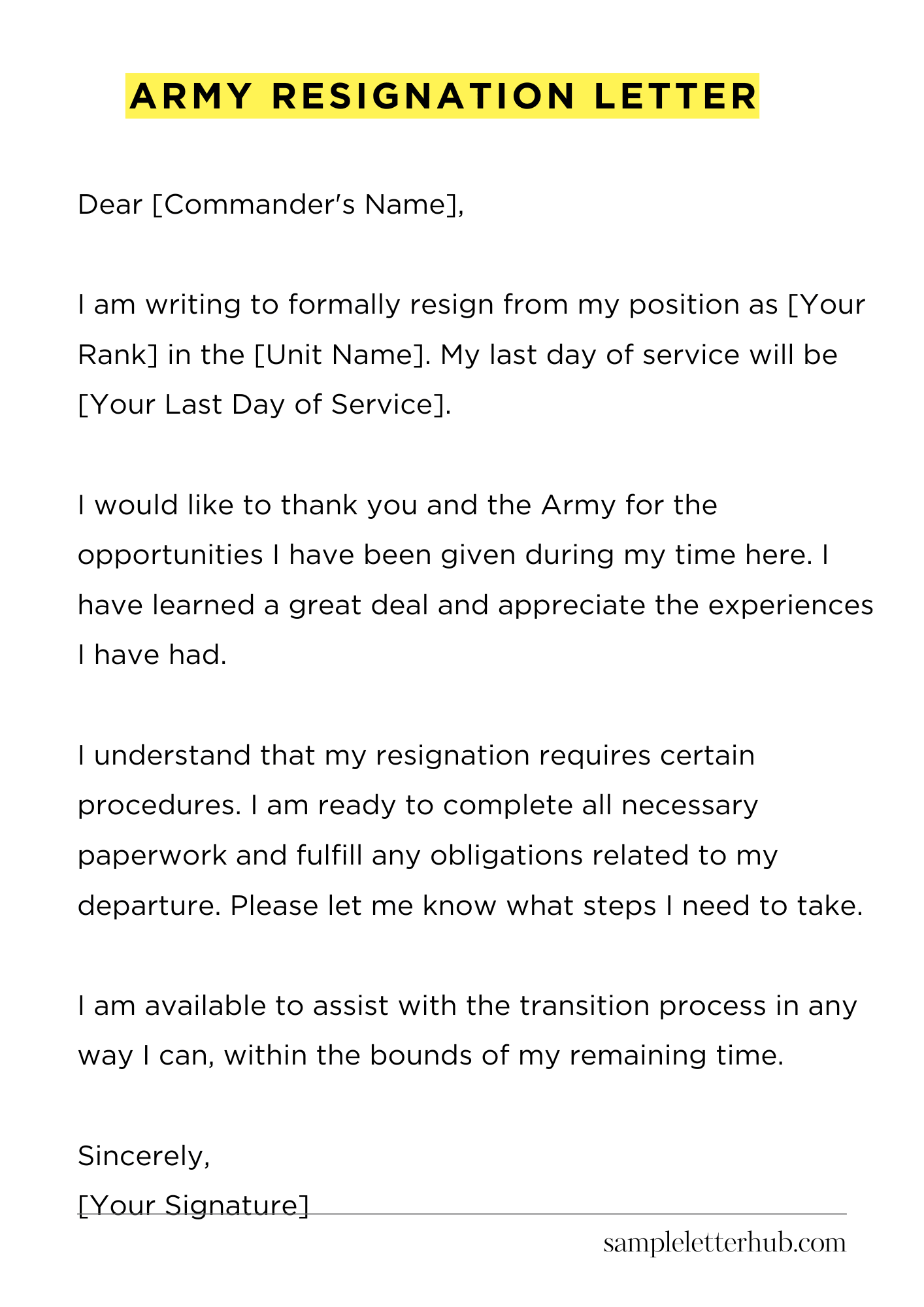
Dear [Commander’s Name],
I am writing to formally resign from my position as [Your Rank] in the [Unit Name]. My last day of service will be [Your Last Day of Service].
I would like to thank you and the Army for the opportunities I have been given during my time here. I have learned a great deal and appreciate the experiences I have had.
I understand that my resignation requires certain procedures. I am ready to complete all necessary paperwork and fulfill any obligations related to my departure. Please let me know what steps I need to take.
I am available to assist with the transition process in any way I can, within the bounds of my remaining time.
Thank you again for your leadership and guidance.
Sincerely,
[Your Signature]
How to Write an Army Resignation Letter
Serving in the military is a demanding commitment. It can take a toll on anyone, and it’s perfectly understandable that someone might decide to move on. If you’ve reached this point, then you’re likely needing to draft an army resignation letter. Getting it right is important. This guide will help you navigate the process.
You’ll find writing a proper resignation letter easier than you think!
Step 1: Understand the Basics and Regulations
First and foremost, familiarize yourself with your branch’s specific regulations regarding resignations. These are absolutely crucial! These rules dictate how you officially submit your resignation and what information must be included. You’ll find this information in your service guidelines, or you can speak with your chain of command.
Know your obligations. Know the timeline. Failing to adhere to the correct procedures can cause delays or even complicate your departure. A little research goes a long way. This is not the time to guess! The Army is all about structure, so let’s be sure your letter is the same.
Step 2: Essential Components of Your Letter
Your letter needs to be clear, concise, and professional. Here are the core elements it must include: Firstly, your full name, rank, and service number should be at the top. Next, clearly state your intent to resign from the Army. Then, specify the date your resignation will be effective. This is an important detail. Keep it professional.
Use polite and respectful language throughout your letter, even if you’ve had disagreements with superiors. A calm and reasoned approach is always best. Lastly, include a closing paragraph expressing gratitude for the opportunities you’ve had. This is optional but shows respect.
Step 3: Writing the Body of the Letter
The body of your letter is where you articulate your reasons for resigning. Keep it brief. You do not need to over-explain. You are not writing a novel; you are simply stating your intentions.
While you don’t need to go into excessive detail, be honest and provide legitimate reasons. Some common reasons include personal, family, or professional considerations. If you’re resigning for another job, don’t be afraid to mention that. You might also want to mention any skills or experience you gained while serving.
This demonstrates value, which is good for your records. Remember, the goal is to make it easy for the recipient to understand your decision.
Step 4: Formatting and Delivery
Pay close attention to formatting. Use standard business letter format. Ensure the letter is typed, single-spaced, and easy to read. Proofread your letter carefully for any spelling or grammatical errors.
These small details show professionalism. Next, determine the appropriate chain of command. Find out who needs to receive the letter and follow the proper channels for submission.
Make sure you keep a copy for your records. Consider sending the letter via certified mail, so you have proof of delivery. This offers extra protection for you. Following these steps helps make the process smoother.
Step 5: After Submission and Next Steps
After you submit your resignation letter, you will likely have to meet with your superiors. Be prepared to answer questions. Remember to remain respectful and professional throughout.
The Army will then process your resignation. Then there will be paperwork. Then there will be a departure date. Be sure to complete any necessary out-processing procedures. This includes clearing your barracks, returning equipment, and completing any required training. Make sure you fully understand your obligations before you leave.
Planning ahead can save you future stress. Finally, keep all documentation related to your resignation in a safe place. This completes your part. You’re done, and ready for your new chapter!
FAQs about Army resignation letter
What are the essential components of an Army resignation letter?
An effective Army resignation letter typically includes your full name, rank, and social security number (for identification), a clear and concise statement of your intent to resign, the effective date of your resignation, and a professional closing. It should also specify whether you have any outstanding obligations or commitments to the Army.
If possible, a brief expression of gratitude for the opportunities you received during your service is often included.
How far in advance should I submit my resignation letter?
The required notice period for resignation varies based on your circumstances and type of enlistment (e.g., active duty, reserve). As a general guideline, officers might be expected to provide more notice than enlisted personnel. It is crucial to consult Army regulations (e.g., AR 600-8-24) and your chain of command to determine the specific timeframe applicable to your situation.
This will ensure your resignation is processed correctly and without issues.
Where should I submit my Army resignation letter?
The submission process for a resignation letter varies. In general, your letter is submitted through your immediate chain of command. Depending on your rank and unit, this might involve your direct supervisor, battalion commander, or a designated personnel office. Always adhere to the specific procedures outlined by your unit to ensure the letter is correctly routed.
What happens after I submit my resignation letter?
After submitting your resignation letter, the Army will initiate the separation process. This includes reviewing your record, verifying eligibility to resign, conducting an out-processing procedure, and arranging for a final physical examination.
You will likely receive guidance on completing the necessary paperwork, clearing your housing (if applicable), and attending separation briefings. The timeframe for this process can vary, so patience is advised, and you should maintain open communication with your chain of command.
Can I withdraw my resignation after submitting the letter?
Generally, withdrawing a resignation after it has been submitted is possible, but it is not guaranteed. Withdrawal is dependent on the stage of the separation process and the Army’s needs.
You must request the withdrawal in writing and provide a compelling reason for doing so. The decision will be made by your commanding officer, taking into account factors like unit manning and your record. It’s important to understand that withdrawing your resignation is not always a given.
Related:
Resignation letter due to rude boss
Resignation letter moving to another state
Resignation letter due to illness of family member
Resignation letter due to study