

An architecture resignation letter is a formal document. Architects use it to officially notify their employer of their departure. The letter states the architect’s intention to leave their job. It includes the last day of employment.
Are you an architect ready to move on? Writing a resignation letter can feel tricky. Don’t worry, we’re here to help. This article provides various templates and examples. Use them to craft your perfect resignation letter.
These samples cover different situations. Find the best fit for your needs. We want to make the process simple. Let’s make your job transition smoother.
Architecture Resignation Letter
Below is a sample of a Architecture Resignation Letter:
[Your Name]
[Your Address]
[Your Phone Number]
[Your Email Address]
[Date]
[Employer’s Name]
[Employer’s Title]
[Company Name]
[Company Address]
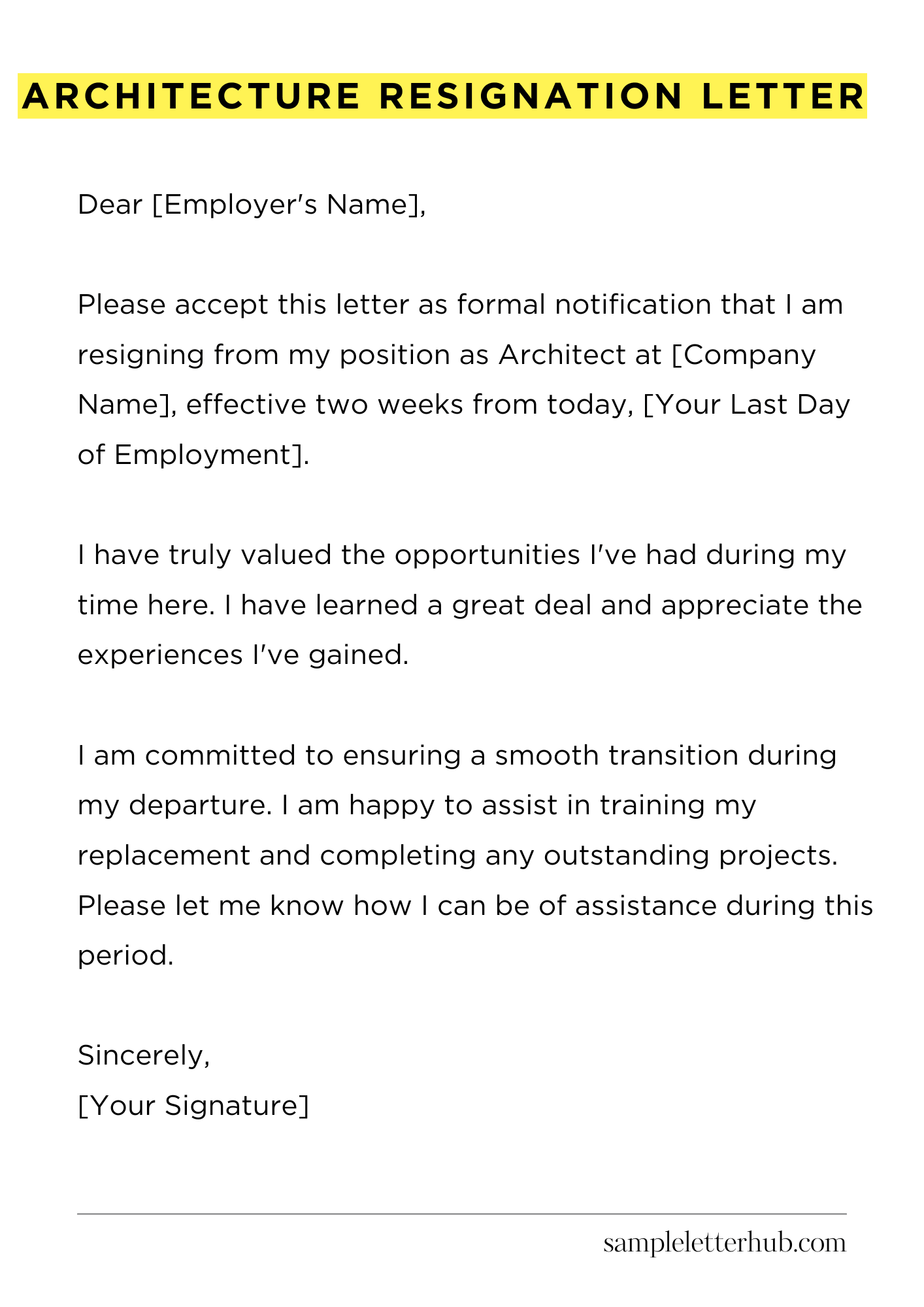
Dear [Employer’s Name],
Please accept this letter as formal notification that I am resigning from my position as Architect at [Company Name], effective two weeks from today, [Your Last Day of Employment].
I have truly valued the opportunities I’ve had during my time here. I have learned a great deal and appreciate the experiences I’ve gained.
I am committed to ensuring a smooth transition during my departure. I am happy to assist in training my replacement and completing any outstanding projects. Please let me know how I can be of assistance during this period.
I wish you and [Company Name] continued success in the future.
Sincerely,
[Your Signature]
How to Write Architecture Resignation Letter
Leaving a job is a big step. Resigning from your architecture position requires more than just a whim; it demands a well-crafted letter. This crucial document formally announces your departure and serves as a vital piece of professional communication. Get it right, and you leave a positive lasting impression.
Get it wrong, and you might burn bridges. Let’s look at how to construct a resignation letter that reflects your professionalism and leaves on a positive note.
1. Formatting is Key: Making a Good First Impression
First impressions matter, even when you’re leaving. Your letter should look polished and professional. Begin with your contact information, followed by the date, and then the recipient’s information (usually your direct supervisor or HR). Use a standard, easily readable font like Times New Roman or Arial.
Keep the tone formal and respectful throughout the letter. Consider a clear and concise structure to present your message, using paragraphs to separate different points. This makes your letter easy to read and understand.
2. The Core Components: What to Include
Every architecture resignation letter needs some core elements. Start by clearly stating your intention to resign. Specify your last day of employment. This is crucial for your employer to plan for your transition. Then, briefly express your gratitude for the opportunity. Mention any specific skills or experiences you’ve gained during your time at the firm. You don’t need to write a novel. Keep it concise.
3. Navigating the Details: Handling the Practicalities
Beyond the basics, your resignation letter can address practical aspects. If applicable, offer to assist with the transition. This shows consideration and professionalism.
Mention any ongoing projects or tasks you’re involved in, and propose how you can help ensure a smooth handover. Consider what responsibilities you need to finish before you leave. This adds value to your letter. Be as clear as you can.
4. Keeping it Positive: Maintaining a Professional Tone
Even if your reasons for leaving are complex, keep your letter positive and professional. Avoid negativity or complaints about your job or colleagues. Focus on expressing gratitude for the experience and your growth within the company. This helps you maintain a positive relationship. Resignation is a delicate process.
5. The Final Touches: Proofreading and Polishing
Before you send your letter, proofread it carefully. Check for any grammatical errors or typos. Ensure your tone is appropriate and professional. Consider having a friend or mentor read it over for a second opinion. This will help to identify any areas for improvement. Making a good impression is key. This final step is important for professionalism.
FAQs about Architecture Resignation Letters
What is the purpose of an Architecture resignation letter?
An architecture resignation letter serves as a formal declaration of your intent to leave your current architectural position. It officially notifies your employer of your departure, confirms your last day of employment, and can help to maintain a positive relationship with your previous employer.
Additionally, it offers an opportunity to express gratitude and may facilitate a smooth transition for your projects or responsibilities.
What key information should be included in an Architecture resignation letter?
A well-crafted architecture resignation letter should include your formal announcement of resignation, the date of your last day of employment, a concise statement of gratitude for the opportunity to work with the firm, and a professional closing.
Consider mentioning your willingness to assist in the transition of your current projects. Also, include your contact information for future correspondence.
How much notice should I give when resigning from an Architecture firm?
The standard notice period in the architecture industry often aligns with the terms of your employment agreement. Commonly, this is two weeks or one month. However, it’s crucial to review your contract or consult with HR to confirm the required notice period. Giving adequate notice allows for a smoother transition, reflecting professionalism and respect for your employer and colleagues.
Should I provide a reason for resigning in my Architecture resignation letter?
While providing a reason for your resignation is not always mandatory, it is typically included to offer context for your departure. You can state your reason simply and professionally; this could be a new job opportunity, a change in career goals, or personal circumstances. Keep the tone positive and avoid negative comments or complaints about your previous employer.
How can I ensure my Architecture resignation letter is professional?
To ensure professionalism, maintain a formal tone and use clear, concise language. Address the letter to the appropriate person, such as your direct supervisor or the HR department. Proofread your letter carefully for any grammatical errors or typos. Consider keeping a copy of your resignation letter for your personal records, which can be useful for future reference.
Related:
Resignation letter due to rude boss
Resignation letter moving to another state
Resignation letter due to illness of family member
Resignation letter due to study