

Ever feel like your insurance settlement offer is too low? An appeal letter to increase insurance settlement is your tool. It’s a formal request to your insurance company. Its goal? To persuade them to offer a higher payout. It presents new information. It challenges their initial evaluation.
Feeling lost on where to start? Don’t worry. We’ve got you covered. This article offers appeal letter samples. We will give you templates to increase insurance settlement. They’re easy to adapt. Use them to craft your own strong insurance appeal letter.
Writing this letter doesn’t have to be hard. We’ll simplify the process. These appeal letter examples can help you. You’ll find what you need. Get ready to boost your settlement!
[Your Name]
[Your Address]
[Your Phone Number]
[Your Email Address]
[Date]
[Insurance Company Name]
[Insurance Company Address]
Subject: Appeal for Increased Settlement – Claim [Claim Number]
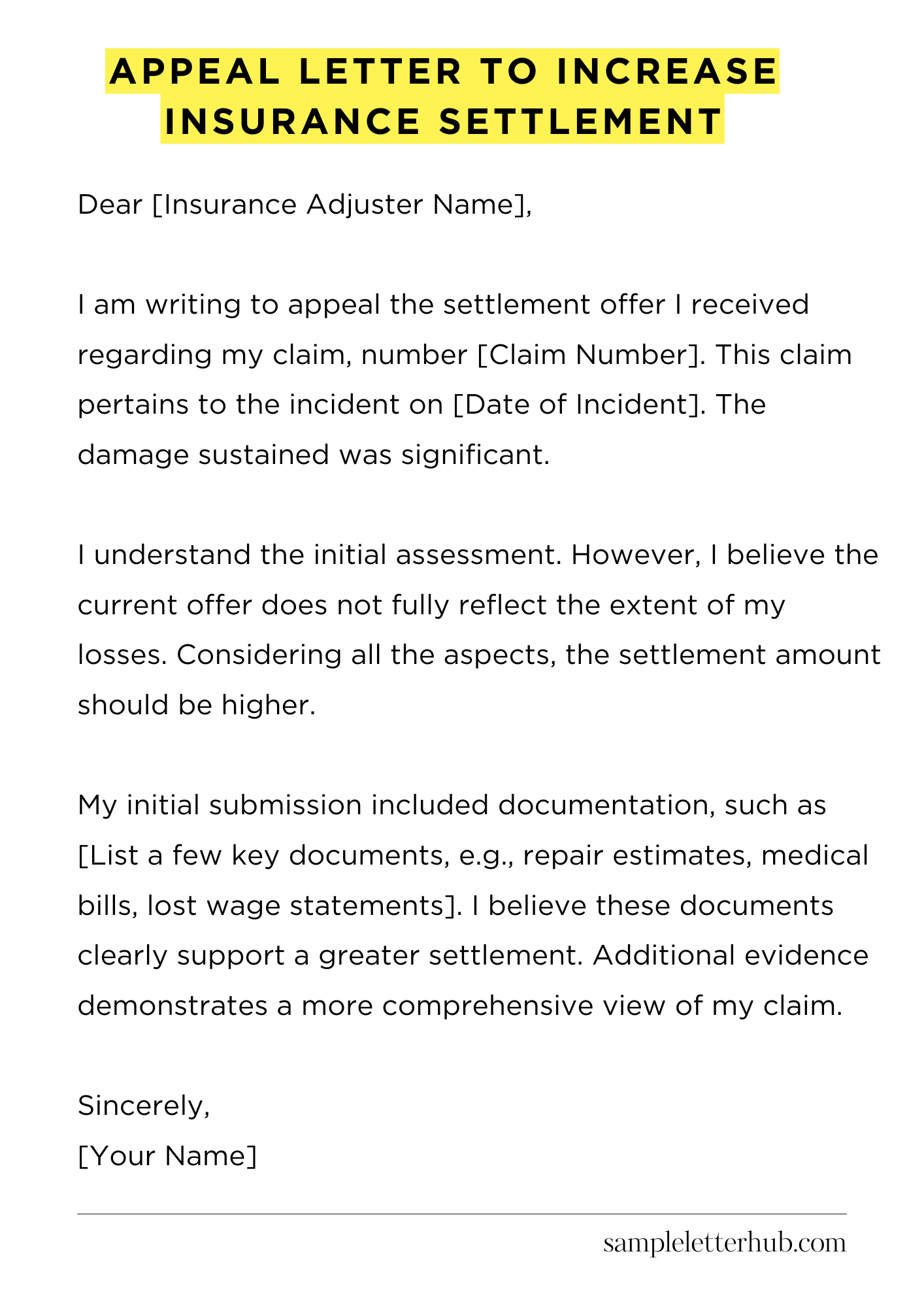
Dear [Insurance Adjuster Name],
I am writing to appeal the settlement offer I received regarding my claim, number [Claim Number]. This claim pertains to the incident on [Date of Incident]. The damage sustained was significant.
I understand the initial assessment. However, I believe the current offer does not fully reflect the extent of my losses. Considering all the aspects, the settlement amount should be higher.
My initial submission included documentation, such as [List a few key documents, e.g., repair estimates, medical bills, lost wage statements]. I believe these documents clearly support a greater settlement. Additional evidence demonstrates a more comprehensive view of my claim.
Specifically, I would like to draw your attention to [Mention specific areas where the settlement seems insufficient, and provide clear reasons. For instance: the cost of repairs, medical expenses, or lost income]. These points need further consideration.
Further, I have recently obtained [Mention any new evidence or documents, e.g., a supplemental report from a mechanic, a specialist’s bill]. This supporting information provides more details. I have attached copies of these documents for your review. The information provided is vital.
I kindly request that you reconsider the initial settlement offer. I am confident that a revised assessment will result in a more just and appropriate compensation. This is important for a just conclusion to the process.
Thank you for your time and attention to this matter. I look forward to hearing from you soon regarding this appeal. Please contact me at your earliest convenience to discuss this further. I appreciate your prompt response.
Sincerely,
[Your Name]
How to Write Appeal Letter to Increase Insurance Settlement
You’ve received an insurance settlement offer, but you feel it’s deficient. You believe you’re entitled to more. Now, what? You compose an appeal letter! This crucial document is your chance to sway the insurance adjuster and potentially augment your payout. Here’s a comprehensive guide to crafting a compelling appeal.
1. Scrutinize Your Policy and the Initial Offer
Before putting pen to paper (or fingers to keyboard), delve into your insurance policy with fastidious attention. Become thoroughly acquainted with the specifics. Understand the terms, exclusions, and coverage limits.
Next, meticulously analyze the initial settlement offer. Identify the specific items or aspects of your claim that were undervalued or omitted. This groundwork is paramount.
2. Gather Supporting Documentation: The Arsenal
Your appeal letter is only as potent as the evidence you furnish. Assemble a comprehensive collection of supporting documentation. This may include medical records (if applicable), repair estimates, photographs, witness statements, and any other evidence that buttresses your claim. Compile everything meticulously; this is your arsenal.
3. Craft a Professional and Persuasive Opening
Begin your letter with a polite, yet assertive, opening. Clearly state your policy number, claim number, and the date of the original settlement offer. Briefly outline your dissatisfaction with the offer. Indicate your intent to formally appeal the decision. Be direct; get right to the point with a powerful opening statement.
4. Detail the Discrepancies: The Core of Your Argument
This is where you marshal your arguments. Systematically outline each specific reason why you believe the initial settlement is inadequate. Cite precise examples.
Reference specific clauses from your insurance policy to demonstrate how the adjuster misinterpreted or misapplied the terms. Back up each point with clear, concise, and compelling evidence from your supporting documents. Don’t be vague; be explicitly persuasive.
5. Present Your Desired Outcome: The End Game
Explicitly state the revised settlement amount you’re requesting. Justify this amount by referencing the evidence you provided. Explain how you arrived at this figure, ensuring it aligns with policy terms and substantiated costs. Don’t be shy about stating what you want; it clarifies the objective.
6. Maintain a Respectful, Yet Firm, Tone
Even though you’re disagreeing with a decision, maintain a professional and respectful tone throughout the letter. Avoid accusatory language or personal attacks. However, don’t be afraid to be assertive in presenting your case. Diplomacy and firmness work best.
7. Finalize and Submit: The Last Step
Before sending, meticulously proofread your letter for any grammatical errors or typos. Ensure all attachments are included and properly labeled. Send your appeal letter via certified mail with return receipt requested.
This provides proof that the insurance company received your letter. Keep a copy of the letter and all supporting documentation for your records. Now, wait patiently for their response.
FAQs about Appeal Letter to Increase Insurance Settlement
What is an appeal letter for an insurance settlement, and why is it necessary?
An appeal letter is a formal document you send to an insurance company to challenge their initial settlement offer. It outlines why you believe the offer is insufficient, providing supporting evidence such as medical records, repair estimates, and lost wage documentation.
It becomes necessary when you disagree with the insurance company’s valuation of your claim, aiming to recover a more equitable amount for your damages or injuries.
What should be included in an effective appeal letter?
A well-crafted appeal letter should include a clear statement of disagreement with the original settlement, detailed explanations of why the offer is inadequate, and supporting evidence such as medical bills, photos of property damage, police reports, and witness statements.
It should also reference specific policy provisions relevant to your claim and clearly state the desired outcome, like a higher settlement amount.
What are the typical deadlines for submitting an appeal letter?
Insurance companies typically impose deadlines for appealing settlement offers, which are usually specified in the initial denial or settlement letter.
These deadlines can vary depending on the jurisdiction and policy terms but are commonly within a few weeks or months of the offer. It’s crucial to review the initial documentation carefully and adhere to the specified deadline to preserve your right to appeal.
What happens after I submit an appeal letter?
After you submit an appeal letter, the insurance company will review your submission and the provided supporting documentation. They may re-evaluate your claim, request additional information, or contact you for further discussion.
The insurance company might then issue a revised settlement offer, maintain its original decision, or, in some cases, deny the appeal. The outcome depends on the strength of your appeal and the insurer’s assessment.
When is it advisable to seek legal counsel when appealing a settlement?
Seeking legal counsel from a personal injury attorney is advisable when your claim involves significant damages, serious injuries, or complex legal issues. It’s also beneficial if you are unfamiliar with insurance claim procedures or if the initial settlement offer is far below your expectations.
An attorney can help navigate the appeal process, gather evidence, and negotiate with the insurance company on your behalf, potentially leading to a more favorable outcome.
Related:
Resignation letter due to rude boss
Resignation letter moving to another state
Resignation letter due to illness of family member
Resignation letter due to study