

An Accounts Assistant resignation letter is a formal notice. It’s written by an Accounts Assistant. The purpose? To officially inform their employer of their departure. It marks the end of employment.
Are you an Accounts Assistant looking to move on? You’ve come to the right place. We understand this can be a difficult task. We’ll provide different templates. You’ll find examples here. These will help you craft your own perfect resignation letter.
Think of these templates as your toolkit. Adapt them. Personalize them. This article makes your letter writing simple. Say goodbye to the stress.
Accounts Assistant Resignation Letter
Below is a sample of a Accounts Assistant Resignation Letter:
[Your Name]
[Your Address]
[Your Phone Number]
[Your Email Address]
[Date]
[Employer’s Name]
[Company Name]
[Company Address]
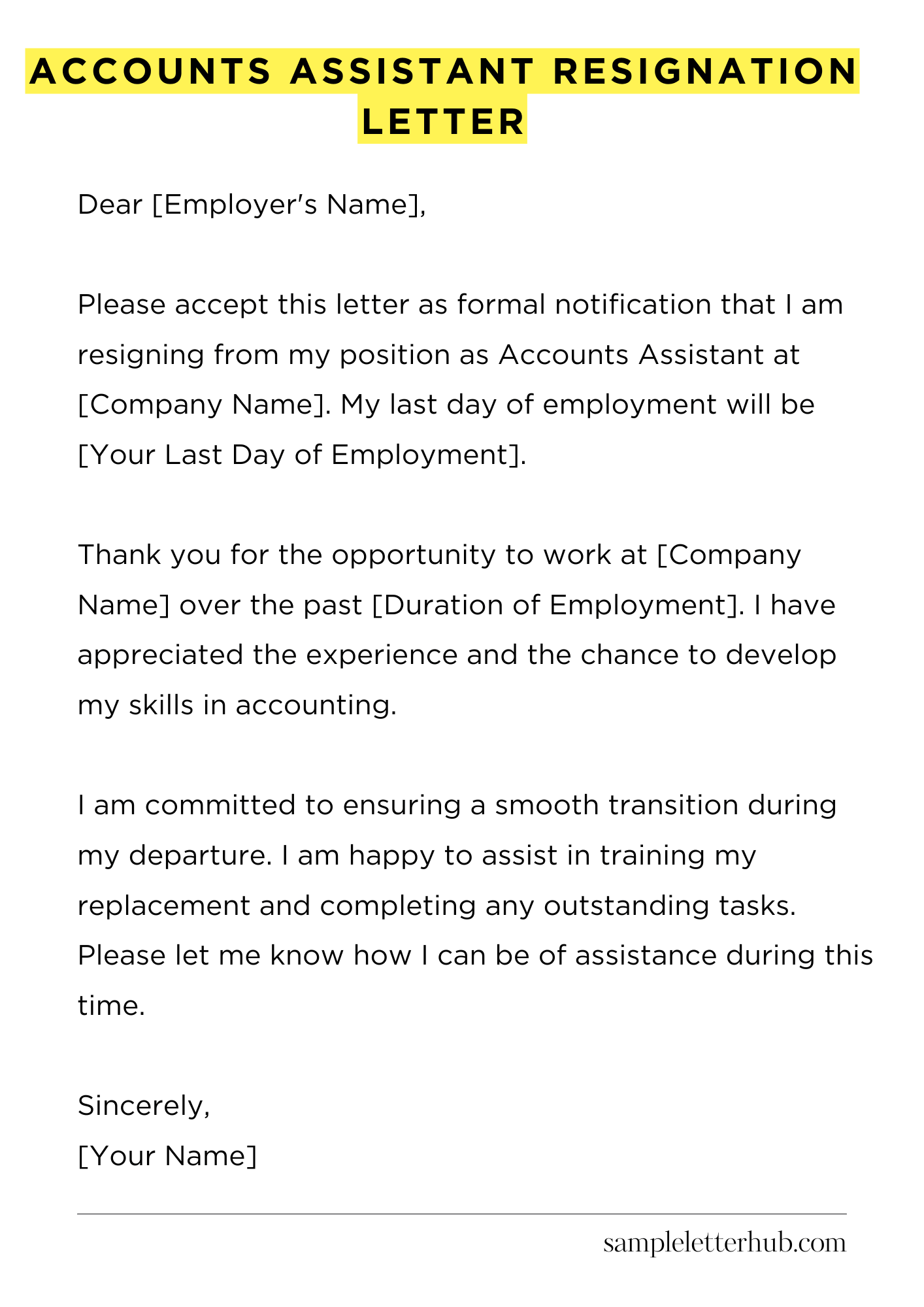
Dear [Employer’s Name],
Please accept this letter as formal notification that I am resigning from my position as Accounts Assistant at [Company Name]. My last day of employment will be [Your Last Day of Employment].
Thank you for the opportunity to work at [Company Name] over the past [Duration of Employment]. I have appreciated the experience and the chance to develop my skills in accounting.
I am committed to ensuring a smooth transition during my departure. I am happy to assist in training my replacement and completing any outstanding tasks. Please let me know how I can be of assistance during this time.
I wish [Company Name] continued success in the future.
Sincerely,
[Your Name]
How to Write an Accounts Assistant Resignation Letter
1. Getting Started: The Basics You Need
So, you’re moving on. Leaving a job always requires a professional touch. A well-crafted resignation letter is absolutely essential, especially for a role like an Accounts Assistant. Let’s make sure you start strong. Begin with your full name and contact information. Below that, include the date.
Next, address the letter to your direct supervisor or the appropriate person in HR. Keep it simple and clear. This is not the time for flowery language, but for simple directness.
Make sure this letter serves its purpose.
2. The Core: Your Formal Resignation
This is where you officially state your intent. Your opening sentence should clearly state your resignation. For instance, “Please accept this letter as formal notification that I am resigning from my position as Accounts Assistant, effective [Your Last Day of Employment].” The effective date is critical, so be sure of the date. Be concise; you do not need to be overly elaborate here.
This ensures there is no confusion.
3. Expressing Gratitude: Show Appreciation
Even if you’re not thrilled about leaving, it’s always wise to express gratitude. Briefly thank your employer for the opportunity to work there. Mention anything you learned or any specific experiences that were valuable.
This shows professionalism and leaves a positive impression, no matter what. Something like: “I am grateful for the opportunities I’ve been given during my time here and for the skills I have developed.”
Remember, bridges should not be burned.
4. Detailing the Handover: Offer Assistance
Offer assistance with the transition. Assure your employer that you’re willing to help train your replacement or complete any ongoing tasks. This is a very important part of writing a good resignation letter. It demonstrates your commitment to a smooth handover and makes you look good.
Something like: “I am happy to assist in training my replacement and completing my current projects to ensure a seamless transition.”
Your colleagues will appreciate it.
5. Closing and Formatting: Finishing Strong
Conclude your letter with a professional closing, such as “Sincerely” or “Best Regards.” Sign your name above your typed name. Proofread the entire letter meticulously before sending it. Check for any errors in spelling, grammar, and punctuation. The format should be clean and easy to read.
Use a standard font like Arial or Times New Roman, and keep your letter to a single page.
Make sure your letter is perfect before you send it!
FAQs about Accounts Assistant resignation letter
A well-crafted resignation letter is crucial for a smooth transition when leaving your role as an Accounts Assistant. Here are some frequently asked questions to guide you through the process:
What essential information should I include in my Accounts Assistant resignation letter?
Your resignation letter should contain the following essential information: a clear statement of your intent to resign, your official last day of employment, a brief expression of gratitude for the opportunity, and your signature. It’s also advisable to include your contact information for future correspondence. Avoid overly negative statements about the company or colleagues.
How much notice should I give when resigning from my Accounts Assistant position?
The standard notice period is typically two to four weeks. However, this can vary based on your employment contract or company policy. Always review your employment agreement to determine the required notice period. Adhering to the agreed-upon timeframe ensures a professional departure and avoids potential contractual issues.
Should I provide a reason for resigning in my Accounts Assistant resignation letter?
You are not obligated to provide a specific reason for leaving. A concise statement expressing your intention to pursue other opportunities or personal reasons is sufficient. If you choose to elaborate, keep it brief and positive. Avoid detailed criticisms or grievances.
Can I use a template for my Accounts Assistant resignation letter?
Yes, using a template can be a helpful starting point. Numerous templates are available online. However, it’s crucial to personalize the template to reflect your specific situation and experiences. Ensure the language is professional and tailored to your relationship with your employer.
How should I deliver my Accounts Assistant resignation letter?
The most professional method is to deliver a physical, signed copy of your resignation letter to your direct supervisor or the appropriate HR representative. You should also consider sending a digital copy via email for record-keeping purposes. Make sure to schedule a meeting with your supervisor to discuss your resignation in person before handing over the letter.
Related:
Resignation letter due to rude boss
Resignation letter moving to another state
Resignation letter due to illness of family member
Resignation letter due to study