


Ever wonder where your medical insurance claim is? A letter to ask about pending medical insurance claim is your tool. It is a simple, written request. Its purpose? To get updates on claims filed with your insurance provider. You need to know the status.
Do you need help writing that crucial letter? Don’t worry, we’ve got you. We’re sharing easy-to-use samples today. We have crafted templates and examples just for you. They will simplify your letter writing task.
These letter samples are easy to adapt. You can personalize them. We hope these templates make your life easier. Get ready to draft those essential letters.
[Your Name]
[Your Address]
[Your Phone Number]
[Your Email Address]
[Date]
[Insurance Company Name]
[Insurance Company Address]
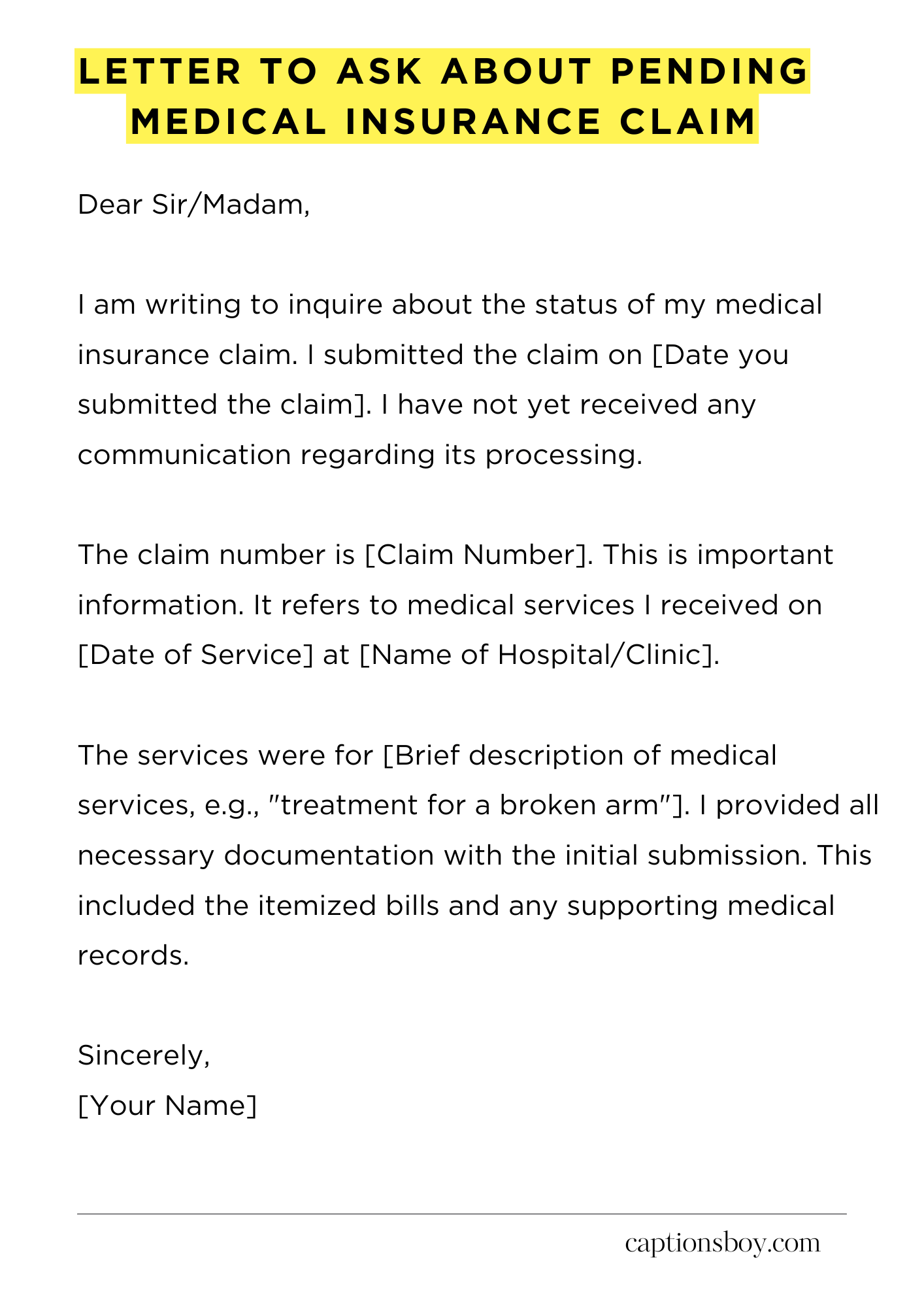
Dear Sir/Madam,
I am writing to inquire about the status of my medical insurance claim. I submitted the claim on [Date you submitted the claim]. I have not yet received any communication regarding its processing.
The claim number is [Claim Number]. This is important information. It refers to medical services I received on [Date of Service] at [Name of Hospital/Clinic].
The services were for [Brief description of medical services, e.g., “treatment for a broken arm”]. I provided all necessary documentation with the initial submission. This included the itemized bills and any supporting medical records.
I understand that claim processing can sometimes take a while. However, I would appreciate an update on its current status. Could you please let me know if there are any outstanding issues? Maybe there’s information missing.
Could you also inform me of the estimated date of completion? I would be very grateful. I would like to know when I can expect a decision on my claim.
Thank you for your time and attention to this matter. I look forward to hearing from you soon. You can contact me at the phone number or email address provided above.
Sincerely,
[Your Name]
How to Write Letter to Ask About Pending Medical Insurance Claim
Navigating the labyrinthine world of medical insurance claims can be a Herculean task. Sometimes, despite your best efforts, claims linger in a state of purgatory. When this occurs, a well-crafted letter can serve as your advocate. It can provide clarity and expedite the process.
1. Commence with a Cogent Introduction
Your missive should begin with a crisp, professional introduction. State the purpose of your letter immediately. This is not a time for ambiguity; clarity is paramount. Concisely mention you are inquiring about a claim. Include the claim’s specific reference number, if applicable. Identify the policyholder, and the patient receiving the treatment for which the claim was filed. This will provide the recipient with the precise parameters they need to address your query.
2. Detail Pertinent Information
Next, provide a comprehensive overview of the claim. Be explicit about the dates of service. Elaborate on the medical services rendered. Specify the amounts billed by the healthcare provider. Attach copies of the relevant documents to support your assertion. This includes the medical bills and any relevant Explanation of Benefits (EOB) statements. The more granular the data you provide, the better equipped the insurance company will be to adjudicate the claim. In this section, ensure you outline what you expect from the insurance company.
3. Articulate Your Queries
Now is the time to express your specific concerns. Is the claim being stalled? Is there a particular aspect of the claim that is causing the delay? Are there discrepancies between your records and the insurer’s records? Frame your questions clearly and politely. This will set the tone for a helpful dialogue. Asking precise questions will help clarify the status of your claim. This is very important.
4. Include Supporting Documentation
This cannot be emphasized enough: Always enclose copies of any documentation. This may include the original medical bills, receipts, or any correspondence that supports your claim. Avoid sending originals, as they could potentially be lost. Maintain a personal file of the documents you have sent. This will allow you to track your claims. This provides documentation to support your case.
5. Maintain a Professional Demeanor
Even if you feel frustration, it is imperative to maintain a professional tone throughout the letter. Avoid accusatory language. The goal is to seek information and resolution. The use of respectful language helps ensure a constructive exchange. The reader is more likely to be willing to assist when the approach is courteous.
6. Provide Contact Information
Include your full name, address, and phone number. Also, it is prudent to provide an email address. This ensures that the insurance company has multiple avenues to contact you. Ensure this information is accurate. This will facilitate effective communication and expedite the processing of your request. This helps the insurance company to revert with the information.
7. Conclude with a Call to Action
Conclude your letter with a clear call to action. State precisely what you expect the insurance company to do. Do you need an update on the claim’s status? Are you expecting a resolution? Be explicit in your request. Express your willingness to provide further information if necessary. End your letter with a formal closing and your signature. Thank them for their time and assistance. By following these steps you will improve your chances of a successful and timely resolution.
FAQs about Letter to Ask About Pending Medical Insurance Claim
What information should I include in a letter to inquire about a pending medical insurance claim?
Your letter should clearly state your full name, policy number, date of service for the claim, and the specific service or treatment for which you are seeking reimbursement. Include the claim number if you have it. Briefly explain the reason for your inquiry and state that you are following up on the pending claim. Provide any additional relevant details, such as the provider’s name and any reference numbers mentioned in previous communications. Always keep a copy of the letter for your records.
What is the best way to address a letter to an insurance company about a pending claim?
Address your letter to the Claims Department of your insurance company. If you know the name of a specific claims adjuster handling your case, address the letter to them directly. Include the insurance company’s full mailing address. Ensure the letter is typed or clearly handwritten and dated.
How long should I wait before sending a letter to inquire about a pending medical insurance claim?
Most insurance companies have a timeframe for processing claims. While this timeframe varies, it is generally best to wait at least 30-45 days after submitting the claim before sending a follow-up letter. This allows sufficient time for the insurance company to process and review the claim. However, you should check your insurance policy for specific guidelines or waiting periods.
Can I send my inquiry about a pending medical insurance claim electronically?
Many insurance companies now accept inquiries via email or through their online portals. Check your insurance company’s website for specific instructions on how to submit inquiries electronically. While electronic submission can be convenient, it’s essential to retain a copy of your email or online submission for your records, just as you would with a paper letter. Be mindful of any security protocols or privacy policies when sending personal medical information electronically.
What should I do if my letter to inquire about a pending medical insurance claim doesn’t get a response?
If you do not receive a response to your initial letter within a reasonable timeframe (typically 2-4 weeks), follow up with a second letter. You can resend the original letter or include a brief reference to the first letter, noting the date it was sent. If you still don’t receive a response, consider contacting the insurance company by phone or sending a formal complaint, which may require you to follow specific procedures outlined in your insurance policy or by your state’s insurance commission.
Related:
Resignation letter due to rude boss
Resignation letter moving to another state
Resignation letter due to illness of family member
Resignation letter due to study
Resignation letter due to long commute