

Need your insurance statement? Sometimes you need official documentation. A letter requesting insurance statement is the way to go. This letter formally asks your insurance company for a copy of your insurance policy details. It serves as proof of coverage, claims, or other important information.
Don’t sweat crafting the perfect letter. We’ve got you covered. This article offers ready-made letter requesting insurance statement templates. We’ll also share various samples and examples to guide you. Use these to easily create your own insurance statement request letter.
Writing a formal letter can be hard. We’ve simplified it. We’re providing tools to streamline the process. You can adapt these letter samples for your specific needs. Get your insurance statement without the hassle.
[Your Name/Your Company Name]
[Your Address]
[Your Phone Number]
[Your Email Address]
[Date]
[Insurance Company Name]
[Insurance Company Address]
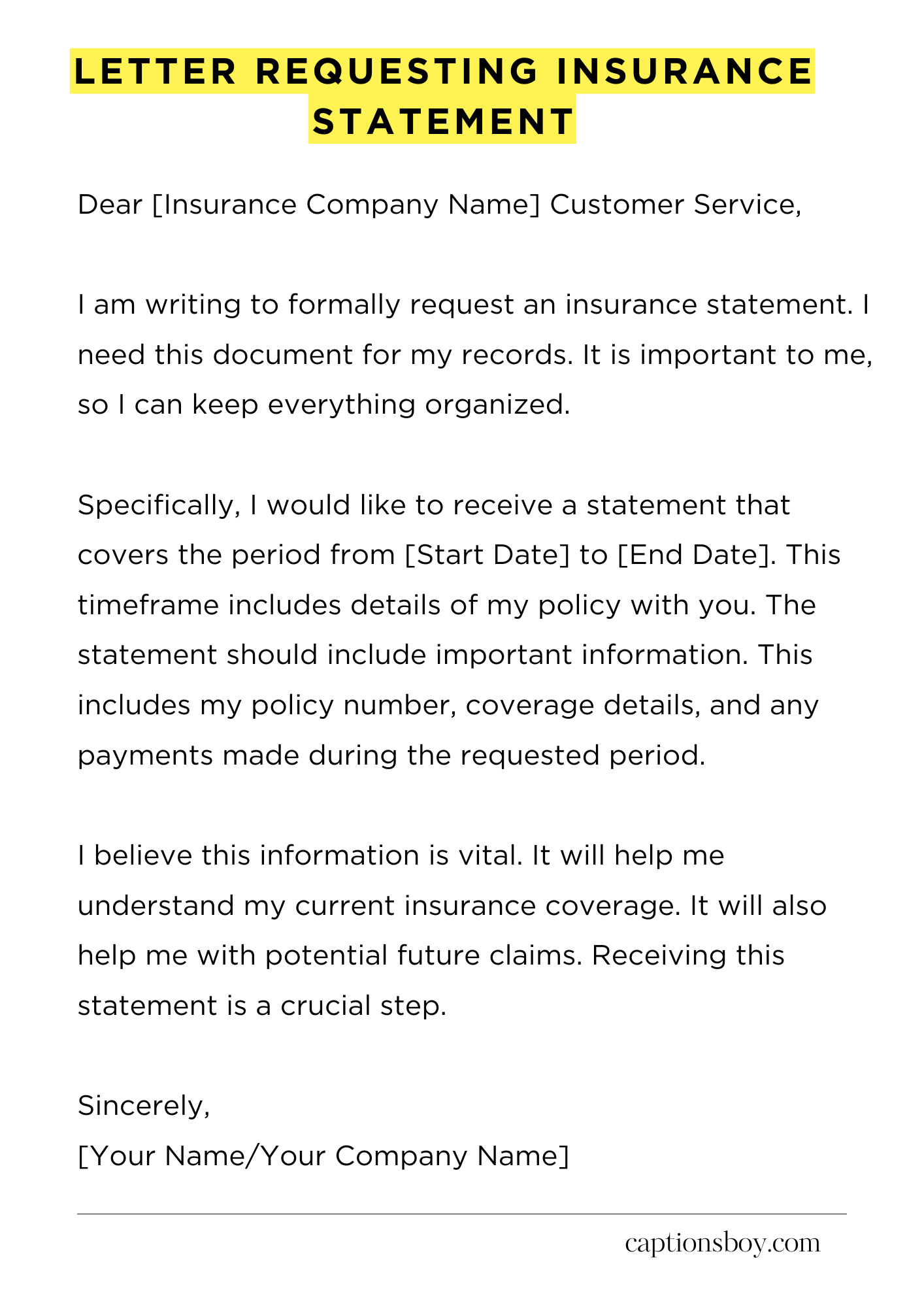
Dear [Insurance Company Name] Customer Service,
I am writing to formally request an insurance statement. I need this document for my records. It is important to me, so I can keep everything organized.
Specifically, I would like to receive a statement that covers the period from [Start Date] to [End Date]. This timeframe includes details of my policy with you. The statement should include important information. This includes my policy number, coverage details, and any payments made during the requested period.
I believe this information is vital. It will help me understand my current insurance coverage. It will also help me with potential future claims. Receiving this statement is a crucial step.
Could you please send the requested statement to my address, as shown above? Alternatively, you can send it to my email address. Sending it electronically would be quicker for me. Please let me know if there are any fees associated with obtaining this statement.
Thank you very much for your time and assistance. I appreciate your prompt attention to this matter. I look forward to hearing from you soon and receiving the requested documents.
Sincerely,
[Your Name/Your Company Name]
How to Write Letter Requesting Insurance Statement
Need an insurance statement but not sure how to request one? Don’t fret! Drafting a cogent letter is simpler than you might realize. Here’s a comprehensive guide to crafting a persuasive letter requesting an insurance statement. Follow these steps and watch the information roll in!
1. Commence with Proper Salutation
Begin your missive with a formal salutation. Address the letter to the appropriate entity, such as the insurance company’s claims department or a designated agent. Using a specific name, if available, can personalize the correspondence. For example, use “Dear Claims Adjuster,” or “Dear Mr./Ms. [Last Name],” if you know it.
2. Declare Your Purpose with Clarity
Immediately state the purpose of your letter. This needs to be forthright. Be blunt! Your goal is to obtain an insurance statement. You should specify which type of statement you require (e.g., policy statement, claim history, etc.). For instance, you might write, “I am writing to request a copy of my policy statement for policy number [Policy Number].” Don’t dilly-dally!
3. Furnish Pertinent Information
Provide all relevant details to facilitate the search. This is very important. Include your full name, address, contact information (phone number, email), and the policy number associated with the insurance coverage. If the request pertains to a specific claim, include the claim number and date of the incident. The more data you provide, the quicker and easier it will be to get your statement.
4. Enunciate the Specifics of the Statement
Be explicit about the details you require within the statement. Clarify the time frame you need the information for. Specify any particular information required such as covered perils, premium payments, deductible amounts, or any relevant details. This specificity diminishes the likelihood of misunderstandings and ensures you receive the desired information.
5. Make a Polished Plea
Kindly request the statement. Reiterate your need for the document. State the reason you require the statement. Be professional, and polite, without being verbose. For example, “I would appreciate it if you could send the statement at your earliest convenience.”
6. Add the Necessary Closing
Conclude your letter with a formal closing and your signature. Use a professional closing, such as “Sincerely,” or “Respectfully,” followed by your full name and signature. If sending a digital letter, consider including a typed signature, and then printing the signed letter.
7. Delivery and Documentation
Choose the right channel to deliver your request. Decide the method of delivery, which could include mail, email, or a company’s online portal (if available). Always retain a copy of the letter for your records. If sending via mail, consider using certified mail with return receipt requested to confirm delivery and establish a paper trail. Document all communication related to the request, including dates, times, and responses. This ensures you have a record of your request and any subsequent interactions with the insurance company.
FAQs about Letter Requesting Insurance Statement
What is the primary purpose of a letter requesting an insurance statement?
The main objective of a letter requesting an insurance statement is to obtain an official record from an insurance company. This record details the coverage information, policy period, and any claims made under the policy. This document is frequently required for various purposes, including legal proceedings, obtaining other insurance policies, or verifying coverage with a third party.
What information should be included in a letter requesting an insurance statement?
A well-drafted request should include the policyholder’s full name, address, and policy number. Additionally, it should clearly specify the type of statement required (e.g., proof of coverage, claims history). The letter should also state the time period the statement should cover and provide the requestor’s contact information. It is helpful to also mention the purpose for needing the statement as it may expedite the process.
How should a letter requesting an insurance statement be delivered to the insurance company?
The preferred method of delivery varies based on the insurance company’s policies. Common methods include postal mail, email, and online portals. Check the insurance company’s website or policy documents to determine their preferred method. If possible, consider sending the letter via certified mail with a return receipt requested to ensure proof of delivery. Many companies offer forms for requesting the information online.
How long does it typically take to receive an insurance statement after a request is made?
The turnaround time can vary depending on the insurance company’s internal processes and the complexity of the request. Generally, it can take anywhere from a few days to several weeks. Factors such as the volume of requests the company is handling, and how old the data is could affect the timeline. Contacting the insurance company after a reasonable amount of time is a good idea if you have not received a response.
What should I do if I disagree with the information provided in the insurance statement?
If you find any discrepancies or inaccuracies in the insurance statement, it’s crucial to contact the insurance company immediately to rectify the situation. Gather any supporting documentation that clarifies the errors, such as previous policy documents, payment records, or communication with the insurance company. Submit this documentation to the insurance company and request a revised statement. Keep records of all communication with the insurance company.
Related:
Resignation letter due to rude boss
Resignation letter moving to another state
Resignation letter due to illness of family member
Resignation letter due to study
Resignation letter due to long commute