

Facing tough times? Life throws curveballs. Unexpected events can make paying your home loan insurance a real struggle. A hardship letter for home loan insurance payment can help. It’s a written plea to your lender. The goal? To explain your situation and potentially get help. This could be a temporary payment reduction or other loan modifications.
Understanding how to write a good hardship letter is key. We’ve got you covered. This article provides helpful hardship letter for home loan insurance payment examples. We share various templates and samples. Use these hardship letter samples to create your own.
Our goal is to make it easier for you. Writing a compelling hardship letter can feel daunting. These sample hardship letters act as a great starting point. Customize these hardship letter examples to fit your unique circumstances. Get the help you deserve today.
[Your Name]
[Your Address]
[Your Phone Number]
[Your Email Address]
[Date]
[Insurance Company Name]
[Insurance Company Address]
Dear Sir/Madam,
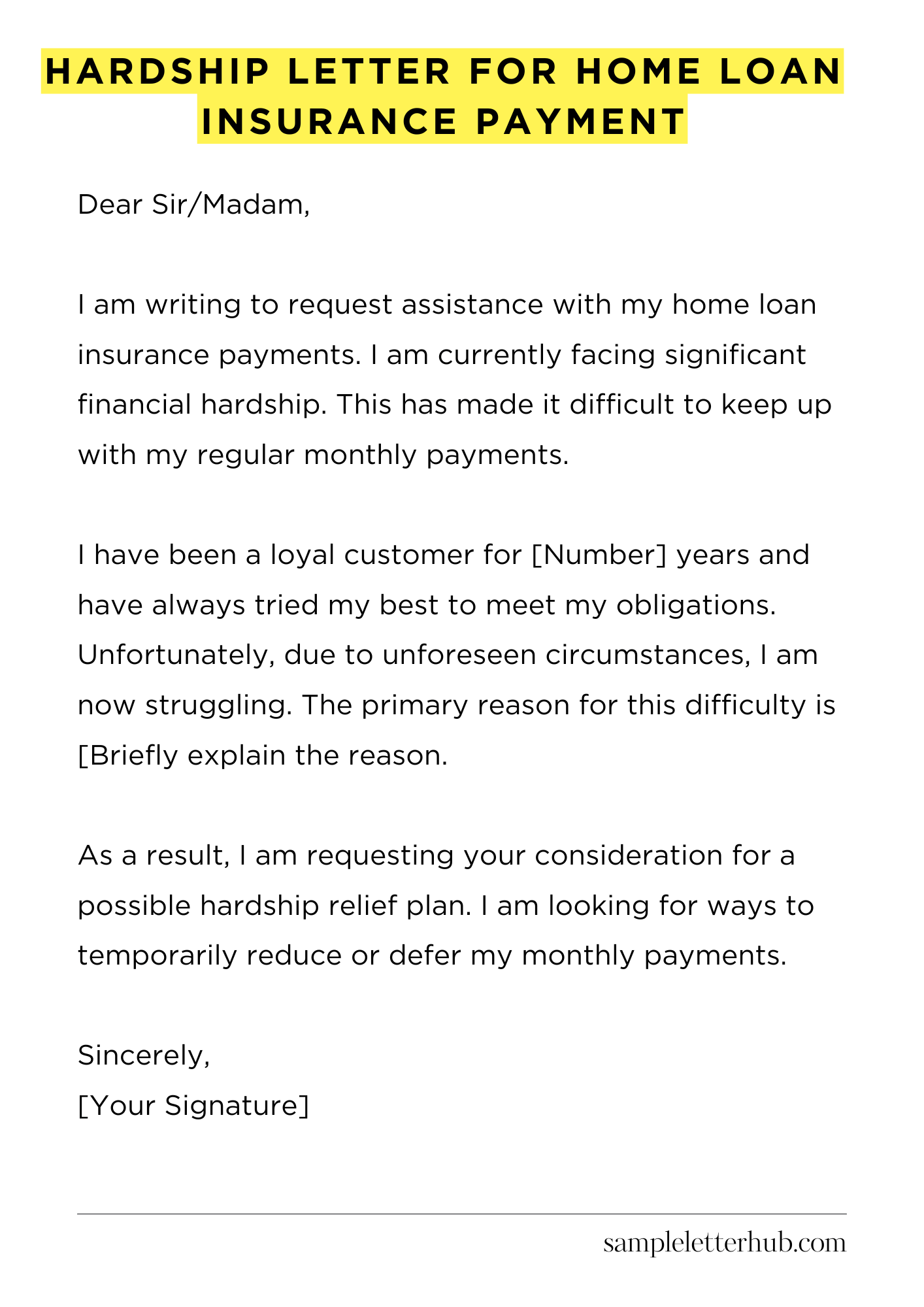
I am writing to request assistance with my home loan insurance payments. I am currently facing significant financial hardship. This has made it difficult to keep up with my regular monthly payments.
I have been a loyal customer for [Number] years and have always tried my best to meet my obligations. Unfortunately, due to unforeseen circumstances, I am now struggling. The primary reason for this difficulty is [Briefly explain the reason, e.g., loss of employment, unexpected medical bills, etc.]. This has drastically impacted my income.
As a result, I am requesting your consideration for a possible hardship relief plan. I am looking for ways to temporarily reduce or defer my monthly payments. I am open to discussing various options that would help me manage my current situation. Perhaps we could explore a temporary payment reduction. Or maybe we can consider a payment holiday.
I have attached supporting documentation to help demonstrate my current financial situation. These documents include [List documents, e.g., bank statements, unemployment verification, medical bills]. I am committed to resolving this issue and returning to my regular payment schedule as soon as possible. I want to keep my home and protect my family.
I would be grateful if you could review my request and contact me to discuss potential solutions. I am available to speak at your earliest convenience. You can reach me at the phone number above or by email.
Thank you for your time and understanding in this matter. I look forward to your prompt response.
Sincerely,
[Your Signature]
How to Write Hardship Letter for Home Loan Insurance Payment
1. Grasping the Tenets of a Hardship Letter
A hardship letter, often a pivotal instrument in navigating financial straits, serves as a compelling appeal to your mortgage servicer. Its essence lies in substantiating your inability to fulfill your home loan insurance payment obligations due to unforeseen, extenuating circumstances. It is your earnest attempt to persuade the lender to offer.
2. Prepping the Canvas: Data Gathering and Documentation
Prior to embarking on the actual writing process, meticulous preparation is paramount. You need to compile all pertinent documentation that supports your claim of hardship. Collect bank statements, pay stubs, medical bills, insurance claims denials, unemployment benefit notifications, and any other evidence that buttresses your case.
The more evidence you can marshal, the stronger your petition will appear. This preparatory phase is the bedrock of a successful letter.
3. The Opening Salvo: Establishing the Context
Begin your letter with a clear and concise introduction. Identify yourself, your loan details (loan number, property address), and the purpose of your communication. State unequivocally that you are writing to request assistance with your home loan insurance payment due to a demonstrable hardship. Clarity and brevity are your allies here; a succinct introduction lays a sturdy foundation.
4. Unveiling the Crucible: Detailing the Hardship
This is the crux of your narrative. Articulate the specific circumstances that have befallen you and have led to your financial strain. This is where you tell your story. Be forthright, factual, and detailed in your explanation.
Examples of hardships include job loss, reduced income, unexpected medical expenses, natural disasters, or the death of a primary wage earner. Specify the precise date the event occurred and how it has impacted your ability to meet your financial obligations.
5. Illuminating the Ripple Effects: Explaining the Consequences
Go beyond merely stating the hardship; explain its consequences. Detail how your hardship has specifically affected your income and expenses, leading to your inability to pay your home loan insurance.
Demonstrate a direct causal link between the hardship and your financial predicament. Presenting a clear analysis of your financial situation will assist the lender to empathize with your struggle.
6. Proposing A Remedy: Suggesting Potential Solutions
Propose the remedial measures you believe are appropriate. This shows the lender you are proactive and willing to find a solution. Consider requesting a temporary forbearance, loan modification, or a payment plan. Be realistic in your requests. Avoid suggesting options you cannot realistically execute. Demonstrate your commitment to remedying the situation.
7. The Parting Shot: Closing and Submission
Conclude your letter with a formal closing and reiterate your commitment to resolving the issue. Express your gratitude for their consideration and understanding.
Provide your contact information (phone number, email address) to facilitate prompt communication. Sign and date the letter. Send the letter along with all supporting documentation via certified mail with return receipt requested. This ensures proof of delivery and receipt.
FAQs about Hardship Letter for Home Loan Insurance Payment
What is a hardship letter for a home loan insurance payment?
A hardship letter, in the context of home loan insurance, is a formal written request submitted to your insurance provider or lender. It outlines the specific financial difficulties you are experiencing, which prevent you from making timely mortgage insurance payments.
The letter aims to explain your situation, detailing the circumstances causing the hardship, and requests assistance such as payment forbearance, modification of payment plans, or other forms of relief.
What should I include in a hardship letter?
A comprehensive hardship letter typically includes several key elements. Start by clearly identifying yourself, your loan details, and the insurance policy information. Then, provide a detailed description of the hardship, including the date it began and its impact on your finances. Document the reason for your hardship, such as job loss, illness, or unexpected expenses.
Quantify the financial impact by providing specific income and expense figures. Include any supporting documentation, like medical bills or unemployment verification, and clearly state the specific relief you are requesting, such as temporary payment reduction or forbearance. Finally, sign and date the letter.
What types of hardships are typically accepted when writing this letter?
Lenders and insurance providers typically consider a range of hardships. These often include job loss or reduction in income, which significantly impacts your ability to make payments. Illness or medical emergencies, resulting in substantial healthcare costs, are also commonly accepted.
Other accepted circumstances include death of a borrower or co-borrower, divorce or separation resulting in loss of income or increased expenses, natural disasters or property damage not covered by insurance, and unexpected major expenses like car repairs. The specific circumstances accepted may vary depending on the lender and insurance policy.
What happens after I submit a hardship letter?
After submitting a hardship letter, the lender or insurance provider will review your request and supporting documentation. They may contact you for additional information or clarification. The review process’s timeframe can vary, but generally, expect to wait several weeks.
The provider will then decide on your request, possibly offering options like payment forbearance, loan modification, or other forms of assistance. If approved, you will receive a formal agreement outlining the terms of the relief. If denied, the lender will provide an explanation, and you may have the option to appeal the decision, depending on your situation.
What are the possible outcomes after submitting a hardship letter?
The outcomes vary, depending on the severity of the hardship, the lender’s policies, and the borrower’s circumstances. A successful outcome can include temporary payment forbearance, allowing you to pause payments for a set period. Loan modifications, such as adjusted interest rates or extended repayment terms, are another possibility, helping lower monthly payments.
In some cases, you might be offered a repayment plan to catch up on missed payments. However, the outcome may also be denial, with the lender unwilling to grant assistance. It’s essential to understand that approval isn’t guaranteed and depends on your individual situation and eligibility.
Related:
Resignation letter due to rude boss
Resignation letter moving to another state
Resignation letter due to illness of family member
Resignation letter due to study