

A Medical Bill Hardship Letter is a formal document. Its purpose is simple. It asks for help with medical bills. People write it to hospitals, clinics, or collection agencies. They explain their financial difficulties.
We understand navigating medical bills can be stressful. That’s why we’re here to assist. This article offers helpful Medical Bill Hardship Letter samples. We’ll provide different templates. You can use them to create your own. It makes the process easier for you.
Need to draft a convincing letter? Our medical bill hardship letter examples cover various scenarios. From job loss to unexpected expenses. We’ll give you the tools. You can tailor them to fit your specific situation. This guide simplifies writing your letter.
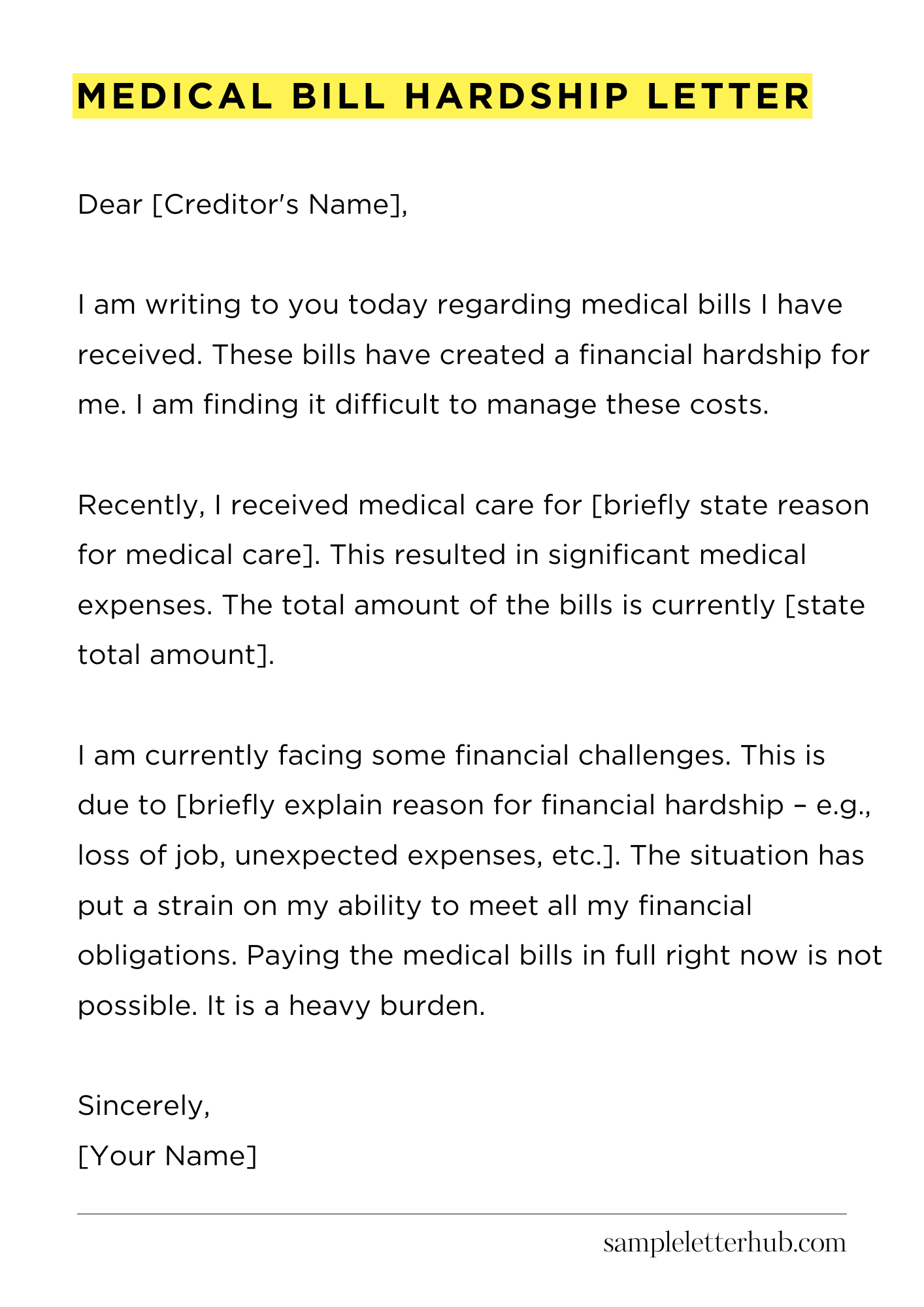
[Your Name/Address]
[Your Phone Number]
[Your Email Address]
[Date]
[Creditor’s Name/Address]
Dear [Creditor’s Name],
I am writing to you today regarding medical bills I have received. These bills have created a financial hardship for me. I am finding it difficult to manage these costs.
Recently, I received medical care for [briefly state reason for medical care]. This resulted in significant medical expenses. The total amount of the bills is currently [state total amount].
I am currently facing some financial challenges. This is due to [briefly explain reason for financial hardship – e.g., loss of job, unexpected expenses, etc.]. The situation has put a strain on my ability to meet all my financial obligations. Paying the medical bills in full right now is not possible. It is a heavy burden.
I would like to explore some options to resolve this matter. Perhaps we could set up a payment plan. Monthly payments would make things easier. I am also interested in discussing the possibility of a reduced payment. Any assistance would be greatly appreciated.
I have attached copies of [mention any supporting documents like income statements, bank statements, etc.]. These documents will show my financial situation. I am committed to resolving this debt. I want to work with you.
Please contact me at your earliest convenience. You can reach me by phone or email. Thank you for your time, consideration, and understanding in this difficult time. I look forward to hearing from you soon.
Sincerely,
[Your Name]
How to Write Medical Bill Hardship Letter
Navigating the complex realm of medical billing can feel like traversing a labyrinth. When faced with exorbitant medical expenses, drafting a hardship letter is often your most potent tool. This carefully constructed communication allows you to advocate for yourself and potentially alleviate some of the financial burden. Here’s a pragmatic guide on composing a compelling letter.
1. Commence with a Concise Header
Your letter’s commencement must be strategic. Begin with your full name, address, and contact information at the top left. On the right, date the document clearly. Below this, include the name of the hospital or the healthcare provider, their address, and any relevant department (e.g., Billing Department).
The formal commencement establishes the professional tone necessary for serious consideration.
2. Subject Line Significance
The subject line of your letter is a critical element, acting as a beacon of clarity. State: “Subject: Medical Bill Hardship – Account Number [Your Account Number]”
This immediately alerts the recipient to the letter’s purpose and facilitates efficient processing. A precise subject line streamlines the recipient’s ability to act upon your request promptly.
3. Crafting the Salutation
The salutation is a bridge between you and the recipient. Use a formal greeting: “Dear [Billing Department/Recipient Name, if known],”. If the recipient is unknown, use the more formal “To Whom It May Concern:”. Always strive for a respectful and professional demeanor. This demonstrates courtesy and respect in your communication.
4. Defining the Financial Predicament
The core of your hardship letter resides in articulating your financial circumstances. Be candid, yet concise. Specify the medical bill amount. Clearly outline the factors contributing to your financial distress. This may include job loss, unexpected medical expenses, significant income reduction, or other extenuating circumstances.
Provide concrete details and avoid vague assertions. Back up your statements by submitting supporting documentation such as pay stubs, bank statements, or unemployment verification.
5. Substantiating Your Case Through Pertinent Documentation
The strength of your argument rests on the supporting documentation. Provide copies (not originals) of all relevant documents. Examples include: pay stubs, tax returns, bank statements, documentation of government assistance (e.g., food stamps, Medicaid), and proof of any other financial obligations.
Organize these documents neatly and reference them clearly within your letter, such as: “Attached, you will find a copy of my most recent tax return, illustrating a significant decrease in income.” This systematic approach reinforces the validity of your claims.
6. Proposing an Equitable Resolution
In this section, articulate your desired outcome. This might involve a request for a payment plan, a reduction in the total bill, or a waiver of charges. Be realistic and consider the likely options.
The more specific your proposal, the easier it is for the provider to consider it. Propose options like monthly installments. Showing that you have a plan signifies your sincerity and willingness to meet your financial obligations in a manageable way.
7. Closing and Formalities
Conclude your letter with a professional and respectful closing. Use “Sincerely,” or “Respectfully,” followed by your full name and signature. If sending the letter electronically, you can type your name.
Consider providing your phone number and email address again. Proofread your letter meticulously for any errors in grammar and spelling before sending it. Make a copy of your letter and all attachments for your records. The meticulous execution of these final steps completes your persuasive appeal.
FAQs about Medical Bill Hardship Letter
What is a medical bill hardship letter, and why is it important?
A medical bill hardship letter is a formal document you send to a healthcare provider or collection agency to explain your inability to pay a medical bill. It’s important because it provides a clear and concise explanation of your financial situation, which may prompt the provider to offer discounts, payment plans, or even forgiveness of the debt.
What information should I include in a medical bill hardship letter?
A comprehensive hardship letter includes your personal and account information, the reason for your financial hardship (e.g., job loss, unexpected medical expenses, reduced income), a detailed description of your current financial situation, the amount you can realistically pay, and any supporting documentation.
Who should I send the medical bill hardship letter to?
The letter should be sent to the billing department of the healthcare provider or the collection agency handling the debt. Verify the correct address and contact information to ensure it reaches the appropriate recipient. Sending it via certified mail with a return receipt requested is recommended to confirm delivery.
Can a medical bill hardship letter guarantee that my bill will be reduced or forgiven?
No, a hardship letter does not guarantee bill reduction or forgiveness. However, it significantly increases your chances of receiving assistance. Healthcare providers and collection agencies will review your situation and determine their response based on their policies and the specifics of your case. The more thorough and well-documented your letter is, the stronger your case.
What happens after I send a medical bill hardship letter?
After sending the letter, the healthcare provider or collection agency will review your request. They may contact you for additional information. You should receive a written response outlining their decision, which could include a discounted payment amount, a payment plan, or a denial of your request. Keep a copy of the letter and all correspondence for your records.
Related:
Resignation letter due to rude boss
Resignation letter moving to another state
Resignation letter due to illness of family member
Resignation letter due to study