

Life throws curveballs. Sometimes, financial struggles make it tough to pay insurance premiums. A “Letter to Explain Premium Non-Payment Due to Financial Issues” is a written explanation. It tells your insurance company why you missed a payment. The goal is to avoid policy cancellation and potentially negotiate payment options.
This article is your guide. We’ll explore helpful templates. You’ll find examples of letters. These samples cover various situations. You can adapt them to your specific needs. They will help you craft a clear and effective letter of explanation. Writing this letter shouldn’t be difficult.
We want to empower you. These letter samples are easy to understand. Using these, you can address your insurance premium non-payment situation. Get started writing your letter to your insurance company with these letter examples!
[Your Name/Company Name]
[Your Address]
[Your Phone Number]
[Your Email Address]
[Date]
[Insurance Company Name]
[Insurance Company Address]
Dear Sir/Madam,
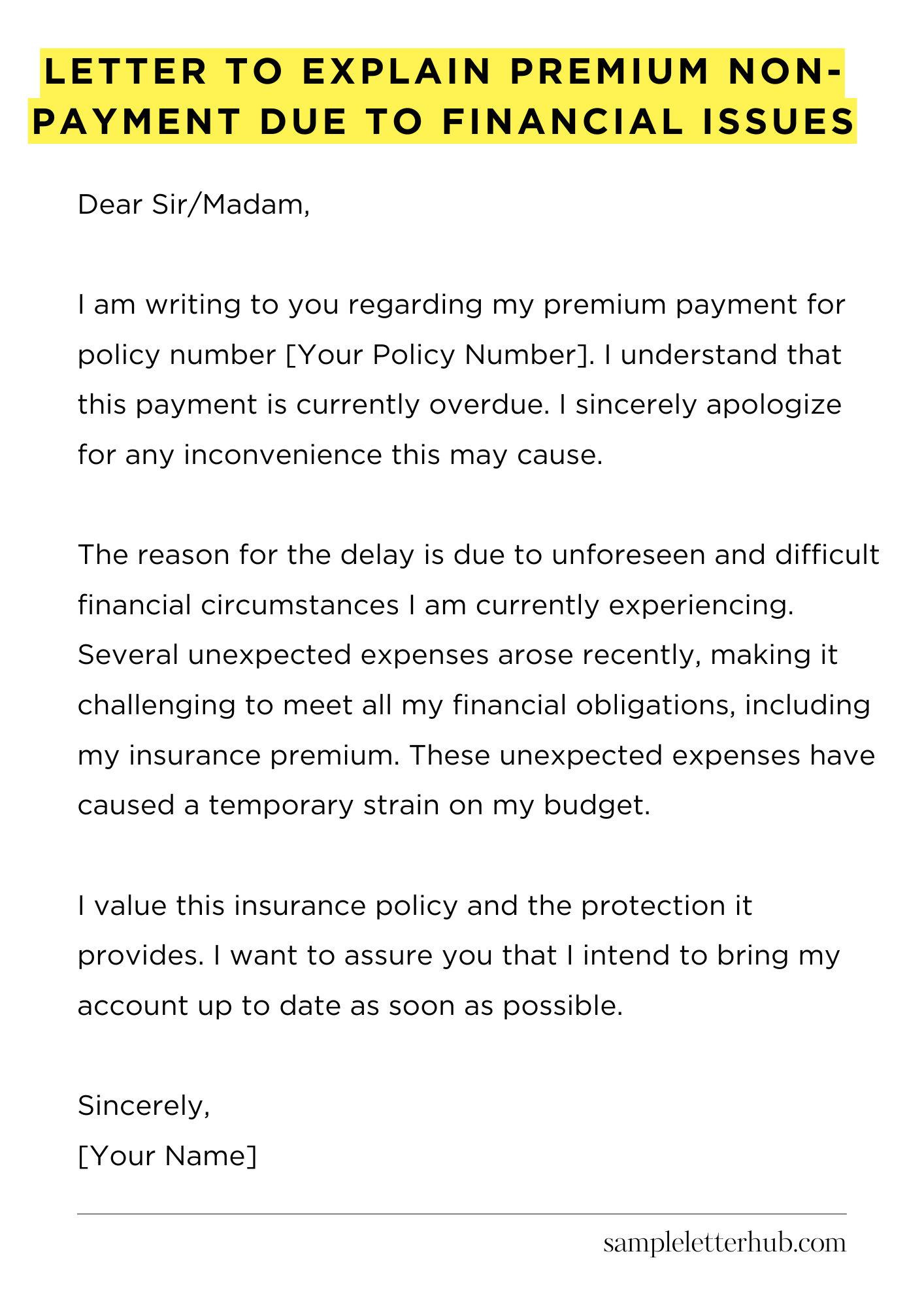
I am writing to you regarding my premium payment for policy number [Your Policy Number]. I understand that this payment is currently overdue. I sincerely apologize for any inconvenience this may cause.
The reason for the delay is due to unforeseen and difficult financial circumstances I am currently experiencing. Several unexpected expenses arose recently, making it challenging to meet all my financial obligations, including my insurance premium. These unexpected expenses have caused a temporary strain on my budget.
I value this insurance policy and the protection it provides. I want to assure you that I intend to bring my account up to date as soon as possible. I am actively working to resolve my financial issues. I am exploring different options and making necessary adjustments to my budget.
I anticipate being able to make the full payment within [Number] weeks/days, specifically by [Date].
Please let me know if this timeframe is acceptable. Could you please provide information on any late payment fees or options that may be available to me during this period? I would appreciate it if you could also inform me of any potential impact on my coverage during this time.
I would be grateful for your understanding and cooperation in this matter. Thank you for your time and consideration. I look forward to hearing from you soon.
Sincerely,
[Your Name]
How to Write Letter to Explain Premium Non-Payment Due to Financial Issues
Life throws curveballs, and sometimes, those pitches land right in your financial ballpark. This is often the impetus for writing a letter. Perhaps you find yourself unable to meet your insurance premium obligations. This guide will walk you through the essential elements of composing a compelling and effective letter to your insurer. Let’s get started.
1. Commence with a Formal Salutation
Your missive should begin with a polished salutation. Address the letter to the appropriate department or individual; this ensures it reaches the correct recipient and elicits a swift response.
Use a formal greeting such as “Dear [Insurance Company Name] Claims Department” or “Dear [Name of Agent]”. Avoid casual greetings; instead, prioritize a tone that reflects respect and professionalism.
2. The Opening Salvo: Clearly State Your Purpose
In the opening paragraph, articulate the intent of your letter directly and unambiguously. State that the purpose is to explain the non-payment of your insurance premium due to financial hardship. This sets the stage and prepares the reader for the subsequent details. Keep it succinct, and avoid any ambiguity.
3. Extrapolate on Your Financial Predicament
Here’s where you elaborate on the core issue: your financial predicament. Providing a concise yet comprehensive account of your situation is crucial. Be specific; mentioning job loss, unexpected medical bills, or other significant life events lends credence to your claims. Avoid hyperbolic language and stick to verifiable facts.
Consider providing supporting documentation, but only if you feel it strengthens your case. This is your chance to really explain yourself and seek assistance.
4. Articulate the Impact and Subsequent Actions
Detail how your financial situation has directly impacted your ability to pay your premium. Discuss the repercussions of non-payment. This is a critical point.
Furthermore, indicate any immediate steps you’ve already taken to rectify the situation, for example, contacting financial advisors. Demonstrate you are taking proactive measures to manage your financial distress and your responsibilities.
5. Propose a Resolution and Negotiate
Offering a solution is a demonstration of good faith and active engagement. Suggest a payment plan, a temporary reduction in coverage, or any other viable alternative that addresses your specific circumstances.
Be reasonable and flexible; this enhances the prospects of a favorable outcome. This is where you have the opportunity to negotiate with the insurance company.
6. Concluding with a Professional Closing and Contact Information
Finish your letter with a formal closing, such as “Sincerely” or “Respectfully”. Include your full name, policy number, address, phone number, and email address. This provides the insurer with all the necessary information to respond promptly and efficiently. Make sure your contact information is up to date.
7. Proofread and Proofread Again: Prioritize Accuracy
Before submitting your letter, meticulously proofread it for any grammatical errors or typos. Errors detract from credibility. Ensure your tone is professional and respectful throughout.
Consider having a second set of eyes review the document. A well-crafted letter speaks volumes and significantly increases the likelihood of a positive outcome. Taking the time to craft a comprehensive letter will ultimately help to increase your chances of having a plan set in motion for your future payments.
FAQs about Letter to Explain Premium Non-Payment Due to Financial Issues
What is the primary purpose of a letter explaining premium non-payment?
The primary purpose of such a letter is to formally notify an insurance provider that you are unable to make your premium payments on time due to financial hardships.
It serves as a means of communication to explain the circumstances leading to the non-payment, often with the hope of maintaining coverage, negotiating payment plans, or avoiding policy cancellation.
What key information should I include in the letter?
Your letter should include your policy number, the date, your full name, and contact information. Be sure to clearly state that you are experiencing financial difficulties that prevent you from making timely premium payments.
Explain the reasons for these difficulties (e.g., job loss, medical bills). Include any supporting documentation if possible, and state your desired outcome, such as requesting a payment plan or temporary coverage suspension. End with a courteous closing.
What supporting documents should I consider attaching to the letter?
Attaching supporting documents can bolster your case and provide evidence of your financial hardship. Examples include a copy of a notice of unemployment, medical bills, bank statements indicating reduced income or increased expenses, or other relevant financial records. The specific documents needed will depend on your individual circumstances.
How should I format the letter and where should I send it?
The letter should be professionally formatted, typed or clearly handwritten, and concise. It should be addressed to the insurance company’s billing or customer service department. It is advisable to send the letter via certified mail with return receipt requested to ensure proof of delivery. Keep a copy for your records.
What are the possible outcomes after sending the letter?
The insurance company may respond in several ways. They might offer a payment plan, temporarily suspend your coverage, request additional information, or deny your request.
The outcome depends on the insurance company’s policies, your specific situation, and your willingness to negotiate. It is essential to carefully review the company’s response and any proposed solutions. Failure to agree to any proposed arrangements or adhere to terms may result in policy cancellation.
Related:
Resignation letter due to rude boss
Resignation letter moving to another state
Resignation letter due to illness of family member
Resignation letter due to study