

Ever notice a mistake on your insurance bill? You’re not alone. A “Letter to Dispute Incorrect Premium Charges” is your official way to challenge those errors. Its purpose? To formally request a correction and potentially get a refund for overcharged insurance premiums. It helps you communicate clearly.
This article is your guide to writing an effective dispute letter. We’ll share letter to dispute incorrect premium charges samples. You’ll find templates, examples, and ready-to-use formats. This makes it easy to dispute insurance charges. Writing a strong letter is now effortless.
Whether it’s health insurance, auto insurance, or another policy, we’ve got you covered. You will be able to deal with your insurance premium dispute issues. These easy-to-adapt templates will guide you. Save time and money, and take control!
[Your Name]
[Your Address]
[Your Phone Number]
[Your Email Address]
[Date]
[Insurance Company Name]
[Insurance Company Address]
Subject: Dispute of Incorrect Premium Charges – Policy Number [Your Policy Number]
Dear Sir or Madam,
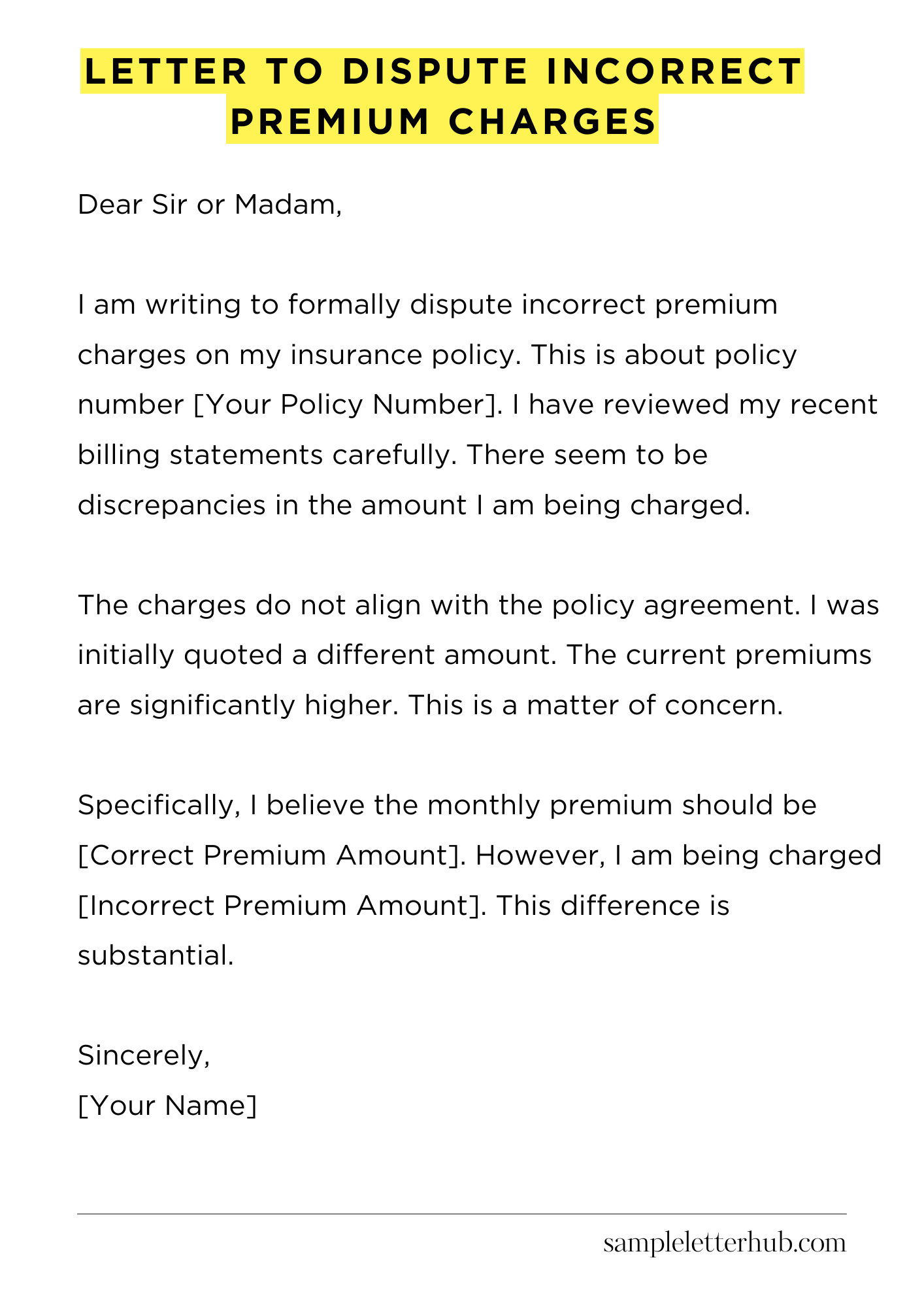
I am writing to formally dispute incorrect premium charges on my insurance policy. This is about policy number [Your Policy Number]. I have reviewed my recent billing statements carefully. There seem to be discrepancies in the amount I am being charged.
The charges do not align with the policy agreement. I was initially quoted a different amount. The current premiums are significantly higher. This is a matter of concern.
Specifically, I believe the monthly premium should be [Correct Premium Amount]. However, I am being charged [Incorrect Premium Amount]. This difference is substantial.
I have attached copies of my original policy documents. I have also enclosed previous billing statements for your reference. These documents clearly indicate the correct premium amount. Please review these materials carefully.
I would appreciate it if you could investigate this matter urgently. Please correct the billing errors promptly. I expect the charges to be adjusted to reflect the correct premium amount. This will avoid any further discrepancies.
I look forward to your prompt response. Please inform me of the steps you will take to resolve this issue. You can reach me by phone at [Your Phone Number] or by email at [Your Email Address]. I am eager to have this resolved quickly.
Thank you for your time and attention to this matter. I appreciate your assistance in correcting this problem.
Sincerely,
[Your Name]
How to Write a Letter to Dispute Incorrect Premium Charges
Disputing erroneous premium charges can be a frustrating experience, but a well-crafted letter can significantly bolster your chances of a favorable resolution. This guide provides a comprehensive roadmap, ensuring your missive is both persuasive and effective. Let’s start!
1. Initiate: The Salutation and Introductory Cadence
Begin your letter with a formal salutation. “Dear [Insurance Company Name] Claims Department” is a suitable choice. Immediately state the purpose of your letter. Be explicit, concise, and professional. Briefly introduce yourself, including your policy number and any relevant identifying information. This sets the stage for a cogent argument.
2. Delimiting the Dereliction: Clearly State the Issue
This is where you delve into the heart of the matter. Meticulously detail the incorrect premium charges you’re disputing. Specify the dates of the charges, the amounts in question, and how they deviate from your understanding or agreement. Explain what is wrong. Provide a clear-cut rationale.
3. Evidence-Based Vindication: Supporting Documentation
This is the bedrock of your argument. Submitting supporting documentation is not just important, it’s *essential*. Include copies of any documents that substantiate your claim.
This could be your original policy documents, previous invoices, payment confirmations, or communication records. Ensure these documents are clear, legible, and directly correlate with your points. Highlight the parts that directly pertain to your situation.
4. Explicating the Discord: Provide a Comprehensive Explanation
Elucidate precisely *why* you believe the charges are incorrect. This is your chance to articulate your reasoning and perspective. Offer a lucid explanation of the events leading up to the charges, referring to the documentation provided. Make sure to connect the dots for the reader so that the case is straightforward. Be sure to be calm and composed while laying down the facts.
5. The Concomitant: Desired Resolution and Specific Request
State precisely what action you want the insurance company to take. Do you want a refund? A correction to your future premiums? A reassessment of your policy? Be unequivocal in your demands. Clearly express what you expect as a satisfactory resolution. Detail the process you want them to follow.
6. The Peroration: Formal Closing and Contact Information
Conclude your letter with a formal closing, such as “Sincerely” or “Respectfully.” Include your full name, address, phone number, and email address. These are important for follow-up and communication. Consider adding a sentence, like “I look forward to your prompt response and resolution of this matter.” Always proofread your entire letter before sending it.
7. The Ambit: Delivery and Follow-Up
Send your letter via certified mail with a return receipt requested. This provides proof of delivery and the date it was received. Keep a copy of the letter and all supporting documentation for your records.
If you don’t receive a response within a reasonable timeframe (typically 30 days), follow up with a phone call or a second, more assertive letter. This demonstrates your commitment to the issue. Persistence is key in these types of disputes.
FAQs about Letter to Dispute Incorrect Premium Charges
What is the primary purpose of a letter to dispute incorrect premium charges?
The primary purpose of a letter to dispute incorrect premium charges is to formally notify an insurance provider or financial institution of billing errors. It serves as an official record of your objection and seeks a correction of the charges, often with supporting documentation to justify your claim.
What information should I include in a letter to dispute incorrect premium charges?
A comprehensive letter should include your full name, policy or account number, a clear description of the disputed charge (date, amount, and reason for dispute), and any supporting documentation, such as previous bills or correspondence. You should also clearly state the desired resolution, such as a refund or correction of future bills.
What supporting documentation should I include with my dispute letter?
The type of supporting documentation needed varies depending on the nature of the dispute. This may include copies of your policy documents, previous correct bills, payment confirmations, medical records (if applicable), or any other evidence that supports your claim. Always retain copies of all documents you submit.
How should I send the letter to dispute incorrect premium charges?
It is recommended to send the letter via certified mail with return receipt requested, or a similar method that provides proof of delivery. This ensures you have confirmation that the insurance provider or financial institution received your letter. Additionally, sending a copy via email can be beneficial for record-keeping.
What should I do if my dispute is denied?
If your initial dispute is denied, carefully review the reasons provided by the provider. You may need to gather further evidence or contact your state’s insurance commission or regulatory agency for assistance. Consider escalating the issue through the company’s internal appeals process or seeking legal counsel if the amount in dispute is significant.
Related:
Resignation letter due to rude boss
Resignation letter moving to another state
Resignation letter due to illness of family member
Resignation letter due to study