

A flood insurance renewal request letter is a formal document. Its purpose is simple. It is sent to your insurance provider. It asks them to renew your existing flood insurance policy. This ensures you remain protected from flood damage. This is essential for anyone living in a flood zone.
Do you need to renew your flood insurance? We’ve got you covered. This article offers helpful resources. We’ll share several flood insurance renewal request letter templates. Consider them your letter-writing cheat sheets. Our goal is to make the process easier for you.
We provide a variety of letter samples. These can be adjusted to your specific needs. Each sample covers different scenarios. You’ll find examples for various situations. Consider these your friendly guides to a successful flood insurance renewal.
[Your Name/Insurance Company Letterhead]
[Your Address]
[Your Phone Number]
[Your Email Address]
[Date]
[Recipient Name/Insurance Company]
[Recipient Address]
Dear [Recipient Name],
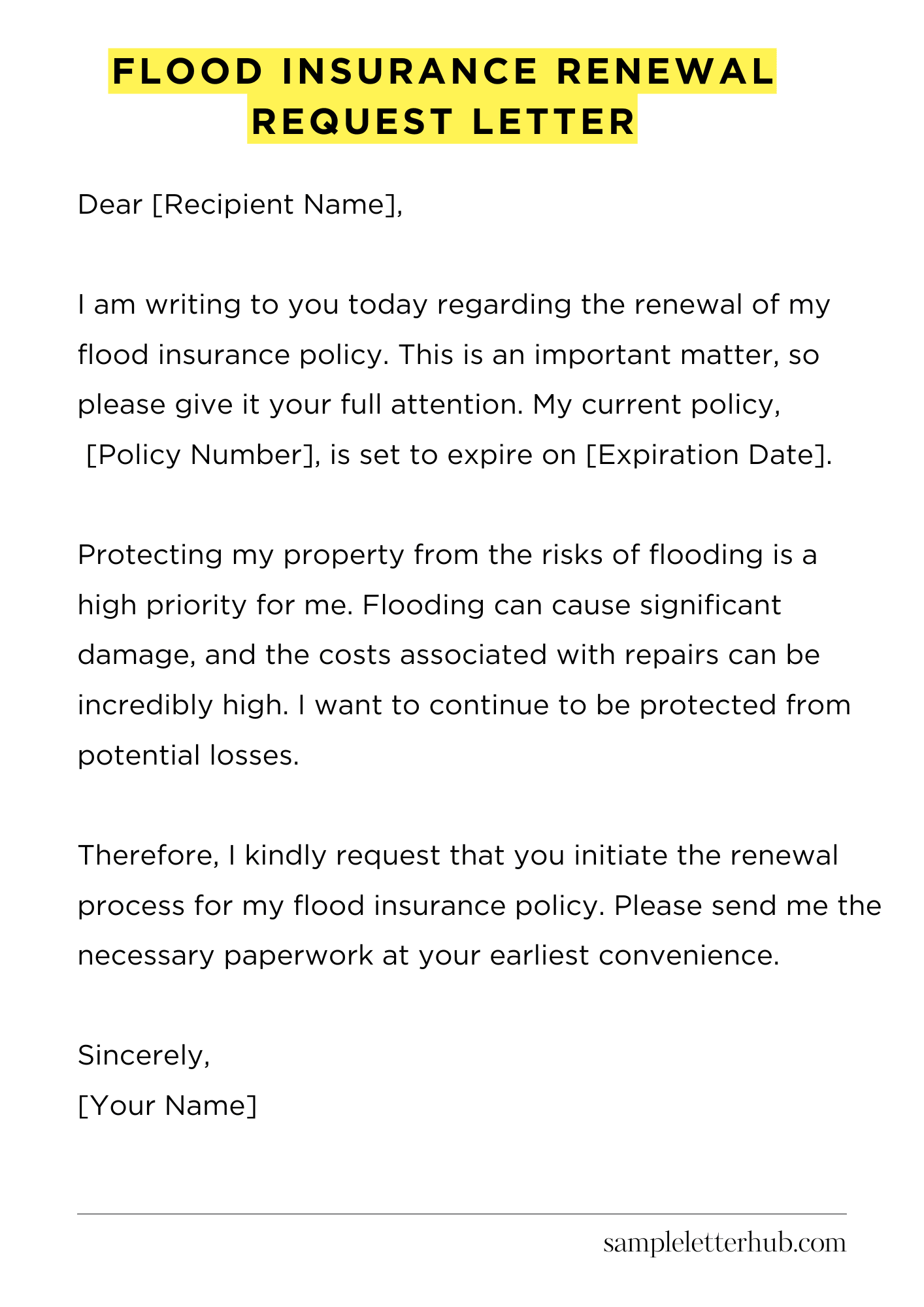
I am writing to you today regarding the renewal of my flood insurance policy. This is an important matter, so please give it your full attention. My current policy, [Policy Number], is set to expire on [Expiration Date].
Protecting my property from the risks of flooding is a high priority for me. Flooding can cause significant damage, and the costs associated with repairs can be incredibly high. I want to continue to be protected from potential losses.
Therefore, I kindly request that you initiate the renewal process for my flood insurance policy. Please send me the necessary paperwork at your earliest convenience. This will include the new policy terms, premium information, and any updated declarations. I will be sure to review everything carefully.
If there are any changes to the terms or premium, I would appreciate a clear explanation. It is always helpful to fully understand the details of my coverage. I am also happy to provide any updated information about my property if it’s needed.
Please let me know if you require any further information from my end. I look forward to receiving the renewal documents and ensuring my property remains adequately protected. I value your prompt attention to this request.
Thank you for your assistance.
Sincerely,
[Your Name]
How to Write Flood Insurance Renewal Request Letter
Securing flood insurance is a pragmatic step for any property owner, particularly if situated in a flood-prone zone. Renewal of your policy is a critical annual chore. This guide will walk you through the nuances of composing a renewal request letter that’s both effective and ensures the seamless continuation of your coverage. Follow these steps, and you’ll be prepared.
1. Crafting the Salutation: Addressing the Insurer
Begin your letter with a professional salutation. Address the letter directly to the insurance provider, often the underwriter or a specific department, if known. If you have a specific contact person, include their name and title.
If not, a general salutation such as “Dear Flood Insurance Department” or “To Whom It May Concern” is perfectly acceptable. Avoid informal greetings; a tone of professionalism sets the stage.
2. The Introductory Proclamation: Identifying Yourself and Your Policy
In the opening paragraph, unequivocally state your intention: requesting a renewal of your flood insurance policy. Provide your full name, the property address, and the policy number.
These are the cornerstones of identification, ensuring your request can be processed with expediency. Include the policy’s effective and expiration dates for additional clarity. Accuracy is paramount.
3. Stipulating the Need: The Renewal Request Itself
This is where you make the formal request. State, in clear and concise language, that you are requesting the renewal of your flood insurance policy. You can include a simple sentence: “I am writing to formally request the renewal of my flood insurance policy, number [Policy Number].” Emphasize the desire to continue coverage without any lapse. This section should be short and direct.
4. Declarations and Disclosures: Essential Information
Next, you must address any changes to your property or circumstances. Have you made any alterations to the property that might affect its flood risk? For example, have you elevated the structure or implemented flood mitigation measures? If so, disclose them. Such renovations could potentially affect your premiums.
If nothing has changed, simply state that “There have been no changes to the property or its flood risk since the inception of the current policy.” Full disclosure is crucial.
5. Financial Acumen: Premium Payment Preferences
Clearly state your preferred method of premium payment. This includes the method (e.g., check, electronic funds transfer) and, if applicable, the payment schedule (e.g., monthly, annually).
Provide the relevant account details if necessary. This will ensure your renewal can be processed promptly, and your coverage continues smoothly. Consider that some insurers may mandate specific payment methods. Check your current policy for specifics.
6. Request for Confirmation: A Call to Action
Conclude your letter by requesting confirmation of the renewal. Specifically ask for a confirmation letter or a copy of the renewed policy, including details of the new premium and coverage terms.
Include your contact information (phone number and email address) to enable the insurer to reach you easily with any queries or for verification. This ensures a prompt and efficient response. A deadline for a response is a good strategy.
7. The Parting Salutation: Closing the Correspondence
End the letter with a professional closing. Use “Sincerely,” or “Respectfully,” followed by your full name and signature. If you are sending a hard copy, ensure you physically sign the letter before mailing it.
The signature is a final confirmation of the authenticity of your request. A well-written letter, coupled with diligent follow-up, is the key to a stress-free renewal process.
FAQs about Flood Insurance Renewal Request Letter
What information should be included in a flood insurance renewal request letter?
A flood insurance renewal request letter should include the policyholder’s name, address, and policy number. It should clearly state the intention to renew the existing flood insurance policy.
The letter should also specify the desired effective date for the renewal. Any changes to coverage, property information, or contact details should be clearly communicated. It’s often helpful to mention the property’s location and any relevant flood zone information, although this is usually on the policy itself.
How far in advance of the policy expiration date should a flood insurance renewal request be submitted?
It’s advisable to submit a flood insurance renewal request at least 30 to 60 days before the current policy’s expiration date. This allows ample time for the insurance provider to process the request, review the property, generate a quote, and issue a new policy.
Early submission reduces the risk of a lapse in coverage, which could leave the property unprotected against flood damage. Check with your specific insurer for their recommended timeframe.
What happens if a flood insurance renewal request is not submitted before the policy expires?
If a flood insurance renewal request is not submitted before the policy expires, the existing coverage will lapse. This means the property will no longer be protected against flood damage.
To reinstate coverage, a new policy must be obtained, which may involve a waiting period before the coverage becomes effective, typically 30 days. Furthermore, the new policy could be subject to new underwriting requirements, potentially leading to higher premiums. The lapse in coverage can also affect mortgage requirements.
Can the premium for a flood insurance policy change upon renewal, and if so, why?
Yes, the premium for a flood insurance policy can change upon renewal. Several factors can influence premium adjustments. These factors include changes in flood zone designation, updated flood maps, inflation, the property’s age and construction type, and any modifications or improvements made to the property.
Additionally, FEMA may adjust its rates periodically, which directly impacts the cost of flood insurance. Coverage limits and any changes selected by the policyholder also influence the premium.
Where should a flood insurance renewal request letter be sent?
A flood insurance renewal request letter should be sent to the insurance provider or the specific contact designated for policy renewals. This information can typically be found on the original flood insurance policy documents, on the insurance provider’s website, or on the renewal notice itself.
The letter may be submitted via mail, email, or through an online portal if the provider offers such options. Always verify the correct address or contact details to ensure the request is processed promptly.
Related:
Resignation letter due to rude boss
Resignation letter moving to another state
Resignation letter due to illness of family member
Resignation letter due to study