


Dealing with flood damage is stressful. A reconsideration letter for flood insurance claim is a formal request. Its purpose is to ask your insurance company to re-evaluate their decision. Maybe your initial claim was denied or only partially covered. This letter gives you a chance to appeal.
This article is your guide to crafting the perfect reconsideration letter for flood insurance claim. We’ll provide you with various templates, examples, and samples. Need help? We got you. This article will also include sample letters for various situations. These samples make writing your own letter easy.
We understand it’s a tough situation. Writing a letter can feel overwhelming. Let these flood insurance claim reconsideration letter samples be your starting point. You’ll find it easier to get the coverage you deserve. This article is all about helping you understand the process.
[Your Name]
[Your Address]
[Your Phone Number]
[Your Email Address]
[Date]
[Insurance Company Name]
[Insurance Company Address]
Subject: Reconsideration of Flood Insurance Claim – [Claim Number]
Dear [Claims Adjuster Name or “Claims Department”],
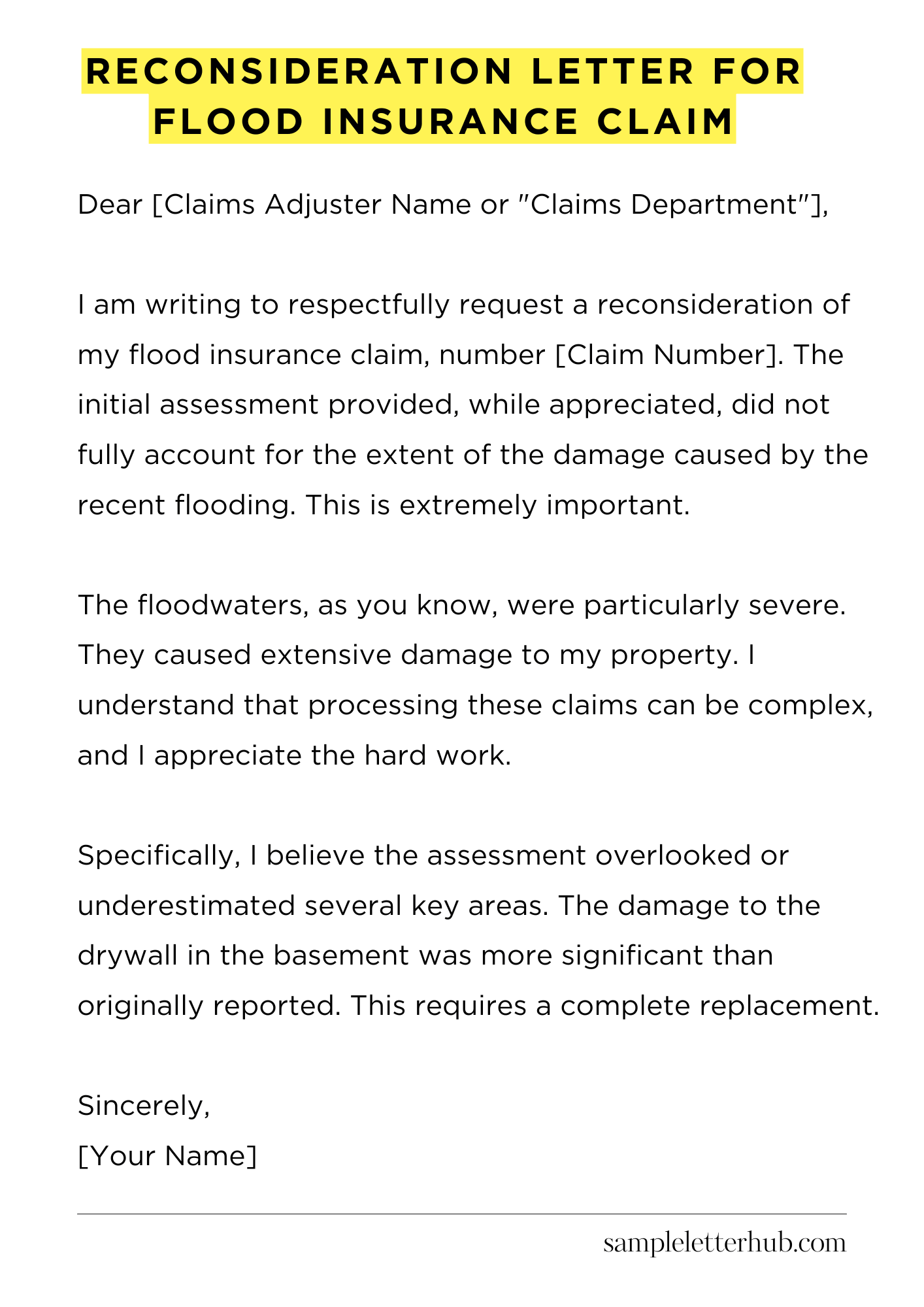
I am writing to respectfully request a reconsideration of my flood insurance claim, number [Claim Number]. The initial assessment provided, while appreciated, did not fully account for the extent of the damage caused by the recent flooding. This is extremely important.
The floodwaters, as you know, were particularly severe. They caused extensive damage to my property. I understand that processing these claims can be complex, and I appreciate the hard work.
Specifically, I believe the assessment overlooked or underestimated several key areas. The damage to the drywall in the basement was more significant than originally reported. This requires a complete replacement. Also, the damage to the electrical system is far more extensive than anticipated.
Attached to this letter, you will find additional documentation. These include new photographs, and detailed estimates from licensed contractors. The photos show further evidence. They clearly illustrate the extent of the damage. The contractor estimates provide a breakdown of the necessary repairs.
I believe these documents will help clarify the full scope of the loss. The total cost of repairs is much higher. I am confident that upon review of this new information, you will reconsider the original assessment and adjust the claim accordingly.
I am available to discuss this further at your convenience. Please feel free to contact me by phone or email. Thank you for your time and attention to this important matter. It is greatly appreciated.
Sincerely,
[Your Name]
How to Write a Reconsideration Letter for a Flood Insurance Claim
1. Grasping the Requisites of Your Claim
Before you even *think* about penning a reconsideration letter, you must thoroughly comprehend your initial flood insurance policy and the denial you received. Scrutinize the rejection letter meticulously.
Pinpoint the specific clauses, provisos, or *de facto* reasons cited for the denial. Analyze these points with exacting care. Gather all pertinent documentation: your policy, the initial claim submission, photographs of the damage, repair estimates, and any communications with your insurance provider. You need an arsenal of evidence.
2. The Art of Precise Articulation
Your letter is your *magnum opus* in this process. Begin with a formal salutation. Maintain a professional tone throughout. In the first paragraph, unambiguously state your intent: to appeal the denial of your flood insurance claim. Then, *with exactitude*, reference your policy number and the claim number associated with the denied claim. Be clear.
3. Deconstructing the Denial: A Forensic Approach
Here’s where you dissect the insurer’s rationale for denial. Address each point of contention raised in the rejection letter *seriatim* (one by one).
If the denial cited a specific exclusion, research that exclusion within your policy. If the insurer claimed insufficient evidence, directly counter that by providing additional photographic, video, or expert assessment data. Don’t be shy about challenging their assertions!
4. Assembling the Evidentiary Armada
This is where you showcase your preparation. Accompany your letter with compelling substantiation. Include clear, high-resolution photographs illustrating the flood damage.
Attach detailed repair estimates from reputable contractors. If you’ve obtained expert opinions (like from an engineer or a building inspector), include their reports. Organize the evidence logically, referencing it explicitly within the body of your letter. This step is imperative.
5. Navigating the Legal Labyrinth (If Necessary)
Depending on the complexity of your case and the severity of the denial, you might need to mention relevant laws or policy provisions in your favor. If you’ve been advised by an attorney, include a brief, succinct reference to their involvement. However, avoid legal jargon unless absolutely necessary. Keep it simple. Clarity prevails over complexity.
6. The Concluding Coup de Grâce
In your closing paragraph, emphatically restate your request for reconsideration. Reiterate that the denial was erroneous and that you believe you are entitled to coverage.
Clearly state the specific outcome you’re seeking (e.g., full payment of your claim, reconsideration of specific damage components). Sign the letter, and include your contact information (phone number, email address, mailing address). Send it via certified mail with return receipt requested. This provides proof of delivery.
7. Aftermath and Vigilance
Once you’ve dispatched the letter, await the insurer’s response. The wait time can vary; however, maintain *constant vigilance*. Document all communications, including dates, times, and the names of individuals you speak with. Be prepared for follow-up, and remain persistent, yet professional, throughout the process. Do not give up.
FAQs about Reconsideration Letter for Flood Insurance Claim
What is a Reconsideration Letter for a Flood Insurance Claim?
A reconsideration letter is a formal document you submit to your flood insurance provider to request a review of a previously denied or underpaid claim. It presents additional information, evidence, or arguments to support your claim for greater compensation.
When Should I Send a Reconsideration Letter?
You should send a reconsideration letter if you believe your initial claim was unfairly denied, the payout was insufficient, or there were errors in the assessment. This is typically done after receiving the claim denial or the initial payment offer.
What Should I Include in a Reconsideration Letter?
A strong reconsideration letter should include your policy number, the claim number, a clear statement of why you disagree with the initial decision, all supporting documentation (photos, receipts, expert reports, etc.), and a specific request for reconsideration and desired outcome.
What Happens After I Submit a Reconsideration Letter?
The insurance company will review your letter and the supporting documentation. They may contact you for more information or clarification. They will then issue a new decision, which could be an approval, a revised payout, or a reaffirmation of their original decision. Be aware of any deadlines for their response outlined in your policy.
What If My Reconsideration Letter is Still Denied?
If your reconsideration letter is denied, you may have other options. These might include appealing the decision through your insurance company’s internal appeal process, seeking mediation, or, as a last resort, filing a lawsuit. Consulting with an attorney specializing in flood insurance claims is recommended.
Related:
Resignation letter due to rude boss
Resignation letter moving to another state
Resignation letter due to illness of family member
Resignation letter due to study