

A Storm Damage Insurance Claim Letter is an official request. It’s a formal way to notify your insurance company. You are reporting damage caused by a storm. The letter explains the damage and asks for compensation. This helps to start the insurance claim process.
Dealing with insurance claims can be stressful. Don’t worry, we’re here to help. We’ll provide you with sample Storm Damage Insurance Claim Letter templates. These templates are easy to use. Use them as a starting point.
Our goal is simple. We aim to help you navigate this process. You can adapt these templates. Customize them to fit your specific storm damage situation. Writing a claim letter doesn’t have to be hard.
[Your Name]
[Your Address]
[Your Phone Number]
[Your Email Address]
[Date]
[Insurance Company Name]
[Insurance Company Address]
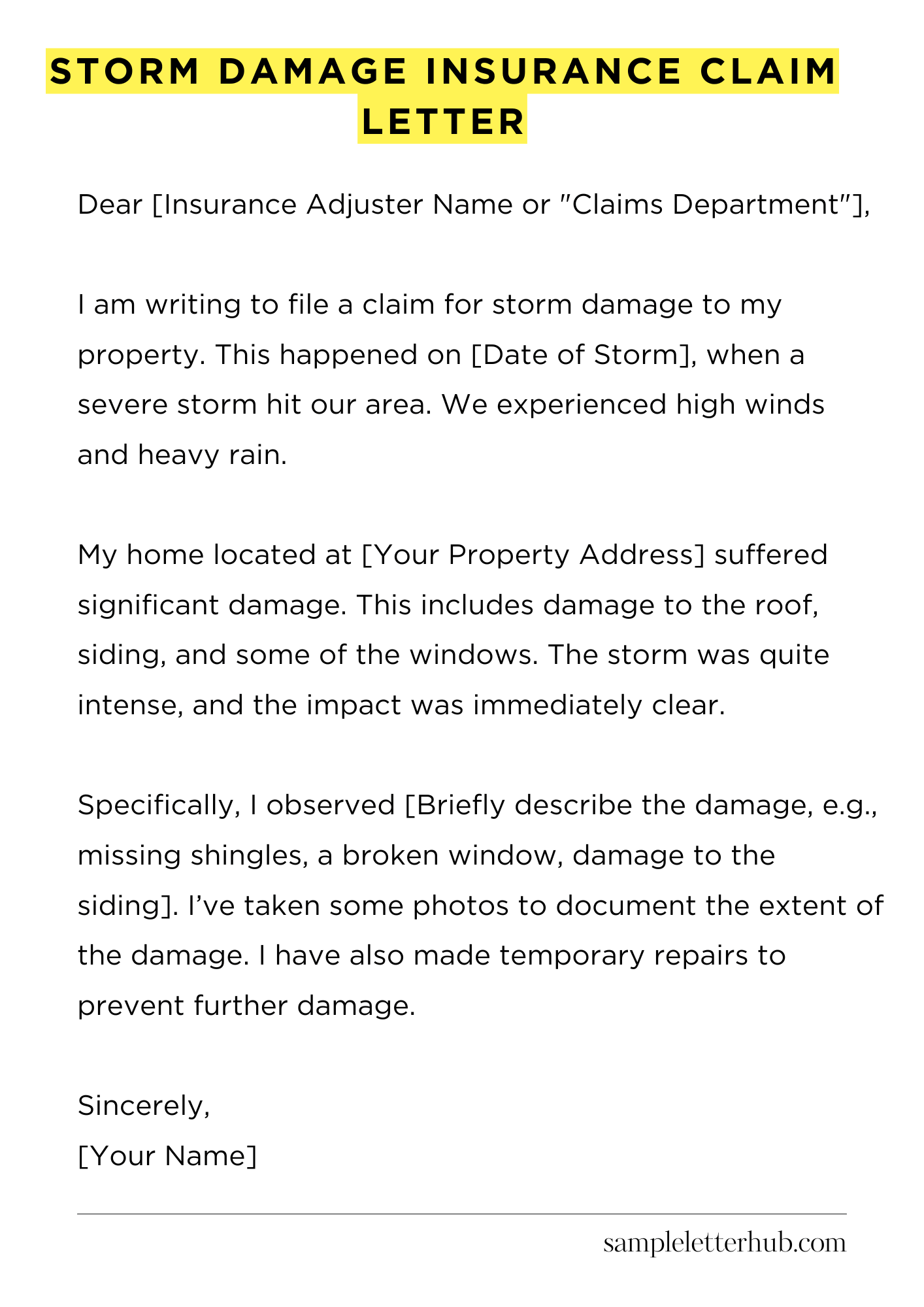
Dear [Insurance Adjuster Name or “Claims Department”],
I am writing to file a claim for storm damage to my property. This happened on [Date of Storm], when a severe storm hit our area. We experienced high winds and heavy rain.
My home located at [Your Property Address] suffered significant damage. This includes damage to the roof, siding, and some of the windows. The storm was quite intense, and the impact was immediately clear.
Specifically, I observed [Briefly describe the damage, e.g., missing shingles, a broken window, damage to the siding]. I’ve taken some photos to document the extent of the damage. I have also made temporary repairs to prevent further damage. These are measures taken to protect my home.
I have attached the following documents to support my claim: [List of documents, e.g., photos of the damage, a copy of your insurance policy, repair estimates]. Please review them carefully.
I would appreciate it if you could start the claims process as soon as possible. Please let me know what steps I need to take next. Also, I want to understand what is covered under my policy. I am available to speak at your earliest convenience. You can reach me by phone or email.
Thank you for your time and assistance with this matter. I am looking forward to hearing from you soon.
Sincerely,
[Your Name]
How to Write Storm Damage Insurance Claim Letter
Filing an insurance claim after a storm can be a daunting process. However, a meticulously crafted letter significantly increases your chances of a swift and favorable resolution. Here’s a comprehensive guide to help you navigate this complex procedure:
1. Initiate with Formality: The Salutation and Subject Line
Begin your missive with a formal salutation. Address the letter to the appropriate claims adjuster or department within your insurance provider. Instead of a casual greeting, employ “Dear [Adjuster’s Name]” or “To Whom It May Concern.”
The subject line is paramount; it immediately telegraphs the letter’s purpose. Make it concise and explicit, such as “Insurance Claim – Storm Damage to Property at [Address].” This proactive approach ensures immediate comprehension.
2. Detail the Date and Pertinent Policy Parameters
Precise dating is crucial. Always include the exact date of the storm and the date you are penning this letter. Subsequently, furnish your policy number and the inception and expiry dates of your policy.
These details are the bedrock upon which your claim rests; omitting them can precipitate delays. Clearly state the insured property’s address. Including this information provides immediate context and streamlines the claims process.
3. Articulate the Causation: Describing the Event and Damages
This section is where you narrate the storm’s impact. Provide a vivid, yet factual, account of the storm. Specify the type of storm (e.g., hurricane, tornado, hailstorm) and the date it transpired.
Then, meticulously describe the damages. Be comprehensive, detailing each item affected and the nature of the damage. For example, “Roof shingles were dislodged by high winds, leading to water ingress in the attic and subsequent damage to the ceiling.” Remember to be as precise as possible.
4. Documentation: The Evidence of Mishap
Claims thrive on corroboration. Append all available documentation. This encompasses photographs (dated and clearly labeled), videos, repair estimates from reputable contractors, and any other evidence that supports your claim.
Consider including receipts for temporary repairs or mitigation efforts undertaken to prevent further damage. Digital photographs are invaluable in depicting the damage.
5. Financial Reckoning: The Monetary Implications
Accurately state the estimated cost of repairs or replacements. If you have obtained repair estimates, list them individually. If the damage is more extensive, you might provide a preliminary estimate and state that additional costs are anticipated pending a comprehensive assessment. Be transparent and present a clear picture of your financial losses.
This transparency fosters trust and expedites the settlement procedure.
6. The Peroration: Requests and Next Steps
Conclude your letter with a clear request. Specify precisely what you are seeking from your insurance provider, whether it’s an assessment of the damage, coverage for repairs, or a full claim settlement.
State your preferred method of contact and provide your phone number and email address. Express your willingness to cooperate with the claims adjuster and provide any further information required.
7. The Ambitious Closure: Signature and Delivery
Sign your letter with your full name and include your contact information for ease of correspondence. It is also good practice to mail the letter via certified mail with a return receipt requested.
This provides proof of delivery and ensures you have a record of when the insurance company received your claim. Keep a copy of the entire letter and all accompanying documents for your records.
FAQs about Storm Damage Insurance Claim Letter
What information should I include in my storm damage insurance claim letter?
Your letter should clearly state your name, policy number, and the date of the storm. Detail the specific damages, including the location and a description of what was affected (e.g., roof, windows, siding).
Provide photos or videos as evidence. Include a preliminary estimate if possible, and state your desired outcome, such as requesting an inspection or starting the claims process. Also, include your contact information for easy communication.
What is the deadline for filing a storm damage insurance claim letter?
The deadline varies based on your insurance policy and state regulations. Check your policy documents for the specific time frame, often measured in days or months from the date of the storm. Missing the deadline could result in claim denial. If you’re unsure, contact your insurance provider immediately to clarify the deadline and ensure timely submission.
How do I document the storm damage before filing my letter?
Thorough documentation is crucial. Take numerous photos and videos of the damage from various angles, including close-ups and wider shots to show the extent. If possible, document the date and time of the images.
Keep any damaged items or debris (if safe and permissible). Consider obtaining multiple estimates from reputable contractors for repair or replacement costs to support your claim.
What happens after I submit my storm damage insurance claim letter?
After submission, your insurance company will likely acknowledge receipt of your claim and assign a claim number. An adjuster will be assigned to investigate, potentially contacting you to schedule an inspection of the damage.
They may request additional documentation. The adjuster will assess the damage, determine the coverage based on your policy, and provide an estimate for repairs. You’ll then receive a settlement offer, which you can accept, negotiate, or dispute if you disagree with the assessment.
Can I use a template for my storm damage insurance claim letter?
Yes, using a template can be a helpful starting point. Numerous templates are available online, but make sure to customize it with your specific details. Ensure the template covers the necessary information, such as your policy details, date of loss, description of damage, and contact information.
Adjust the template to reflect the specifics of your situation to ensure accuracy and clarity.
Related:
Resignation letter due to rude boss
Resignation letter moving to another state
Resignation letter due to illness of family member
Resignation letter due to study