

Dealing with water damage can be stressful. You might be facing leaks, floods, or other issues. A water damage insurance claim letter is essential. It’s how you formally tell your insurance company about the damage. The purpose is to start the claims process. It helps you get the coverage you’re entitled to.
Writing this letter can seem daunting. No worries! We’ve got you covered. We’ll provide water damage insurance claim letter samples. These include templates and examples. Using them will make writing your own letter easier.
Our water damage claim letter templates will help. They are crafted to be simple and effective. You can easily adapt them for your specific situation. This article makes the process less overwhelming. Prepare to make the claim process easy.
[Your Name]
[Your Address]
[Your Phone Number]
[Your Email Address]
[Date]
[Insurance Company Name]
[Insurance Company Address]
Subject: Water Damage Claim – [Policy Number]
Dear [Claims Adjuster Name, or “Claims Department”],
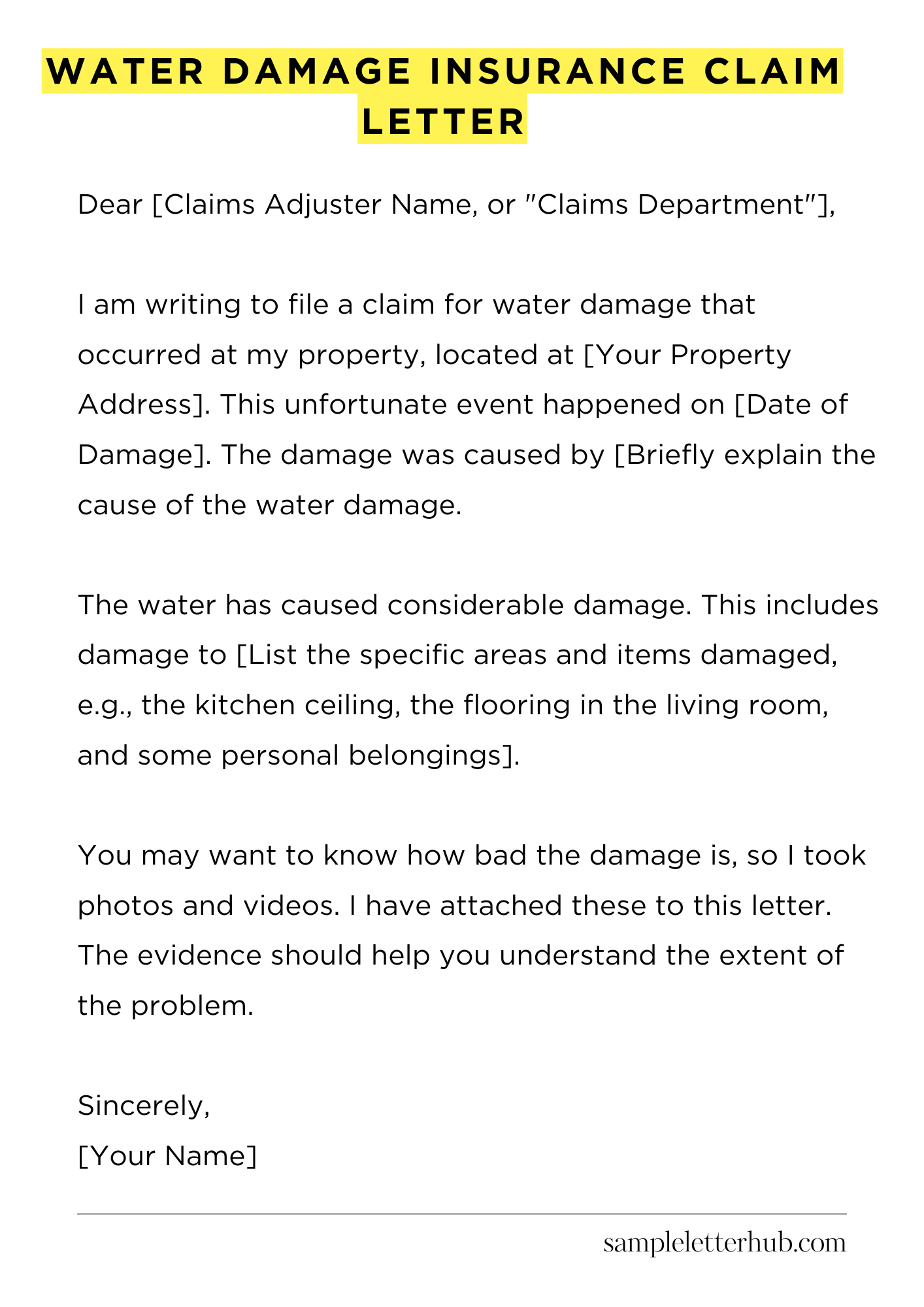
I am writing to file a claim for water damage that occurred at my property, located at [Your Property Address]. This unfortunate event happened on [Date of Damage]. The damage was caused by [Briefly explain the cause of the water damage, e.g., a burst pipe in the kitchen, a leaking roof during a storm].
The water has caused considerable damage. This includes damage to [List the specific areas and items damaged, e.g., the kitchen ceiling, the flooring in the living room, and some personal belongings].
You may want to know how bad the damage is, so I took photos and videos. I have attached these to this letter. The evidence should help you understand the extent of the problem.
I have already taken some initial steps to mitigate further damage. I did this by [Briefly describe any immediate actions taken, e.g., shutting off the water supply, calling a plumber, removing wet items]. I want to ensure the safety of my property.
My insurance policy number is [Your Policy Number]. I have reviewed the policy and believe this damage is covered.
I would appreciate it if you could initiate the claims process as soon as possible. Please let me know what further information or documentation you require from me.
Also, tell me about the next steps. I am available to speak at your earliest convenience to discuss this claim. You can reach me at the phone number or email address listed above.
Thank you for your prompt attention to this matter.
Sincerely,
[Your Name]
How to Write Water Damage Insurance Claim Letter
Water damage, a bane of property owners, necessitates swift action. Securing insurance indemnification demands a meticulously crafted claim letter. It’s not just a formality; it’s your primary instrument in persuading the insurer to honor their obligations.
This guide will navigate you through composing an efficacious letter, optimizing your prospects for a favorable resolution.
1. Commence with an Impeccable Salutation
Your missive’s commencement sets the tone. Use a formal salutation. Address the letter to the appropriate claims adjuster or department head. Avoid generic greetings. If you possess a specific adjuster’s name, utilize it.
For instance, “Dear Ms. Eleanor Vance,” exudes personalized professionalism, increasing the likelihood of a prompt response. Precision here will leave a lasting impression.
2. Explicitly State Your Purpose
The cardinal rule of clear communication applies here. Immediately declare your intent: to file a claim for water damage. Be unambiguous. Specify the policy number and the date the damage occurred.
Use concise, impactful language. Something as simple as, “This letter constitutes a formal claim under policy number [Policy Number] for water damage sustained on [Date of Damage]” serves the purpose admirably.
3. Detailed Account of the Incident
Provide a comprehensive narrative of the water damage event. Chronological order is your ally. Explain *how* the damage occurred. Detail the source of the water. Did a pipe burst? Was it due to a leaky roof? Pinpoint the cause. Include dates and times, if known. Be specific; the more details you provide, the better.
Consider the narrative, a meticulously crafted record. For example: “On the morning of October 26, 2024, I discovered a significant water leak emanating from a burst pipe in the kitchen. The leak originated near the sink, inundating the flooring and subsequently affecting the adjacent walls.”
4. Comprehensive Damage Assessment
Now, meticulously catalogue the damage. Describe all affected areas and items. Itemize the specific damage; be it warped flooring, stained ceilings, or damaged personal belongings.
Employ precise terminology: “water-stained drywall,” “structural damage to the subfloor,” or “mold infestation.” Consider attaching a detailed inventory of damaged personal property, if applicable. A photographic record of the damage is imperative; augment your description with visual evidence. The goal is complete transparency.
5. Supporting Documentation Submission
This is where you fortify your claim. Include all supporting documentation. This may include: photographs and videos of the damage, repair estimates from reputable contractors, receipts for temporary repairs (if any), and any police or fire reports.
Organize these documents meticulously. Ensure they are legible and clearly labeled. Don’t underestimate the power of evidence; it solidifies your case. A well-organized, comprehensive set of documents can expedite the claims process substantially.
6. The Claim’s Monetary Demands
Articulate your financial expectations with precision. State the total amount of the claim. This figure should align with the repair estimates and the value of damaged items. If the estimate includes a line-by-line breakdown, specify each cost.
Demonstrate that your claims are grounded in fact. Don’t hesitate to clearly state the desired reimbursement amount, which is what the policy requires.
7. Concluding Politeness and Contact Information
End the letter professionally. Reiterate your contact information: your name, address, phone number, and email address. Request confirmation of receipt and the claim’s status.
Express gratitude for the adjuster’s time and attention. Something like, “Thank you for your prompt attention to this matter. I look forward to hearing from you soon regarding the status of this claim.
Please contact me at your earliest convenience.” Such courtesies can go far. Conclude with a formal closing, such as “Sincerely,” or “Respectfully,” followed by your full name. Remember, this letter is a pivotal first step.
FAQs about Water Damage Insurance Claim Letter
What information should I include in my water damage insurance claim letter?
Your water damage insurance claim letter should comprehensively detail the event. Begin with your policy information (policy number, etc.).
Clearly state the date and time of the water damage, and the specific cause (e.g., burst pipe, roof leak). Provide a thorough description of the damage, including affected areas and items. Include a preliminary estimate of repair costs, if possible, and supporting documentation like photos, videos, and receipts.
What supporting documents are typically required with a water damage claim letter?
Supporting documentation is crucial. Gather photographs and videos that clearly show the water damage to your property and belongings. Include any receipts for emergency repairs or temporary lodging, if applicable.
Obtain estimates from qualified contractors for the necessary repairs and restoration. Consider adding any relevant documentation like inspection reports, maintenance records, or expert opinions that can strengthen your claim.
How should I format the water damage insurance claim letter?
The letter should be professional and easy to understand. Start with the date and your contact information. Address the letter to your insurance company’s claims department. State the purpose of the letter clearly in the opening paragraph.
Use concise language, focusing on the facts. Organize the information logically, using bullet points or numbered lists when necessary. End with a polite closing, expressing your willingness to cooperate and any follow-up contact information.
How soon after the water damage should I file a claim and send the letter?
File your claim and send the letter as soon as possible after discovering the water damage. Most insurance policies have a specific timeframe within which you must report the damage to remain eligible for coverage.
Review your policy’s terms and conditions for this deadline. The sooner you report the damage, the faster the claims process can begin, and the less likely additional damage will occur. If you are unsure always contact your insurer immediately.
What if my insurance company denies my water damage claim?
If your claim is denied, carefully review the denial letter to understand the reasons. Often, there is an appeals process. Gather additional evidence or information that addresses the reasons for denial.
Contact your insurance company to discuss the denial and explore the possibility of an appeal. If necessary, seek assistance from a public adjuster or legal counsel specializing in insurance claims to challenge the decision and protect your rights.
Related:
Resignation letter due to rude boss
Resignation letter moving to another state
Resignation letter due to illness of family member
Resignation letter due to study