

A Benefits Administrator resignation letter is a formal document. It informs an employer of your intention to leave your position. The letter also states your last day of employment. This is a crucial step in the resignation process.
Need to resign as a Benefits Administrator? Writing the perfect letter can feel daunting. We’re here to help ease the process. We’ve compiled a collection of templates and examples. These samples are designed to guide you.
Whether you’re looking for something simple or detailed, we have you covered. These examples will get you started quickly. Adapt them to fit your specific circumstances. Make your resignation as smooth as possible.
Benefits Administrator Resignation Letter
Below is a sample of a Benefits Administrator Resignation Letter:
[Your Name]
[Your Address]
[Your Phone Number]
[Your Email Address]
[Date]
[Benefits Administrator’s Name (if known), or “Benefits Department”]
[Company Name]
[Company Address]
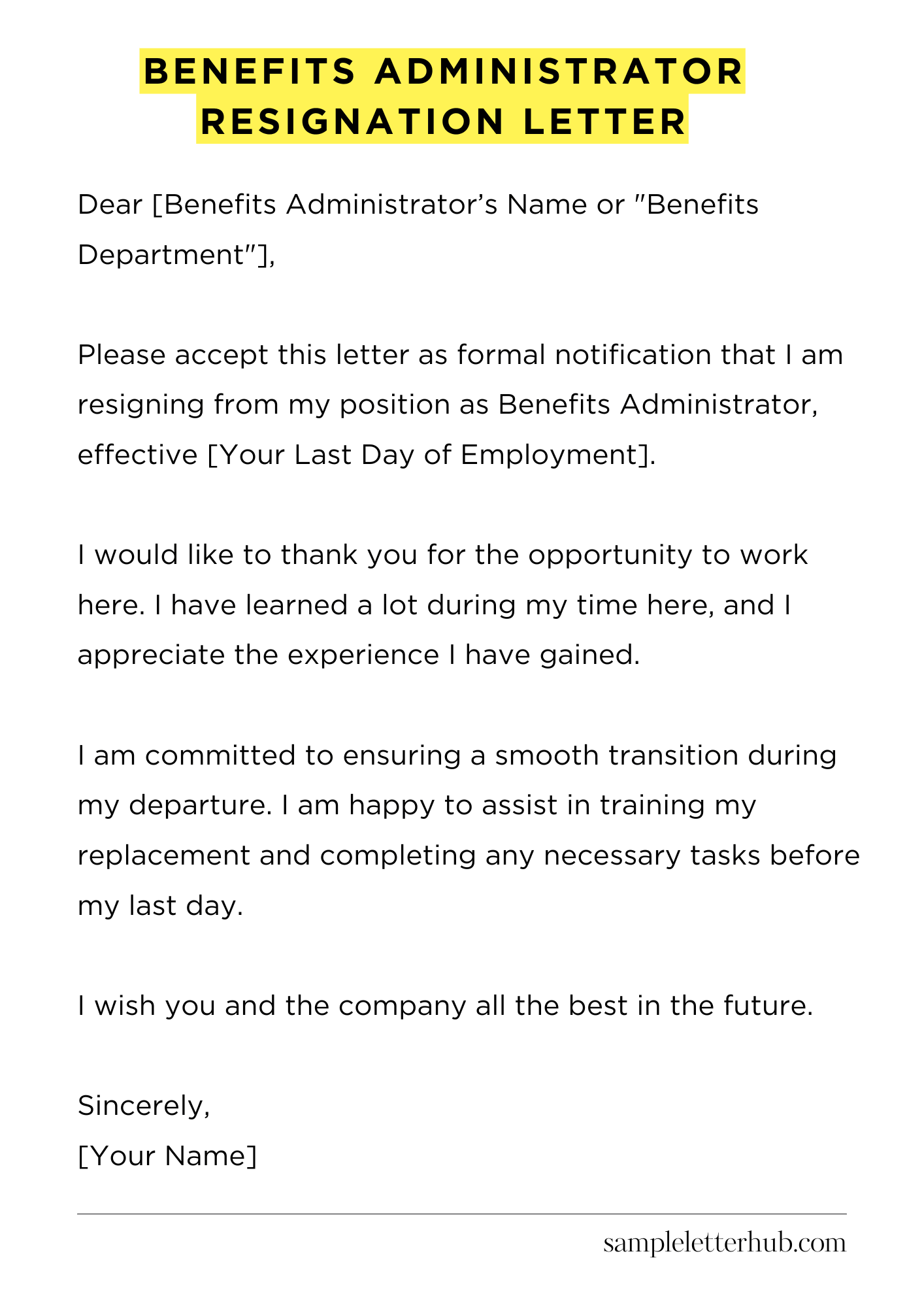
Dear [Benefits Administrator’s Name or “Benefits Department”],
Please accept this letter as formal notification that I am resigning from my position as Benefits Administrator, effective [Your Last Day of Employment].
I would like to thank you for the opportunity to work here. I have learned a lot during my time here, and I appreciate the experience I have gained.
I am committed to ensuring a smooth transition during my departure. I am happy to assist in training my replacement and completing any necessary tasks before my last day. Please let me know how I can be of help in this process.
I wish you and the company all the best in the future.
Sincerely,
[Your Name]
How to Write a Benefits Administrator Resignation Letter
Leaving a job, even one that isn’t the perfect fit, requires professionalism. You want to ensure a smooth transition and maintain a positive relationship with your former employer.
A well-crafted resignation letter is the cornerstone of a graceful departure. Especially when you’re a Benefits Administrator; the processes, data, and compliance are very important.
1. Start with the Essentials: Your Information and the Date
The first step is about clarity and formality. Begin at the top with your name, address, phone number, and email. This is standard business practice. Directly below, include the date of the letter. Then, state the name of your supervisor and their title. This is where you formally announce your intention to leave.
For example, you might start like this:
[Your Name]
[Your Address]
[Your Phone Number]
[Your Email Address]

[Date]

[Supervisor's Name]
[Supervisor's Title]
[Company Name]
[Company Address]
2. State Your Intention Clearly and Concisely
The core of your letter needs to be direct. Let the reader know you are resigning from your position as Benefits Administrator. There’s no need for elaborate preambles. Your intent should be clear within the first paragraph. Specify your last day of employment. This is crucial for planning purposes.
Consider this example:
“Please accept this letter as formal notification that I am resigning from my position as Benefits Administrator at [Company Name]. My last day of employment will be [Your Last Day of Employment].”
3. Express Gratitude and Briefly Highlight Your Contributions
Acknowledging the opportunity to work at the company and expressing gratitude for your experience is always a good practice. It reflects well on you.
Briefly mention any specific contributions or experiences you’ve valued. This shows you’re not just rushing out the door. It adds a touch of professionalism and can even help to create a good reference in the future.
Try this kind of sentence in your letter:
“I am grateful for the opportunities I’ve had during my time here. I am especially thankful for the experience in [Specific Area].”
4. Offer Assistance with the Transition
A true professional understands the importance of a smooth transition. Offer your assistance during the handoff. This shows commitment, even as you’re leaving. Suggesting you’re available to train your replacement or answer questions is a thoughtful gesture.
Try something like this:
“I am committed to ensuring a smooth transition during my departure. I am happy to assist in training my replacement and answer any questions to the best of my ability.”
5. Close Professionally and Include a Signature
End the letter with a professional closing, such as “Sincerely,” or “Respectfully.” This reinforces your professionalism. Then, type your name below the closing.
Make sure to leave space for your handwritten signature above the typed name. This personal touch completes the formal letter. Make sure you proofread and then sign it!
Here’s an example:
Sincerely,
[Your Signature – Handwritten]
[Your Typed Name]
Writing a resignation letter is a simple formality. However, it is an important step in ending a job relationship well. Use these tips to help compose a letter that leaves a positive lasting impression.
FAQs about Benefits Administrator resignation letter
How much notice should a Benefits Administrator give when resigning?
The standard notice period for a Benefits Administrator is typically two weeks. However, this can vary based on company policy, employment contracts, and the seniority of the role.
It’s crucial to review your employment agreement to determine the required notice period. Providing more notice, such as three or four weeks, is often viewed favorably and allows for a smoother transition.
Adhering to the agreed-upon notice period is important to maintain a positive relationship with your employer and colleagues.
What should be included in a Benefits Administrator resignation letter?
A Benefits Administrator’s resignation letter should be concise and professional. It should clearly state your intention to resign, your last day of employment, and a brief expression of gratitude for the opportunity.
You may also include a statement acknowledging your willingness to assist with the transition of your duties. Avoid including negative comments about the company or your reasons for leaving. Your letter should be a formal record of your departure and should leave a positive final impression.
Should a Benefits Administrator explain the reason for resigning in the letter?
While not mandatory, you are not obligated to explain the reason for your resignation in detail. You can choose to keep your reason private. However, it’s generally sufficient to state you are pursuing other opportunities. If you have positive feedback or want to express gratitude for specific experiences, you can include those.
The letter should maintain a professional tone, focusing on the fact of your resignation and not delving into potentially sensitive reasons for leaving.
How should a Benefits Administrator handle the transition of duties when resigning?
A Benefits Administrator should be proactive in managing the transition of their duties. Offer to train a replacement or assist in the onboarding process to ensure a smooth handover.
Create detailed documentation outlining your responsibilities, processes, and contacts. This includes information on benefits administration, open enrollment, and any other duties you perform. Completing outstanding tasks and providing readily accessible information will leave a positive lasting impression.
Can a Benefits Administrator’s resignation letter be used as a reference?
Your resignation letter itself is generally not used as a reference. However, a well-written letter can reinforce your professionalism. Potential employers are more likely to seek a reference from your supervisor or HR department.
Be sure to confirm your employer’s reference policy and any preferred formats for such requests. A positive resignation letter can indirectly contribute to the overall perception an employer might have of your work ethic.
Related:
Resignation letter due to rude boss
Resignation letter moving to another state
Resignation letter due to illness of family member
Resignation letter due to study