

A COO resignation letter is a formal document. It is written by a Chief Operating Officer. The letter announces their departure from a company. Its main purpose is to inform the employer of the resignation. It also communicates the effective date of leaving.
Leaving a job can be tough. Crafting the perfect resignation letter is even tougher. We’ve got you covered. We’re offering various samples and templates. These will help you compose your COO resignation letter.
Whether you’re moving on to new opportunities or retiring, we can help. Each sample offers a different style. Choose the one that suits your needs. Make the process of your leaving easier.
Coo Resignation Letter
Below is a sample of a Coo Resignation Letter:
[Your Name]
[Your Address]
[Your Phone Number]
[Your Email Address]
[Date]
[Recipient’s Name]
[Recipient’s Title]
[Company Name]
[Company Address]
Dear [Recipient’s Name],
Please accept this letter as formal notification that I am resigning from my position as Chief Operating Officer (COO) at [Company Name]. My last day of employment will be [Your Last Day of Employment].
I would like to thank you and the company for the opportunity to work here. I have learned a great deal and appreciate the experiences I’ve gained during my time here.
I am committed to ensuring a smooth transition during my departure. I am happy to assist in training my replacement and completing any necessary handover tasks to the best of my ability.
I wish you and [Company Name] all the best in the future.
Sincerely,
[Your Name]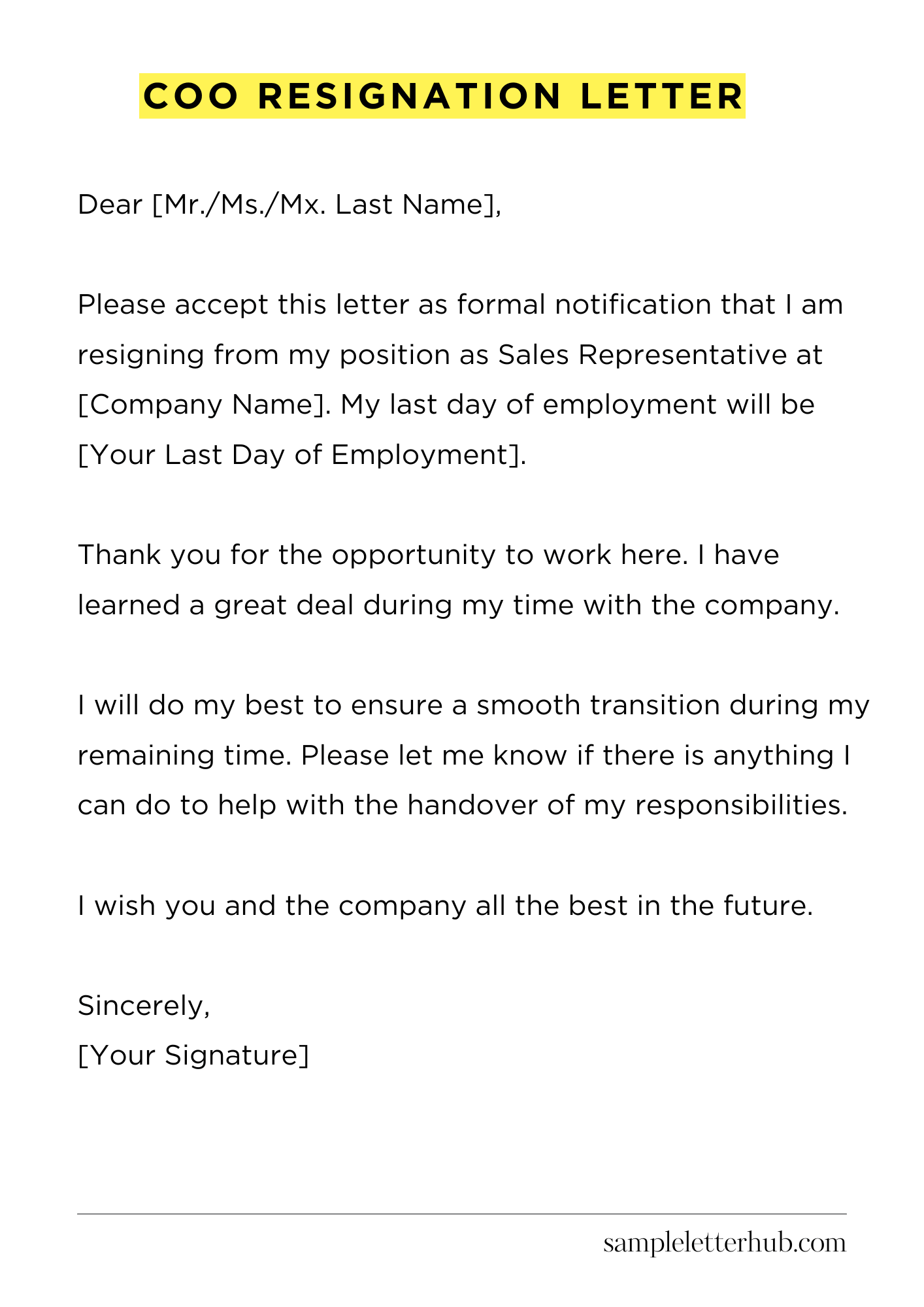
How to Write a COO Resignation Letter
Know Your Audience and Your Intent
Resigning from a Chief Operating Officer (COO) position is a big deal. You’re not just leaving a job; you’re departing a significant leadership role. Before you even think about putting pen to paper (or fingers to keyboard), you need to be crystal clear about why you’re leaving. What are your motivations?
Where do you see yourself heading? This clarity will inform the tone of your letter. You also need to understand your audience: the Board of Directors, the CEO, perhaps even key stakeholders. They’ll likely be surprised. Therefore, consider their perspective. A professional and respectful approach is always best.
Crafting the Core Message
The core of your letter needs to be direct and concise. Start with a clear statement of your resignation. State your name, the position you’re leaving (COO), and the effective date of your departure. Keep it simple.
A sample opening could be: “Please accept this letter as formal notification that I am resigning from my position as Chief Operating Officer of [Company Name], effective [Date].”
Next, briefly state your reason, if you choose to include one. This could be anything from personal reasons to pursuing another opportunity. Avoid negativity and keep it brief. Focus on a positive tone.
Expressing Gratitude and Providing Support
This is where you build bridges. Acknowledge your time at the company and express your gratitude. Consider mentioning specific individuals or teams you’ve enjoyed working with.
This isn’t about sucking up; it’s about demonstrating professionalism and leaving on good terms. Then, offer your support during the transition. What can you do to help ensure a smooth handover? Offer to assist with training your replacement, answering questions, or completing ongoing projects. This shows leadership and consideration.
Formatting and Important Considerations
Formatting matters. Your letter should be on company letterhead (if applicable) and professionally formatted. Use a standard business letter format. Keep it concise – aim for one page, if possible.
Proofread, proofread, proofread! Check for any typos, grammatical errors, or awkward phrasing. Deliver the letter in person, if possible, or via email with a clear subject line (e.g., “Resignation – [Your Name]”). Keep a copy for your records.
Remember, this letter is a reflection of you. Consider consulting with a legal professional before submitting, especially if you have an employment agreement.
The Follow-Up: What Comes Next
After you submit your letter, be prepared for a response. Expect meetings, discussions about your departure, and perhaps even negotiations. Be prepared to answer questions. Be professional throughout the process.
Maintain a positive and helpful attitude. After you leave, your resignation letter might become a reference point. Therefore, ensure it clearly communicates your message while maintaining a positive and professional tone. Doing this sets you up well for future endeavors.
FAQs about COO Resignation Letter
What is the purpose of a COO resignation letter?
The primary purpose of a COO resignation letter is to formally notify the employer (typically the CEO, Board of Directors, or relevant authority) of the intention to leave the position of Chief Operating Officer.
It serves as an official record of the resignation, the effective date, and often, a brief expression of gratitude or a statement about the transition. The letter ensures a clear understanding and avoids any ambiguity regarding the departure.
What key elements should be included in a COO resignation letter?
A well-crafted COO resignation letter should include: a formal statement of resignation, the specific title (Chief Operating Officer), the effective date of resignation, a concise reason for leaving (optional but often included), an expression of gratitude for the opportunity, and any necessary details regarding the handover of responsibilities.
It’s also wise to include contact information for any post-employment transition support.
How much notice should a COO provide when resigning?
The required notice period for a COO resignation is typically dictated by the employment contract, company policy, or local labor laws. Often, it’s a minimum of two to four weeks, but for a high-level executive like a COO, a longer notice period (e.g., one to three months) is generally expected to allow for a smooth transition and handover of duties.
Should a COO explain their reasons for resigning in the letter?
Including a reason for resignation is optional. While it’s common to state the reason, it is not obligatory. If the COO feels comfortable sharing, they may briefly state a reason, such as pursuing a new opportunity or personal reasons.
However, the level of detail provided is at the discretion of the individual and should be handled professionally and with due consideration for the company’s best interests.
How should a COO handle the handover of responsibilities after resigning?
A COO should proactively manage the handover of responsibilities. This includes identifying and documenting key duties, training or briefing the successor or team members, completing any unfinished projects, and ensuring a smooth transition of knowledge and authority.
The departing COO should be prepared to be available for a limited period after their effective date to answer questions and assist as needed. This process ensures continuity and minimizes disruption to operations.
Related:
Resignation letter due to rude boss
Resignation letter moving to another state
Resignation letter due to illness of family member
Resignation letter due to study