

A dietitian resignation letter is a formal document. It informs an employer of your intent to leave your job. The letter states your last day of employment. It’s a professional courtesy and a crucial step.
You’re thinking of moving on. A well-crafted resignation letter is important. Need help getting started? We have you covered. We’re sharing templates and examples.
These samples provide a solid foundation. You can adapt them to your specific situation. This guide helps you create your own letter with ease. Good luck with your next chapter!
Dietitian Resignation Letter
Below is a sample of a Dietitian Resignation Letter:
[Your Name]
[Your Address]
[Your Phone Number]
[Your Email Address]
[Date]
[Employer’s Name]
[Employer’s Title]
[Company Name]
[Company Address]
Dear [Employer’s Name],
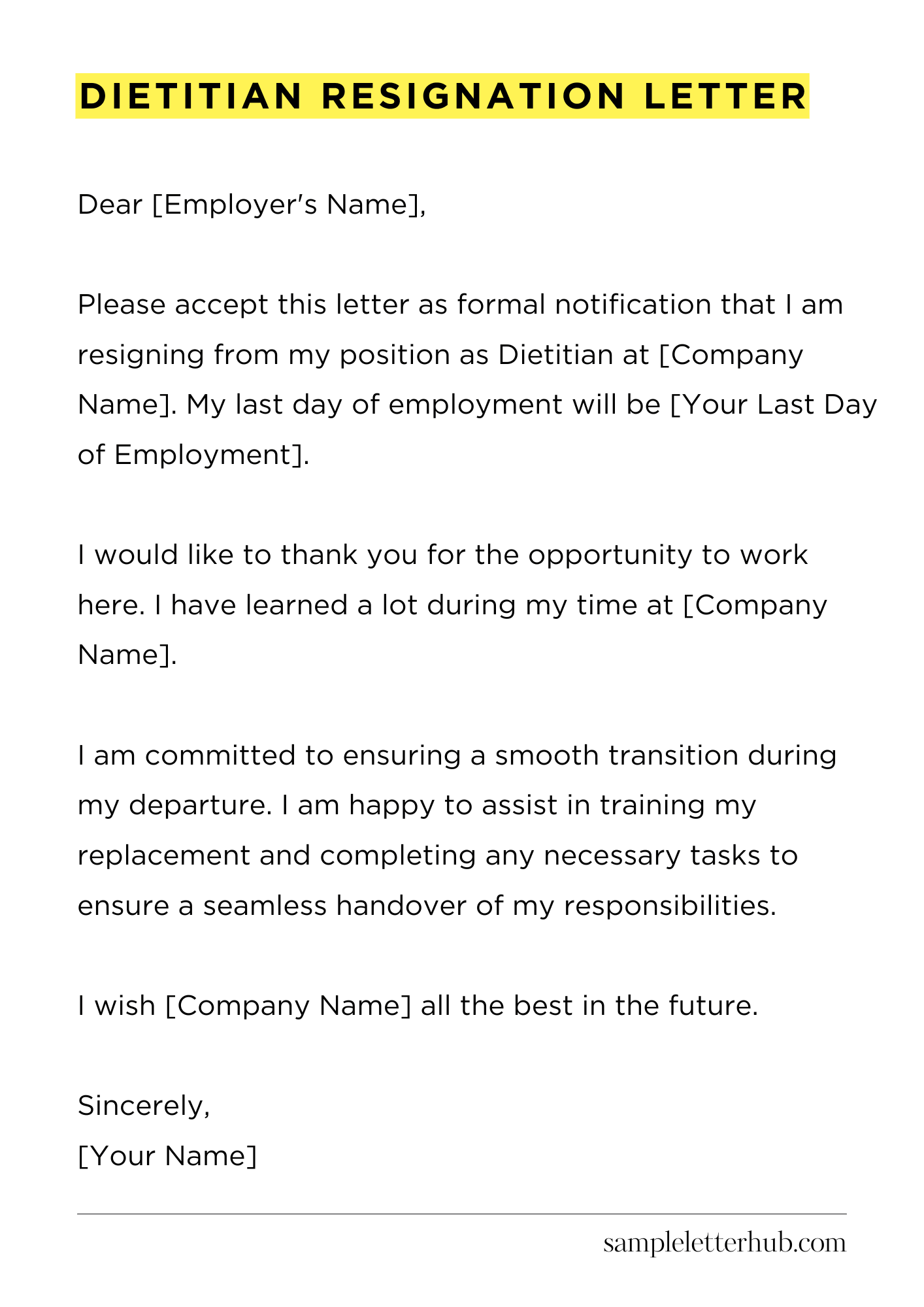
Please accept this letter as formal notification that I am resigning from my position as Dietitian at [Company Name]. My last day of employment will be [Your Last Day of Employment].
I would like to thank you for the opportunity to work here. I have learned a lot during my time at [Company Name].
I am committed to ensuring a smooth transition during my departure. I am happy to assist in training my replacement and completing any necessary tasks to ensure a seamless handover of my responsibilities.
I wish [Company Name] all the best in the future.
Sincerely,
[Your Name]
How to Write a Dietitian Resignation Letter
Know Your Reasons First
Before you even begin typing, take a moment to reflect. Why are you resigning from your position as a dietitian? What are the key drivers behind your decision?
Are you seeking a better work-life balance? Maybe a higher salary is on your mind. Perhaps you’ve received a more exciting offer elsewhere. Understand the core of your motivation.
This introspection will shape your letter’s tone and content. Honesty is crucial, though you’re not obligated to share every single detail. Keep it professional. Keep it clear. A clear understanding will help you write a powerful letter.
Formatting and Structure Are Key
Let’s talk about the look. Your resignation letter should be formatted professionally, just like any other business communication. It should look clean and easy to read. Use a standard business letter format. Start with your name, address, and the date. Next, include the employer’s name, title, and address.
Then, begin with a formal salutation, such as “Dear [Manager’s Name]”. The body should be concise and focused. Finally, conclude with a professional closing like “Sincerely” or “Best regards.” Remember to proofread thoroughly. Check for typos and grammatical errors.
Crafting the Body of Your Letter
The body of your letter is where you communicate your intention. Start with a clear and direct statement of your resignation. State your position and the effective date of your departure. Next, express gratitude for the opportunity to have worked there. Highlight any positive experiences or skills you’ve gained.
Briefly mention any specific projects you enjoyed working on. Avoid negativity or complaints. This isn’t the place to air grievances. Offer assistance with the transition. Be willing to help with the handover of your duties. This shows professionalism. Offer any guidance you can give. This will leave a positive lasting impression.
What to Include (and What to Avoid)
Essential components include your resignation statement, the effective date, and a brief thank you. Do mention your availability to assist with the transition. You may include a reason, but it’s optional.
Focus on the positive aspects of your employment, or a neutral one if necessary. Avoid burning bridges. Don’t include any negative comments about your colleagues or the company. Do not overshare personal details. Keep the tone respectful and professional. Keep it concise.
Finalizing and Sending Your Letter
Once you’ve drafted your letter, review it several times. Proofread it carefully. Ensure your grammar is correct. Check for any errors in spelling. Consider having a trusted friend or colleague review it too.
Their fresh eyes might catch something you missed. Make sure you have an understanding of your contract’s requirements concerning the notice period. Submit your resignation letter to the appropriate person, usually your direct supervisor or HR department. Keep a copy for your records. Good luck with your future endeavors!
FAQs about Dietitian Resignation Letter
What is the primary purpose of a dietitian resignation letter?
The primary purpose of a dietitian resignation letter is to formally notify an employer of an intention to leave their current position. It serves as an official record of the resignation, detailing the effective date of departure, and often includes expressions of gratitude and offers of assistance during the transition period.
What key elements should be included in a dietitian resignation letter?
Essential components of a dietitian resignation letter include a clear and concise statement of resignation, the specific date of the last day of employment, a professional tone, and expressions of gratitude for the opportunity.
It may also include a brief reason for leaving, though this is not always mandatory. Offering assistance with the transition, such as training a replacement, is also a good practice.
What is the ideal format for a dietitian resignation letter?
A typical resignation letter should be formatted professionally. It should begin with your contact information and the date, followed by the recipient’s information.
The body should be concise, professional, and well-written. It is advisable to use a business letter format, including a formal closing (e.g., “Sincerely”) and your typed name, with space for your signature above it.
How much notice should a dietitian give when resigning?
The amount of notice a dietitian should give varies depending on the employment contract and company policy. However, as a general rule, providing at least two weeks’ notice is considered standard professional practice.
Some contracts may require a longer notice period, particularly for senior positions or those with specific contractual obligations. It’s always best to adhere to the terms outlined in the employment contract.
Should a dietitian include a reason for leaving in their resignation letter?
While not mandatory, including a brief, professional reason for leaving can be beneficial. It helps provide context and may assist the employer in understanding the decision.
However, it’s important to keep the reason concise and positive. Avoiding negativity and focusing on future plans is generally advised. If there is a need to address a difficult situation, it’s often better to do so in person or in a separate conversation.
Related:
Resignation letter due to rude boss
Resignation letter moving to another state
Resignation letter due to illness of family member
Resignation letter due to study