

A “Maintenance Engineer resignation letter” is a formal document. It informs an employer of your intention to leave your job. The letter officially marks the end of your employment.
Writing a resignation letter can be tricky. You want to be professional and clear. We’ve got you covered. We’ll provide you with various letter templates.
These examples are tailored for maintenance engineers. They cover different situations. Use them as a starting point. Adapt them to fit your specific needs.
Maintenance Engineer Resignation Letter
Below is a sample of a Maintenance Engineer Resignation Letter:
[Your Name]
[Your Address]
[Your Phone Number]
[Your Email Address]
[Date]
[Employer’s Name]
[Company Name]
[Company Address]
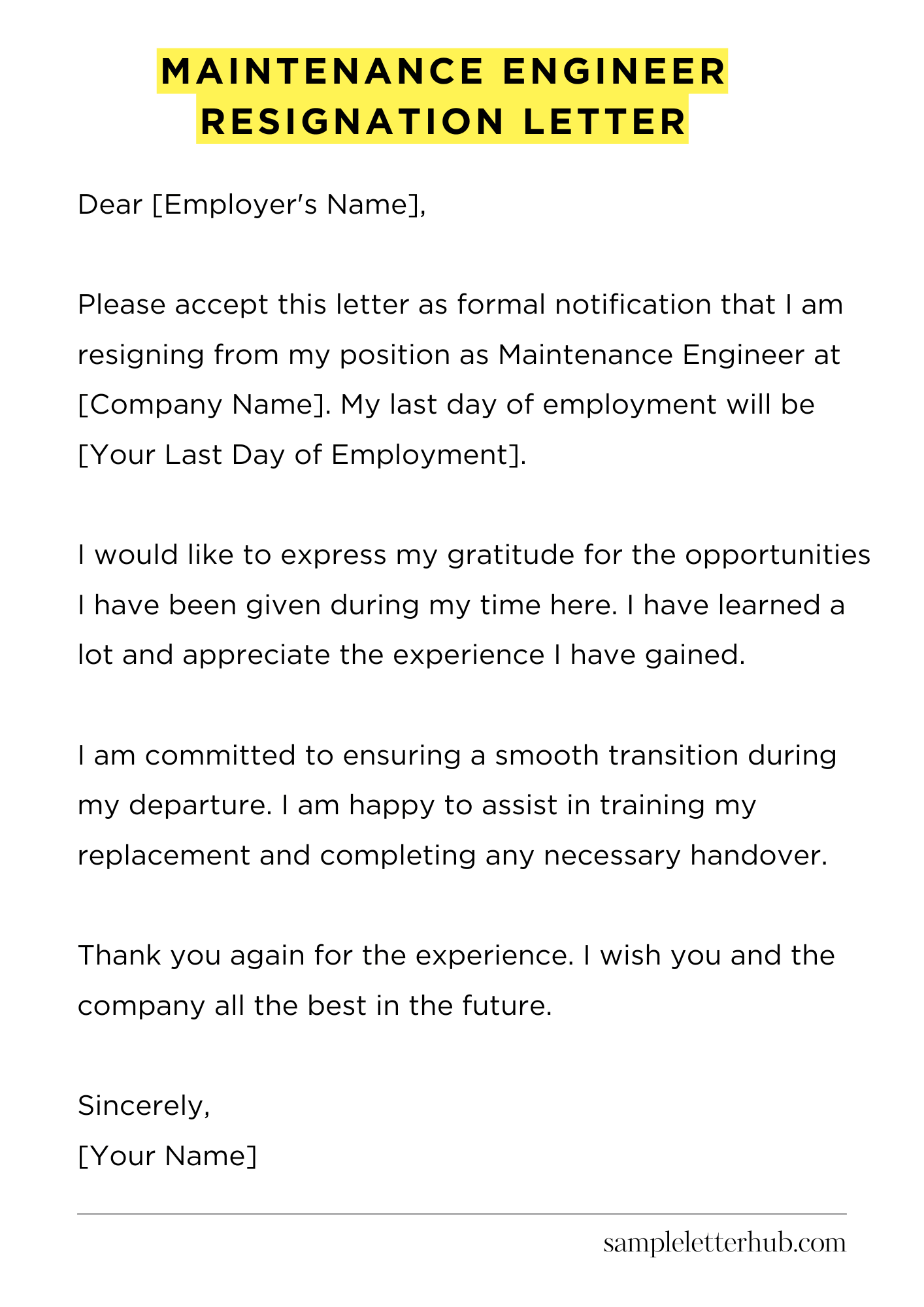
Dear [Employer’s Name],
Please accept this letter as formal notification that I am resigning from my position as Maintenance Engineer at [Company Name]. My last day of employment will be [Your Last Day of Employment].
I would like to express my gratitude for the opportunities I have been given during my time here. I have learned a lot and appreciate the experience I have gained.
I am committed to ensuring a smooth transition during my departure. I am happy to assist in training my replacement and completing any necessary handover tasks before my final day.
Thank you again for the experience. I wish you and the company all the best in the future.
Sincerely,
[Your Name]
How to Write a Maintenance Engineer Resignation Letter
1. Getting Started: The Basics You Need to Know
Resigning from your job as a maintenance engineer is a significant step. You’ve likely put a lot of hard work into your role. It’s important to make the process as professional and straightforward as possible. Your resignation letter is the first step. This document serves as your official notice. You’ll want to ensure it’s written well.
Firstly, the letter needs to be addressed correctly. Always include the date. Include your manager’s name and title. Make sure you use the proper company address. Clarity and accuracy are key.
2. Crafting the Core: What to Include
Your resignation letter is about giving notice. State your intention to resign. The main reason for writing the letter is to inform your employer of your departure. Keep it simple and direct.
Mention your last day of employment. This is crucial for the company. Always adhere to the terms of your employment contract regarding the notice period.
A standard notice period is typically two weeks, but it could be longer depending on your contract. Specify the date. Express your gratitude for the opportunity to work there. Briefly acknowledge any valuable experiences gained during your employment. Keep it positive.
3. Detailing Your Contributions and Offering Assistance
Acknowledging your contributions is a good touch. You can briefly mention any projects you were involved in. Also, include any key responsibilities you handled. Avoid making it a long list. It’s not a performance review.
Offer your assistance during the transition. Offer to help train your replacement. This is a common courtesy. It shows professionalism and a commitment to ensuring a smooth handover. Be prepared to provide any support needed.
4. Formalizing Your Tone and Formatting
Maintaining a professional tone is paramount. Your language should be polite and respectful. Avoid negativity or personal grievances. Refrain from gossip or complaints.
Your resignation letter should be formatted professionally. It must be clear and easy to read. Use a standard font. Keep the font size between 10 and 12 points.
Use single spacing, and align the text to the left. Proofread your letter carefully. Check for any grammatical errors or typos. Ensure your letter is a true reflection of you and your professionalism.
5. Final Steps: Review, Submit, and Move Forward
Before submitting, review the letter thoroughly. Make sure everything is accurate and clear. Once you are satisfied, print the letter. If your company prefers digital submissions, then send it via email.
Deliver the letter to your manager. You can then discuss your departure with them. Finally, remember to stay positive. The goal is to leave on good terms. You should always maintain a positive attitude. This is important for future career prospects. Good luck!
FAQs about Maintenance Engineer resignation letter
How much notice should a Maintenance Engineer give when resigning?
The standard notice period is typically outlined in the employment contract. Common notice periods range from two weeks to one month. It is important to review the employment contract to understand the specific requirements. Providing the appropriate amount of notice is crucial for maintaining a professional relationship with the employer.
What should be included in a Maintenance Engineer’s resignation letter?
A well-written resignation letter should include a clear statement of resignation, the effective date of resignation, a brief expression of gratitude for the employment opportunity, and a polite offer to assist with the transition, if possible. Additional elements can include a concise explanation for leaving (optional), and contact information for future correspondence.
Should a Maintenance Engineer provide a reason for resigning in the letter?
Providing a reason for resigning is optional. While it’s polite to offer a brief explanation, such as pursuing another opportunity or personal reasons, it’s not always necessary. If you choose to provide a reason, keep it concise and professional. Avoid negativity or providing excessive detail.
How should a Maintenance Engineer deliver the resignation letter?
The preferred method is typically to deliver a physical or emailed copy of the resignation letter to the direct supervisor or Human Resources department. It’s advisable to have a face-to-face conversation with the supervisor beforehand, if feasible. This allows for an opportunity to discuss the resignation and answer any immediate questions.
What are some common mistakes to avoid in a Maintenance Engineer resignation letter?
Common mistakes include being unprofessional, burning bridges, or including negative comments about the employer or colleagues. It’s best to maintain a positive and professional tone.
Avoid lengthy explanations or justifications for resigning. Ensure accuracy in dates, job titles, and contact information. Always review the letter carefully before submitting it.
Related:
Resignation letter due to rude boss
Resignation letter moving to another state
Resignation letter due to illness of family member
Resignation letter due to study