

A “Mental Health Therapist Resignation Letter” is a formal document. It is written by a therapist. The purpose is to officially inform their employer of their departure. This letter signals the end of their employment.
Leaving a job can be tricky. It’s often difficult to know where to begin. This is where we come in. We will provide helpful examples. These include templates and samples.
Consider this your quick guide. You’ll find different formats. They fit various situations. Use these to tailor your own letter. Make it clear and professional.
Mental Health Therapist Resignation Letter
Below is a sample of a Mental Health Therapist Resignation Letter:
[Your Name]
[Your Address]
[Your Phone Number]
[Your Email Address]
[Date]
[Employer’s Name]
[Clinic/Organization Name]
[Clinic/Organization Address]
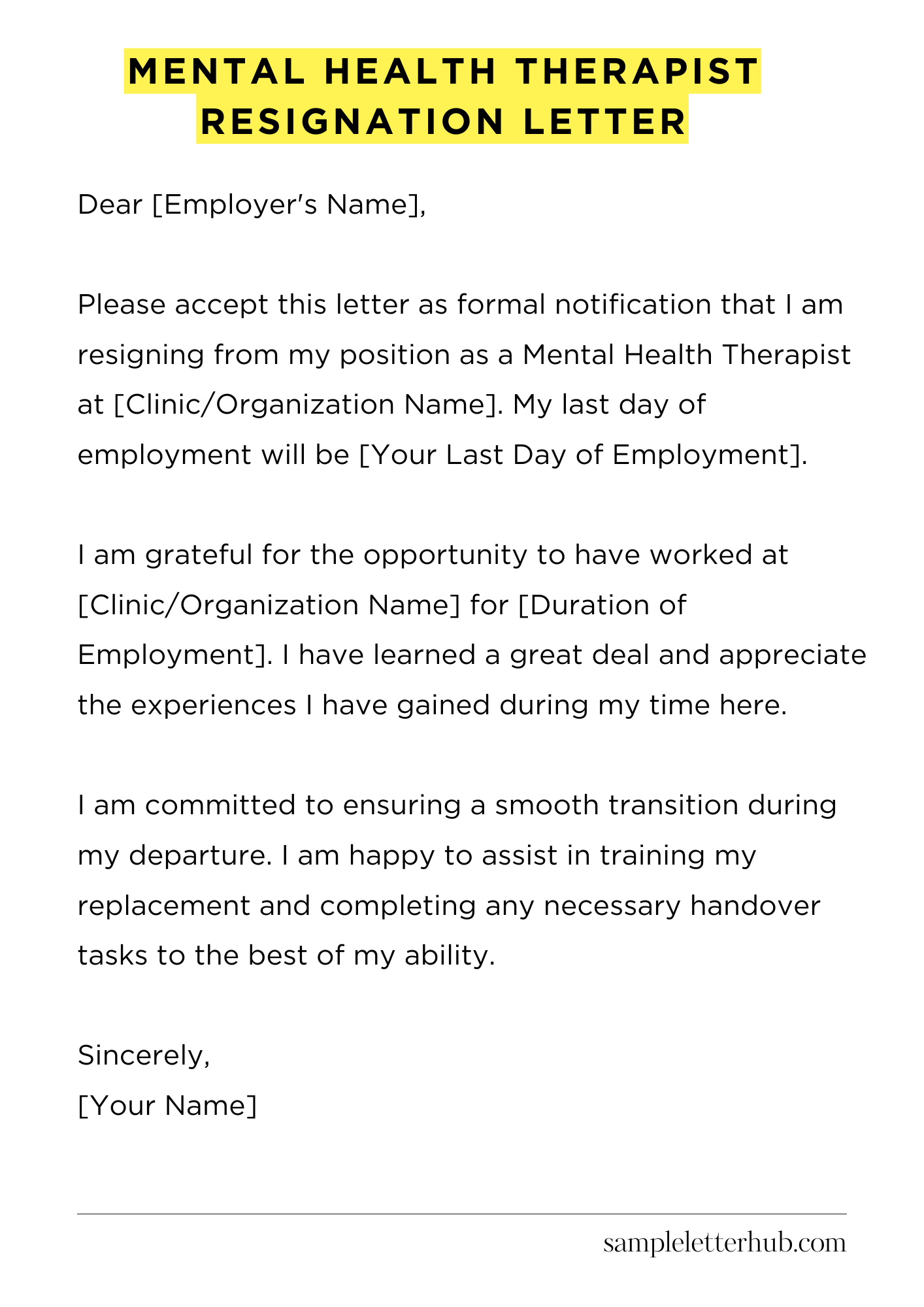
Dear [Employer’s Name],
Please accept this letter as formal notification that I am resigning from my position as a Mental Health Therapist at [Clinic/Organization Name]. My last day of employment will be [Your Last Day of Employment].
I am grateful for the opportunity to have worked at [Clinic/Organization Name] for [Duration of Employment]. I have learned a great deal and appreciate the experiences I have gained during my time here.
I am committed to ensuring a smooth transition during my departure. I am happy to assist in training my replacement and completing any necessary handover tasks to the best of my ability.
Thank you for your understanding. I wish you and the organization continued success in the future.
Sincerely,
[Your Name]
How to Write a Mental Health Therapist Resignation Letter
1. Why Resign? Reasons and Considerations
Leaving a mental health therapy position is a big decision. It’s important to carefully consider why you are resigning. This process helps ensure you’re making the right choice for your career and well-being.
Several reasons might lead a therapist to resign. These can include: feeling burnt out, the need for a better work-life balance, seeking a different professional opportunity, or perhaps even a difficult work environment.
Before you take the leap, assess your current situation honestly. Are you feeling overwhelmed by caseloads, paperwork, or the emotional toll of the job? Consider the pros and cons of staying versus leaving.
Talking to trusted colleagues, mentors, or even a therapist can help you gain clarity. This is particularly important for your own mental health too. Make sure this decision is right for you, now and in the future.
2. Essential Elements: What to Include
Your resignation letter needs to be clear, professional, and respectful. First, start with a formal salutation. Address the letter to your direct supervisor or the appropriate person within the organization. State your intention to resign clearly in the first paragraph. Specify the date of your last day of employment.
This is super important! Express gratitude for the opportunity to work there. Briefly mention any positive experiences or skills you gained. Offer to assist in the transition process.
This might involve helping to transfer client files or training a replacement. Include a professional closing, such as “Sincerely” or “Respectfully”. Finally, don’t forget your signature and printed name. These basics are crucial for a smooth transition.
3. Crafting the Content: Tone and Language
The tone of your letter should be professional and polite. Avoid negative language or making accusations. Focus on the positive aspects of your employment, if possible. Keep it concise.
Get straight to the point. Avoid oversharing personal reasons for leaving; a simple statement is usually sufficient. For example, “I am resigning to pursue other opportunities” is acceptable.
Proofread your letter carefully for any grammatical errors or typos. This helps ensure it reflects well on you. Also, be mindful of any confidentiality agreements you signed when you joined the company. You wouldn’t want to get into any issues. Be sure the letter is appropriate for the workplace.
4. Addressing Client Transitions: Ethical Considerations
As a therapist, you have an ethical responsibility to your clients. Your resignation letter should not directly address client care. However, you need to think about how your departure will impact them.
Be prepared to discuss your departure with your supervisor. Discuss plans for transferring clients to other therapists or providing them with referrals. Follow your organization’s guidelines for client notification and file transfer.
If you’re managing clients yourself, make sure to give enough time to the clients. Ensure a smooth and ethical transition for your patients. This means prioritizing their well-being throughout the process.
5. Formatting and Delivery: Tips for Success
Format your resignation letter in a business letter style. Use a standard font like Times New Roman or Arial. Keep the font size at 12 points. Use single spacing and left alignment. Print your letter on high-quality paper.
If delivering it in person, hand it directly to your supervisor. If submitting electronically, send it as a PDF to ensure proper formatting. Keep a copy of the letter for your records.
This helps keep things professional, and the transition will be less complicated. Follow up with your supervisor to discuss any questions or concerns they may have. This concludes your professional steps!
FAQs about Mental Health Therapist resignation letter
How much notice should a Mental Health Therapist give when resigning?
The standard notice period for a mental health therapist typically ranges from two to four weeks, depending on the employment contract, company policy, and local regulations. However, therapists in private practice might have different arrangements.
It is crucial to review the employment agreement for the specifically stated notice requirements. Providing sufficient notice is critical to allow for a smooth transition of client care and is considered a professional courtesy.
What should be included in a Mental Health Therapist’s resignation letter?
A well-crafted resignation letter from a mental health therapist should include a clear and concise statement of resignation, the effective date of departure, an expression of gratitude to the employer and, if applicable, the clients served, and any specific instructions from the employer.
Therapists often offer to assist with the transfer of client records and the continuity of client care. Professionalism and confidentiality are key in the letter’s tone and content.
How should a Mental Health Therapist handle client communication about their resignation?
Therapists must inform their clients about their resignation in a manner that is ethically sound and complies with all professional guidelines and local regulations.
The announcement should be delivered in person or via secure electronic communication, and it should include the date of the therapist’s departure, instructions for transitioning to a new therapist, and any guidelines for accessing records. Therapists should be prepared to discuss the clients’ concerns, feelings, and plan for the future with new care in mind.
What are the legal and ethical considerations when a Mental Health Therapist resigns?
When resigning, Mental Health Therapists must adhere to all legal and ethical obligations. This includes maintaining client confidentiality, ensuring the proper transfer of client records, and assisting clients in finding appropriate care.
Therapists must be aware of the laws and ethical codes relevant to their profession and the jurisdiction in which they practice. Avoiding abandonment of clients is paramount, and therapists must prioritize the welfare of their clients above all else.
What if a Mental Health Therapist wants to change their resignation date?
If a Mental Health Therapist wishes to change their resignation date, they should discuss this with their employer as soon as possible. The reasons for the change should be clearly communicated.
The employer must agree to the revised date. Any changes should be documented in writing to avoid misunderstandings. Flexibility depends on the workplace’s needs, and client needs are a factor in this decision.
Related:
Resignation letter due to rude boss
Resignation letter moving to another state
Resignation letter due to illness of family member
Resignation letter due to study