

An associate resignation letter is a formal document. It informs your employer of your decision to leave your job. The letter officially ends your employment. It’s a crucial step in the process of moving on.
Crafting a resignation letter can be tough. Don’t worry. We’ve got you covered. We’ll share various templates. These examples will guide you. You can easily adapt them. Write the perfect letter for your situation.
Our goal is to make it simple. We want to take the stress out of resigning. You’ll find different formats. Choose the one that suits your needs. Prepare to make a smooth transition.
Associate Resignation Letter
Below is a sample of a Associate Resignation Letter:
[Your Name]
[Your Address]
[Your Phone Number]
[Your Email Address]
[Date]
[Hiring Manager Name] (If known, otherwise use title)
[Hiring Manager Title]
[Company Name]
[Company Address]
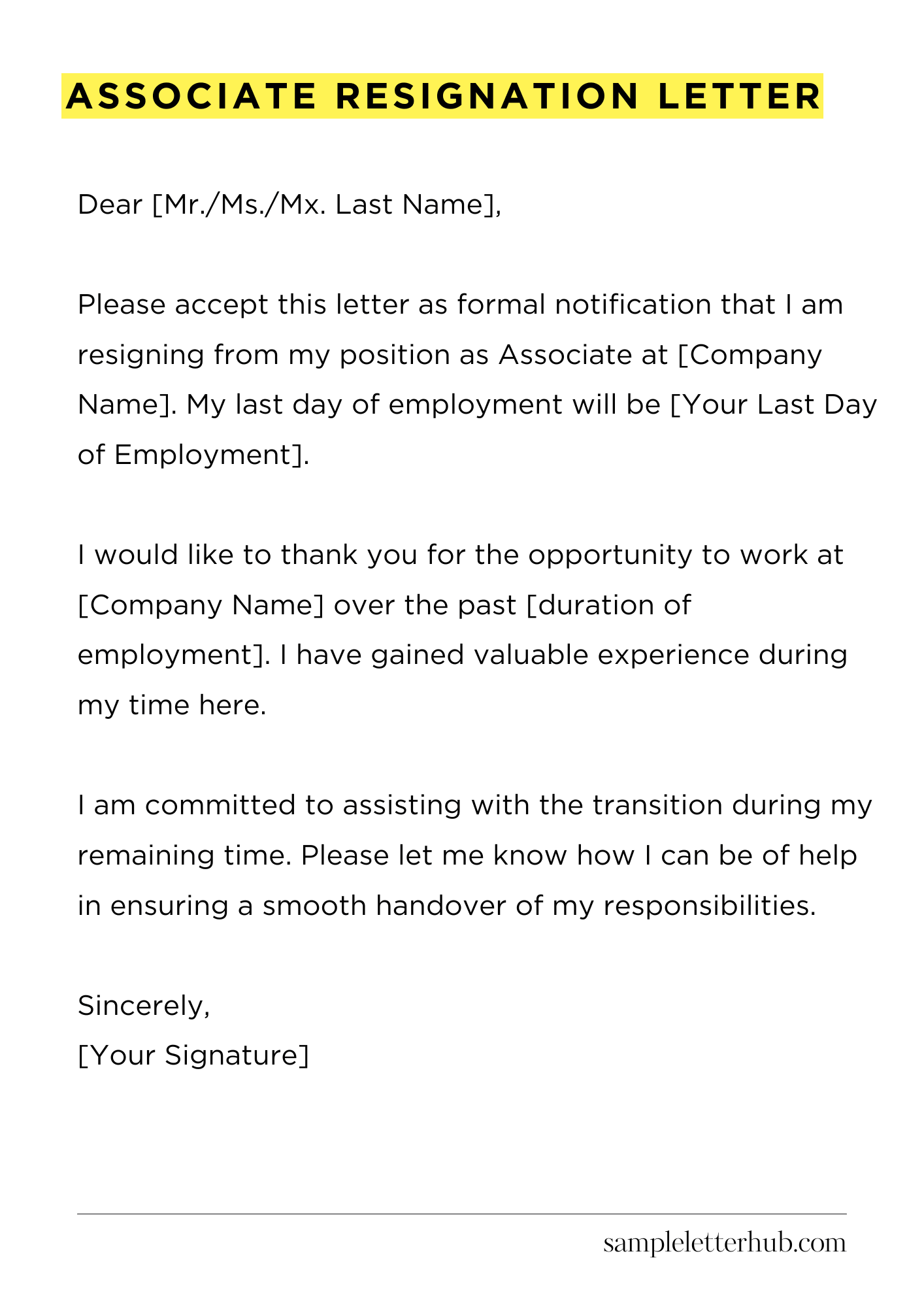
Dear [Mr./Ms./Mx. Last Name],
Please accept this letter as formal notification that I am resigning from my position as Associate at [Company Name]. My last day of employment will be [Your Last Day of Employment].
I would like to thank you for the opportunity to work at [Company Name] over the past [duration of employment]. I have gained valuable experience during my time here.
I am committed to assisting with the transition during my remaining time. Please let me know how I can be of help in ensuring a smooth handover of my responsibilities.
I wish you and the company all the best in the future.
Sincerely,
[Your Signature]
How to Write an Associate Resignation Letter
Leaving a job is a big decision, and it’s essential to do it professionally. The cornerstone of this process? A well-crafted resignation letter. This isn’t just about saying “I quit.” It’s about maintaining a positive relationship and leaving a good impression. Let’s delve into how to write a killer resignation letter, specifically for an associate position.
Step 1: Get the Basics Right
First things first. You need a letter, not an email that’s a mile long. Keep it concise. Start with your full name, address, phone number, and email address. At the top right, add the date. Then, address your letter to your supervisor or the appropriate person, using their title and full name. This shows respect. Consider a professional format for your letter.
Step 2: State Your Intent Clearly
This is the most crucial part. Be direct. State that you are resigning from your position as an Associate at [Company Name]. Include your last day of employment. This is where you officially declare your departure. Make sure the date aligns with company policy regarding notice periods.
For example: “Please accept this letter as formal notification that I am resigning from my position as Associate at [Company Name], effective November 10, 2024.” This is straightforward and leaves no room for misinterpretation.
Step 3: Express Gratitude and Maintain Professionalism
It’s always a good idea to show some appreciation. A little thanks goes a long way. Briefly express your gratitude for the opportunities you’ve been given at the company.
Mention any specific skills you’ve gained or projects you’ve enjoyed. Keep it sincere, but keep it brief. Avoid overly emotional language, even if you are not happy. Remember, you might need a reference in the future.
Step 4: Offer Assistance with the Transition
Demonstrate your commitment to a smooth transition. Offer to help train your replacement or complete any ongoing projects. This demonstrates responsibility and a willingness to help.
For instance: “I am happy to assist in training my replacement and ensuring a smooth handover of my responsibilities.” This shows professionalism and consideration for your former employer’s needs. This is what separates a good resignation letter from a great one.
Step 5: Close with a Professional Closing and Signature
End the letter professionally. Use a formal closing, such as “Sincerely,” or “Respectfully,” followed by your full typed name. If you are submitting a printed letter, leave space for your signature above your typed name. If submitting electronically, a digital signature can also be used. This formality is crucial. It’s what completes the picture.
Writing a resignation letter might seem stressful, but it doesn’t have to be. By following these steps, you can create a letter that is both professional and effective. This will leave a positive lasting impression. Remember, your departure is a reflection of you. Make it count.
FAQs about Associate resignation letter
Understanding the nuances of crafting an Associate resignation letter is crucial for a smooth transition. This guide addresses frequently asked questions to help you navigate this important step.
What is the primary purpose of an Associate resignation letter?
The primary purpose of an Associate resignation letter is to formally notify your employer of your intention to leave your position. It serves as an official record of your resignation, specifies your last day of employment, and provides an opportunity to express your gratitude and potentially offer assistance during the transition period.
What essential information must be included in an Associate resignation letter?
An effective Associate resignation letter must include your formal resignation, stating your intent to leave and the specific date of your last day of employment. It should also clearly state your name, the date the letter is written, and your department or team, which help in organization and clarity.
How much notice should I give in my Associate resignation letter?
The standard notice period for an Associate resignation letter is typically two weeks. However, the exact notice period may vary based on your employment contract, company policy, and local labor laws. Always review your employment agreement to understand the required timeframe.
Can I express my reasons for leaving in an Associate resignation letter?
While not mandatory, you may briefly mention your reasons for leaving in your Associate resignation letter. Keep it professional and concise, focusing on positive terms or future opportunities. Avoid negative comments or criticisms about your current employer or colleagues. If you have any formal complaints then you can mention them in the HR department too.
Should I offer assistance with the transition in my Associate resignation letter?
Offering assistance with the transition is generally a good practice in your Associate resignation letter. This demonstrates professionalism and a commitment to ensuring a smooth handover.
You can offer to help train your replacement, document your responsibilities, or assist with any ongoing projects. However, the extent of your assistance depends on your workload and agreement with your employer.
Related:
Resignation letter due to rude boss
Resignation letter moving to another state
Resignation letter due to illness of family member
Resignation letter due to study