

So, you’re a detective looking to move on? A detective resignation letter is your official goodbye. It’s a formal document. Its purpose is to notify your department of your departure. It states your last day of employment. It’s an important step in ending your service.
Crafting the perfect resignation letter can be tricky. We can help you navigate this. We will provide you with various examples. You’ll find templates for different scenarios. These will simplify your writing process.
Need to keep it concise? Need to express gratitude? You’ll find sample letters to fit your needs. Explore them and tailor them to your situation. Make the process easier for you.
Detective Resignation Letter
Below is a sample of a Detective Resignation Letter:
[Your Name]
[Your Address]
[Your Phone Number]
[Your Email Address]
[Date]
[Recipient’s Name]
[Recipient’s Title]
[Police Department Name]
[Police Department Address]
Dear [Recipient’s Name],
Please accept this letter as formal notification that I am resigning from my position as Detective, effective [Your Last Day of Employment].
I have carefully considered my decision. I want to thank you for the opportunities I have been given during my time here. I have learned a great deal and I appreciate the experiences and training I have received.
I wish the department the very best in the future. I am willing to help with the transition in any way I can, within reason. Please let me know if there is anything I can do to assist.
Sincerely,
[Your Signature]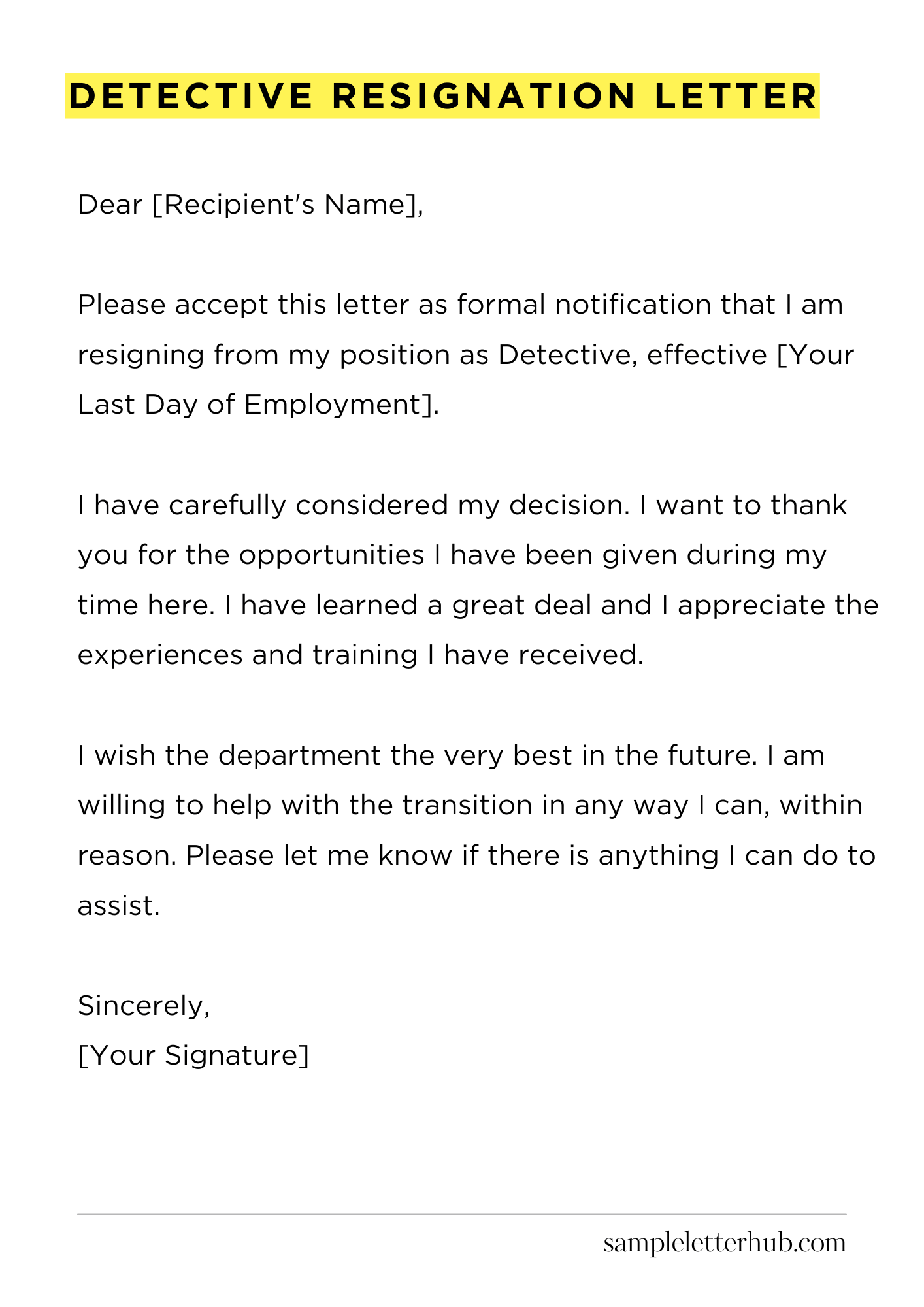
How to Write a Detective Resignation Letter
So, you’ve decided to hang up your badge. The life of a detective, full of intrigue, danger, and long hours, has led you to this moment: writing your resignation letter. Crafting this document requires careful thought and a strategic approach. It’s more than just saying goodbye; it’s a formal record that can impact your future. Let’s break down how to get it right.
1. Getting Started: The Basics You Need
First things first. You’ll need a few essential pieces of information. This isn’t rocket science, but missing these can lead to problems. Start by including your full name, the date, and your current contact information at the top. Next, identify the recipient – usually the Police Chief or your direct supervisor. Address them respectfully.
Keep it straightforward and professional; remember, this is a formal letter. Also, make sure to state your official title, and of course, your current department.
In the opening paragraph, clearly state your intent: to resign from your position. Specify the date your resignation will be effective. Adhere to any required notice period outlined in your employment contract or department policy. This is super important! Not following these simple rules could potentially complicate things down the line.
2. Expressing Your Gratitude (and Keeping it Concise)
Now, while you may be eager to move on, showing appreciation for the opportunities you’ve been given is a good idea. This is the place to acknowledge any positive experiences, training, or relationships you’ve formed during your time as a detective. Keep it sincere, but brief.
There’s no need to go overboard with the flattery, but a simple “Thank you for the opportunity to serve…” can go a long way. Consider mentioning any specific skills or experiences you gained that you’re grateful for.
This is also a good opportunity to mention any positive collaborations and to show you were a team player. Your goal is to leave on a positive note, minimizing the potential for any professional fallout.
3. Providing a Reason (Optional, but Often Recommended)
Whether you choose to include a reason for your resignation depends on your personal circumstances and departmental culture. In some cases, a brief, general statement is sufficient. You don’t need to provide a detailed explanation of your motives. If you are leaving for another job, you might say, “I have accepted a position that will allow me to pursue different professional goals.”
However, if you are retiring, you could simply state: “I am retiring from law enforcement.” Keeping it simple protects your privacy. Remember, honesty is the best policy, but you are not obligated to overshare. Do not be overly critical.
4. Formalities and Next Steps
Conclude your letter with a formal closing, such as “Sincerely” or “Respectfully.” Sign your name above your typed name. Under your signature, you can include your title again if you’d like. Be sure to proofread the entire document for any spelling or grammatical errors. A typo can really undermine your credibility.
Make a copy of the letter for your records. Then, submit the original according to your department’s protocol, which usually involves delivering it to your supervisor or HR department. Be prepared for a conversation; your supervisor may want to discuss your departure.
5. After the Letter: Wrapping Up and Looking Ahead
Once you’ve submitted your letter, the process of leaving begins. Cooperate fully with your department during the handover process. This might involve completing paperwork, training your replacement, and returning any equipment. Your goal is to make the transition as smooth as possible.
Leaving on good terms is crucial. It’s important for future career prospects and networking opportunities. Finally, remember to stay positive. The world needs good people, and hopefully, you will find your next venture even more fulfilling.
FAQs about Detective resignation letter
Why is a formal resignation letter necessary for a detective?
A formal resignation letter is crucial for a detective for several reasons. Primarily, it serves as a documented record of the employee’s intent to leave the position, establishing an official date of departure.
This documentation is essential for legal and administrative purposes. It helps to ensure that all relevant procedures, such as final paychecks, benefits processing, and return of department property, are handled correctly.
Additionally, a well-crafted letter can help maintain a positive relationship with the department, which might be beneficial for future references or interactions.
What key elements should be included in a detective’s resignation letter?
A detective’s resignation letter should contain several key elements. It must include a clear and concise statement of the intent to resign, along with the effective date of resignation. The letter should mention the detective’s name, rank, and any relevant department-issued identification numbers.
Expressing gratitude for the opportunity to serve, while optional, can foster goodwill. It’s often advisable to briefly state the reason for leaving, but it can be kept general. Finally, the letter should formally request acknowledgment of the resignation and instructions on how to proceed with final tasks, such as the return of equipment. Including contact information is useful.
What are the common reasons detectives resign from their positions?
Detectives resign for a variety of reasons. Many detectives depart for better opportunities in different fields, such as the private sector, or to pursue other law enforcement roles with different agencies.
Some resign due to a lack of career advancement opportunities, or they might seek a better work-life balance, which can be challenging in detective work.
Personal reasons, such as relocation or family commitments, also play a role. Stress, burnout, and dissatisfaction with departmental policies or leadership can also be contributing factors to a detective’s resignation. Finally, physical or mental health concerns can also lead to resignation.
How should a detective handle the handover of ongoing investigations in the resignation letter?
In the resignation letter, the detective should address the handover of ongoing investigations. This typically involves expressing a commitment to a smooth transition and offering to assist in the handover process.
The detective might state that all active cases will be properly documented and organized. It is also important to suggest possible candidates or potential replacements for each case.
The letter should mention the detective’s willingness to brief the incoming detective on the active investigations. This should ensure minimal disruption during the transition period and protect the integrity of the ongoing cases.
What legal and ethical considerations should a detective keep in mind when writing a resignation letter?
When composing a resignation letter, detectives must be mindful of several legal and ethical considerations. The letter should avoid making any defamatory, libelous, or slanderous statements about the department or its personnel.
Confidentiality is paramount; detectives should not disclose any sensitive information related to ongoing investigations, especially not sensitive information that is classified. It is crucial to adhere to departmental policies and procedures regarding the resignation process and the return of department property.
Furthermore, detectives should maintain professionalism and respect throughout the letter, avoiding any language that could be seen as insubordinate or disrespectful. Seeking legal advice is prudent in complex situations.
Related:
Resignation letter due to rude boss
Resignation letter moving to another state
Resignation letter due to illness of family member
Resignation letter due to study