

An Executive Housekeeper resignation letter is a formal document. It officially informs an employer of your departure. The purpose is to communicate your decision clearly and respectfully. It also provides a date for your last day of employment.
Are you an Executive Housekeeper looking to move on? Writing the perfect resignation letter can be tough. We’ve got you covered. We’re sharing templates and examples. Use them as a starting point.
These samples will help you. They make crafting your letter simple. Choose the best format. Customize it to fit your needs. Your resignation letter will be ready in no time.
Executive Housekeeper Resignation Letter
Below is a sample of a Executive Housekeeper Resignation Letter:
[Your Name]
[Your Address]
[Your Phone Number]
[Your Email Address]
[Date]
[Employer’s Name]
[Employer’s Title]
[Hotel/Company Name]
[Company Address]
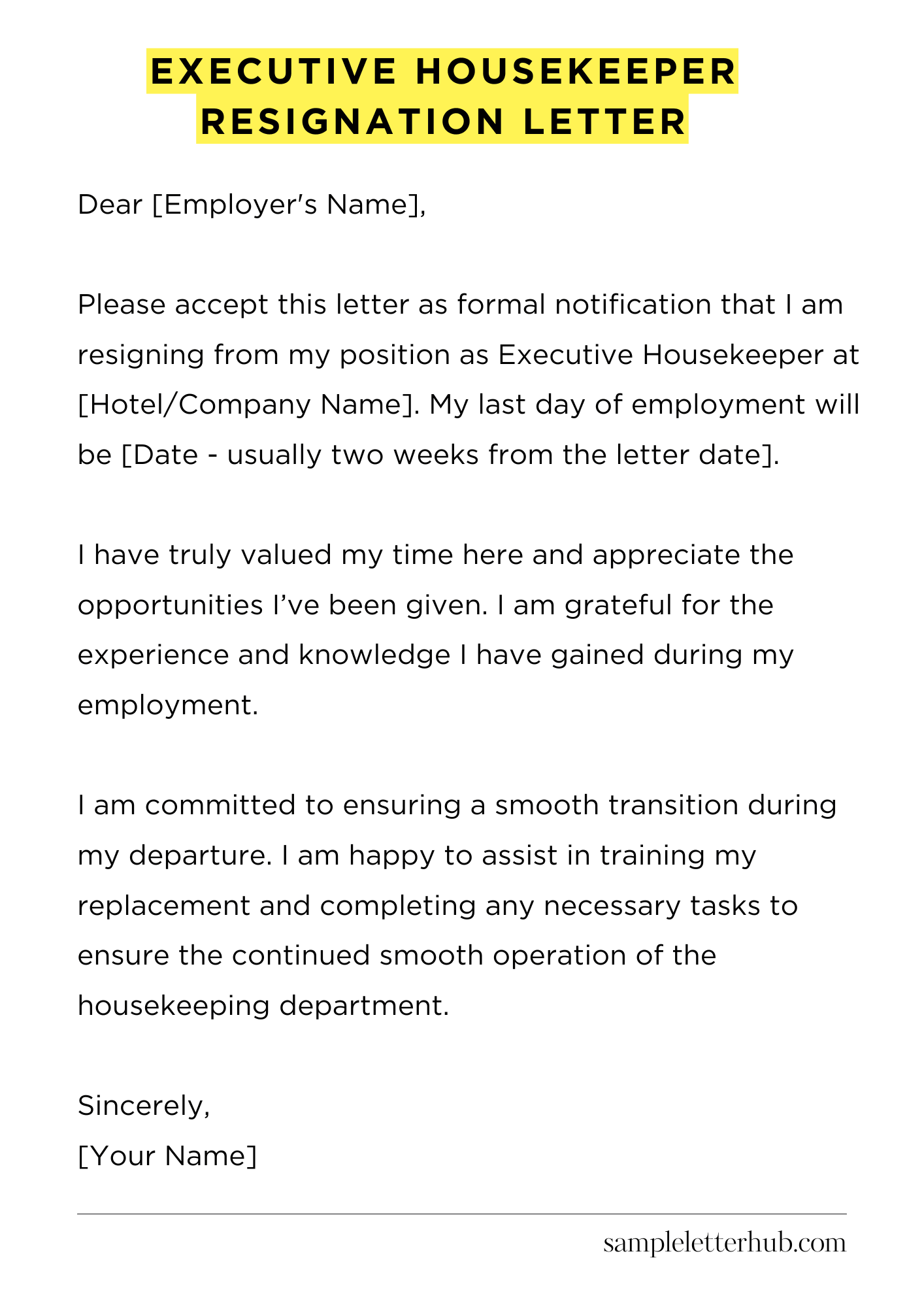
Dear [Employer’s Name],
Please accept this letter as formal notification that I am resigning from my position as Executive Housekeeper at [Hotel/Company Name]. My last day of employment will be [Date – usually two weeks from the letter date].
I have truly valued my time here and appreciate the opportunities I’ve been given. I am grateful for the experience and knowledge I have gained during my employment.
I am committed to ensuring a smooth transition during my departure. I am happy to assist in training my replacement and completing any necessary tasks to ensure the continued smooth operation of the housekeeping department.
I wish you and [Hotel/Company Name] all the best in the future.
Sincerely,
[Your Name]
How to Write Executive Housekeeper Resignation Letter
1. Grasping the Basics: Why a Resignation Letter Matters
Leaving a job, especially a role like Executive Housekeeper, requires professionalism. This is more than just a formality. A well-crafted resignation letter is your official statement. It serves several crucial purposes.
First, it formally notifies your employer of your departure. Second, it creates a written record. This helps avoid any misunderstandings. Third, it allows you to maintain a positive relationship with your employer. Leaving on good terms is always the best way to go, you never know when you might need a reference or want to work with them in the future.
So, take it seriously!
2. Structure is Key: Formatting Your Letter Correctly
The structure of your letter is important. Get it right from the start. Begin with your contact information. Include your name, address, phone number, and email. Then, add the date.
Next, address your recipient formally. Use their name and title. The body of the letter needs a clear and concise opening. State your intention to resign. Specify your last day of employment. Keep it brief. Then, write a simple thank you.
Follow a basic layout. Keep it clean and easy to read.
3. Content Matters: What to Say and What to Avoid
Now, let’s look at the content. Keep it professional. State your resignation, your last day, and express gratitude. Offer to assist with the transition. Keep it concise. Avoid negative comments about your job.
Do not go into extensive detail. Focus on the facts. It is not necessary to give a full list of your personal reasons for leaving. If you must, a simple, neutral statement is usually enough. For example, “I have accepted a new opportunity.” Also, proofread your letter. Check for spelling and grammatical errors. Avoid making it look rushed.
A well-written letter reflects well on you.
4. Show Gratitude: Saying Thank You Properly
Expressing your gratitude is essential. Thank your employer for the opportunity. Mention any positive experiences you’ve had. This shows you’re not just leaving; you appreciate the time.
A short and sincere expression goes a long way. Consider mentioning any specific learning experiences. If you have been promoted and trained, mention this. If you can, keep it specific. Being specific creates a more personal feel. This can create a lasting impression. Do not overdo it. Keep it brief. Showing gratitude ensures you leave a positive impression.
A simple thank you is a must.
5. Final Steps: Reviewing, Delivering, and What Comes Next
Before submitting, review your letter. Read it carefully. Check everything. Ensure everything is correct. Make sure it reflects your professionalism. Deliver your letter according to company policy.
You may need to hand it in to your direct supervisor. Follow any specific instructions. After submitting, be prepared for a response. Be ready to discuss your departure. Be cooperative with your employer. Remember that you are setting the stage for your future. Leave on a positive note. Good luck with your new job!
Following these steps will help you write a successful resignation letter.
FAQs about Executive Housekeeper resignation letter
How much notice should an Executive Housekeeper give when resigning?
The standard notice period for an Executive Housekeeper, similar to many professional roles, is typically two to four weeks. However, the exact amount can vary based on the employment contract, company policy, and local labor laws.
It’s crucial for the Executive Housekeeper to review their employment agreement to determine the stipulated notice period. Providing adequate notice is a professional courtesy that allows the employer time to find a replacement and ensure a smooth transition of responsibilities.
What key elements should be included in an Executive Housekeeper resignation letter?
An effective resignation letter should include: a clear and concise statement of resignation (e.g., “I am writing to formally resign from my position as Executive Housekeeper”); the effective date of the resignation; a brief expression of gratitude for the opportunity to have worked at the company; and an offer to assist with the handover of duties.
Optional elements include a brief, professional reason for leaving (if desired) and a positive closing, expressing best wishes for the company’s future.
Should an Executive Housekeeper explain the reason for leaving in their resignation letter?
While not mandatory, providing a reason for leaving is often optional. If the Executive Housekeeper chooses to include a reason, it should be brief, professional, and positive.
Avoid going into excessive detail or including negative comments about the employer or colleagues. Examples of acceptable reasons could be “to pursue other opportunities,” “for personal reasons,” or “to relocate.” If no reason is provided, that is also perfectly acceptable.
How should an Executive Housekeeper handle the handover of duties?
The Executive Housekeeper should offer to assist with the handover of their duties to ensure a smooth transition. This involves creating a detailed list of responsibilities, processes, and contacts.
They should be prepared to train their replacement or other staff members, provide documentation, and answer any questions to ensure the continuity of operations. The extent of the handover will depend on the role’s complexity and the agreed-upon terms with the employer.
What is the appropriate tone for an Executive Housekeeper’s resignation letter?
The appropriate tone is professional, respectful, and courteous. The letter should maintain a positive and appreciative tone, even if the Executive Housekeeper is leaving due to dissatisfaction.
Avoid negativity, complaints, or unprofessional language. The letter is a final communication, and it’s essential to leave a positive impression. Clarity and brevity are also key components of a well-written resignation letter.
Related:
Resignation letter due to rude boss
Resignation letter moving to another state
Resignation letter due to illness of family member
Resignation letter due to study