

A building manager resignation letter is a formal document. It is written to inform an employer about a building manager’s departure. This letter clearly states the intent to leave the job. It also includes the effective date of the resignation.
So, you’re a building manager looking to move on? You’ve come to the right place. We understand it can be tricky to craft the perfect resignation letter. That’s why we’ve got you covered.
We’ve compiled several templates and examples. These are designed to help you. These samples make writing your resignation letter a breeze. Use them as inspiration. Customize them to fit your specific needs.
Building Manager Resignation Letter
Below is a sample of a Building Manager Resignation Letter:
[Your Name]
[Your Address]
[Your Phone Number]
[Your Email Address]
[Date]
[Building Manager’s Name]
[Building Name]
[Building Address]
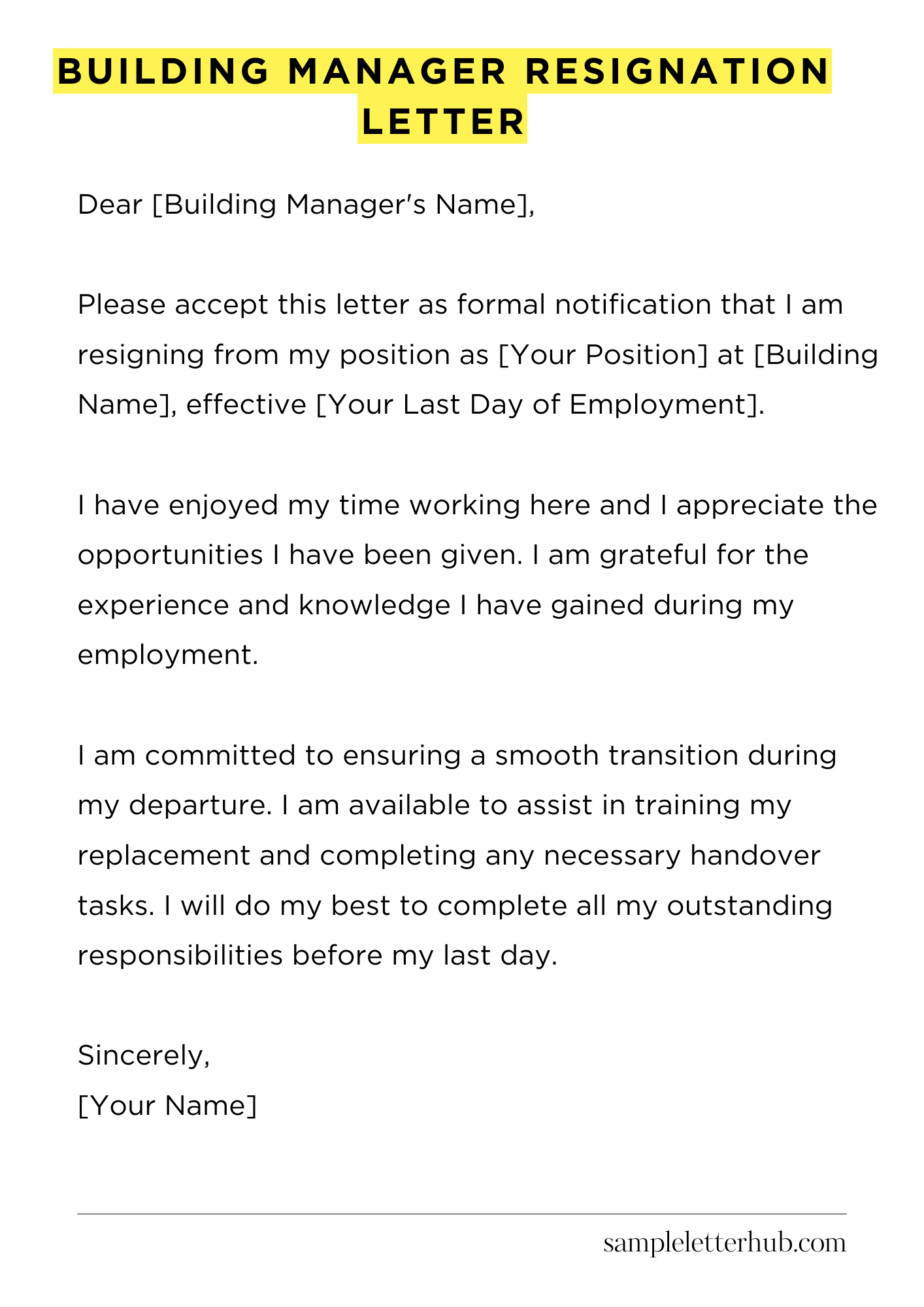
Dear [Building Manager’s Name],
Please accept this letter as formal notification that I am resigning from my position as [Your Position] at [Building Name], effective [Your Last Day of Employment].
I have enjoyed my time working here and I appreciate the opportunities I have been given. I am grateful for the experience and knowledge I have gained during my employment.
I am committed to ensuring a smooth transition during my departure. I am available to assist in training my replacement and completing any necessary handover tasks. I will do my best to complete all my outstanding responsibilities before my last day.
I wish you and [Building Name] all the best in the future.
Sincerely,
[Your Name]
How to Write a Building Manager Resignation Letter
Resigning from any job can be a significant step. Doing it gracefully, especially as a Building Manager, is crucial. You want to leave a positive impression. This guide will help you craft a professional and effective resignation letter, setting the stage for a smooth transition. Consider it your roadmap to a successful departure.
1. Get Started: The Essentials
First things first. You need to gather some basic information. Your letter should always include the date. Then, state your official resignation. Make it clear and concise. Use a formal tone. Include your name, current title (Building Manager), and the intended last day of employment. This is the foundation upon which you’ll build your letter.
Here’s a basic structure to follow:
[Your Name]
[Your Address]
[City, State, Zip Code]
[Date]
[Employer’s Name]
[Employer’s Title]
[Company Name]
[Company Address]
Dear [Employer’s Name],
I am writing to inform you of my resignation from my position as Building Manager at [Company Name]. My last day of employment will be [Your Last Day of Employment].
Sincerely,
[Your Signature]
[Your Typed Name]
2. Express Your Gratitude (and Keep it Brief!)
Even if you’re leaving for better opportunities or feeling burnt out, expressing gratitude is important. Acknowledge your time with the company.
Briefly mention any positive experiences or opportunities you’ve been given. Keep this section brief and sincere. This small step shows professionalism and respect. Don’t go overboard, a sentence or two is sufficient. Remember, a simple “Thank you for the opportunity” can go a long way.
3. The Handover: Offer Assistance
Offer assistance with the transition. This is crucial for maintaining a good relationship. It shows that you value your colleagues and the smooth running of the building.
This also highlights your commitment to professionalism. The offer to help with the handover process is an important step. This could include training a replacement, compiling important documents, or simply answering questions. Be specific about what you’re willing to do. Make sure you state how long you’re willing to help for.
For instance: “I am committed to ensuring a seamless transition. I am available to assist in training my replacement and providing any necessary documentation for the next two weeks.”
4. The Reason (Or Not): Transparency vs. Privacy
Do you need to provide a reason for leaving? Not always. It is often best to keep things brief and professional. It depends on your relationship with your employer. If you had a positive working relationship, a brief explanation can be okay. However, you are not obligated to disclose all details.
You can simply state that you are pursuing other opportunities. The decision to include a reason rests entirely with you. Keep it professional. Avoid negativity or complaints. If you do include a reason, ensure that it is concise and factual.
Example: “I have accepted a new position that aligns with my long-term career goals.”
5. Review and Refine: The Finishing Touches
Before you send your letter, review it carefully. Proofread for any errors in grammar and spelling. Ensure that the tone is professional. Check your contact information.
Make sure you have included your signature. It is important to remember to keep a copy for your records. Consider asking a trusted friend or colleague to read it over for a second opinion. This helps to ensure that your message is clear and effective. A well-written letter reflects positively on you and can leave a lasting positive impression. A final review is an essential step.
FAQs about Building Manager Resignation Letter
What information should I include in my building manager resignation letter?
Your resignation letter should clearly state your intention to resign from your position as building manager. Include your full name, the date, and the effective date of your resignation. It’s also standard practice to express gratitude for the opportunity to work in the role and, if you wish, briefly explain the reason for your departure.
Be sure to provide contact information for the transition, and mention the return of company property. Keep it professional and concise.
What is the proper format for a building manager resignation letter?
The standard format for a resignation letter is a formal business letter. Start with your contact information (name, address, phone number, email) and the date. Next, include the recipient’s information (usually the property owner, employer, or their representative).
Follow with a clear and concise opening statement of your resignation, the effective date, and a brief statement expressing gratitude. End with a professional closing, such as “Sincerely” or “Respectfully,” followed by your typed name and signature.
How much notice should I give when resigning as a building manager?
The amount of notice you should give depends on your employment contract, local laws, and company policy. However, as a general rule, providing at least two weeks’ notice is considered standard professional practice.
This allows time for your employer to find a replacement and for you to assist with the transition of your responsibilities. Consulting your employment contract will help you determine the specific requirements.
Can I include the reason for my resignation in the letter?
While not mandatory, you can briefly mention the reason for your resignation in your letter. However, it’s generally best to keep it concise and professional.
You can state that you’re pursuing another opportunity or that it’s due to personal reasons. Avoid providing detailed complaints or negativity. If you are comfortable, you may also choose to discuss the reasons with your employer separately.
What should I do after submitting my building manager resignation letter?
After submitting your letter, be prepared to cooperate with your employer during the transition period. This may involve training your replacement, completing any outstanding tasks, and providing necessary documentation. Be professional and maintain a positive attitude throughout this process.
Ensure you have a clear understanding of your final pay, benefits, and the return of any company property. Finally, obtain a copy of your letter for your records.
Related:
Resignation letter due to rude boss
Resignation letter moving to another state
Resignation letter due to illness of family member
Resignation letter due to study