

So, you’re a game designer ready to move on. A “Game Designer resignation letter” is a formal document. You use it to tell your employer you’re leaving. Its main job? To officially end your employment gracefully.
This article is your guide to crafting the perfect goodbye. We’ve got your back. We’ll share different templates. They will act as your blueprint for a smooth departure. They will make it easier for you to express your feelings.
Whether you’re off to a new opportunity or taking a break, we have examples. These samples cover various situations. Consider these as your creative launchpad. Now, you can adapt these to reflect your unique circumstances.
Game Designer Resignation Letter
Below is a sample of a Game Designer Resignation Letter:
[Your Name]
[Your Address]
[Your Phone Number]
[Your Email Address]
[Date]
[Employer’s Name]
[Company Name]
[Company Address]
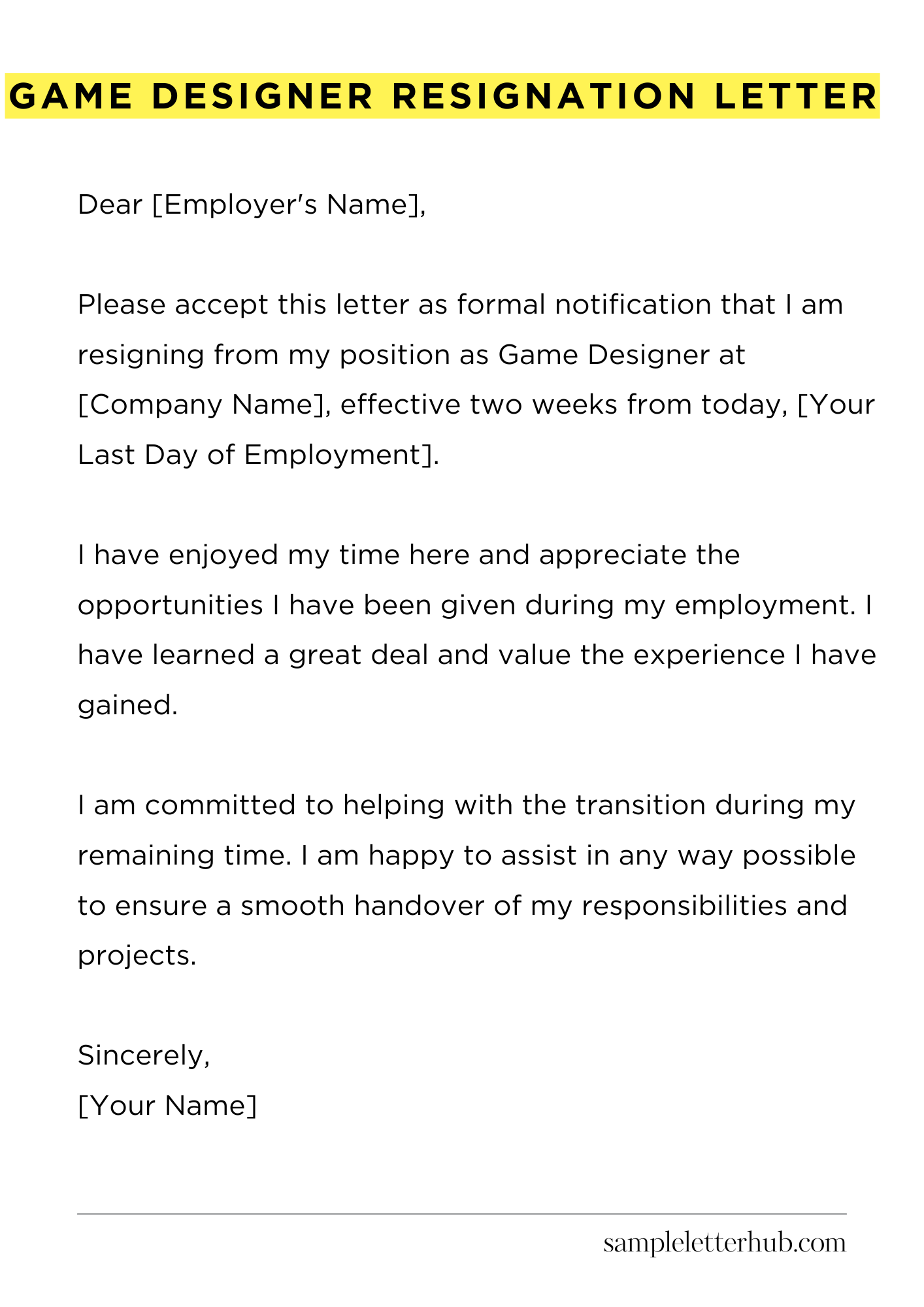
Dear [Employer’s Name],
Please accept this letter as formal notification that I am resigning from my position as Game Designer at [Company Name], effective two weeks from today, [Your Last Day of Employment].
I have enjoyed my time here and appreciate the opportunities I have been given during my employment. I have learned a great deal and value the experience I have gained.
I am committed to helping with the transition during my remaining time. I am happy to assist in any way possible to ensure a smooth handover of my responsibilities and projects.
Thank you for the opportunity to work at [Company Name]. I wish you and the company all the best in the future.
Sincerely,
[Your Name]
How to Write Game Designer Resignation Letter
Why a Resignation Letter Matters
Leaving a job, especially in the exciting world of game design, can feel overwhelming. You’ve poured your creativity into projects, collaborated with talented teams, and likely built a good rapport with your colleagues.
That’s why a well-crafted resignation letter is extremely important. A clear and professional letter ensures a smooth transition. Think of it as your final contribution to the company and a bridge to your next opportunity.
It’s also about maintaining a professional reputation. You never know when you might cross paths with these people again. A positive closing reflects well on your career.
Essential Elements: What to Include
So, what should be included in this essential document? First and foremost, clearly state your intention to resign. Specify your last day of employment. This is crucial for HR and your manager to plan accordingly.
Next, express your gratitude. Acknowledge the opportunity you were given. Thank your employer for the experiences and any growth you’ve gained during your time there. Keep it concise, but sincere.
A brief, positive statement about your experience working with the team is also a good idea. Consider mentioning any projects you enjoyed or skills you developed. Don’t go into extensive detail. Simply offer a respectful sentiment.
Finally, end the letter by offering assistance with the transition. This shows consideration for your colleagues. Offer to help train a replacement or complete any unfinished tasks if needed. This will truly cement your professionalism.
Structuring Your Letter: The Right Format
Formatting is key. A well-structured letter is easy to read. Start with your name and contact information. Then, include the date and the recipient’s information (manager’s name, title, and company address).
Use a professional business letter format. A standard business letter format includes a formal salutation (e.g., “Dear [Manager’s Name],”).
Keep your language formal. Proofread carefully before sending it. Avoid slang or overly casual language.
After your closing remarks, include a closing (e.g., “Sincerely,” or “Best regards,”). Sign your name above your typed name. This personal touch seals the deal.
What to Avoid: Common Pitfalls
Avoid any negativity. Your resignation letter isn’t the place to air grievances or complain about your previous experiences. Keep the tone positive and professional, even if you weren’t happy.
Do not include detailed reasons for leaving. It is generally not necessary to disclose your new job or discuss why you are leaving in depth. Keep it brief. You can do that in your exit interview.
Never burn bridges. Refrain from making disparaging remarks about colleagues, projects, or the company. You want to leave a good impression.
Also, don’t just email a resignation letter. Submit a physical copy whenever possible. Make sure it is addressed to the right person.
The Final Delivery and Follow-Up
Once your letter is ready, discuss it with your manager. Schedule a meeting to deliver the letter in person. This shows respect for your employer and gives them the opportunity to ask questions.
After you submit your letter, be prepared for an exit interview. This is your chance to provide more detailed feedback if you feel comfortable. Even so, keep it professional.
Follow all company policies regarding your departure. Ensure you return all company property. Lastly, remember to maintain professionalism until your last day of employment. It leaves the best possible impression.
FAQs about Game Designer Resignation Letter
What is the primary purpose of a game designer resignation letter?
The primary purpose of a game designer resignation letter is to formally notify an employer of an employee’s intent to leave their position. It serves as an official record of the resignation, the last day of employment, and provides a professional means of communicating the departure.
What key elements should be included in a game designer resignation letter?
A well-structured game designer resignation letter typically includes the formal announcement of resignation, the effective date of departure, a brief expression of gratitude for the opportunity, and possibly an offer to assist with the transition. It may also briefly state the reason for leaving, though this is optional.
How should a game designer address the letter and who should it be sent to?
The letter should be addressed formally to the direct supervisor, the department head, or the human resources department. The specific recipient will vary depending on company policy. It is crucial to use a professional salutation, such as “Dear [Name],” to maintain a professional tone.
Is it necessary to provide a reason for leaving in the resignation letter?
While not mandatory, briefly stating the reason for leaving is acceptable, but not required. It is often useful to keep the explanation concise and positive, focusing on the future and new opportunities, or personal reasons. Avoid negative comments about the company or colleagues.
How can a game designer ensure a smooth transition after submitting the resignation letter?
To ensure a smooth transition, a game designer can offer to assist in training a replacement, completing outstanding tasks, or documenting their work processes. This proactive approach demonstrates professionalism and can help maintain positive relationships with the former employer. Additionally, adhere to the company’s established procedures for the departure process.
Related:
Resignation letter due to rude boss
Resignation letter moving to another state
Resignation letter due to illness of family member
Resignation letter due to study