

So, you’re leaving your operations role? That means you’ll need to write an “Operations Resignation Letter”. This letter formally informs your employer of your departure. It officially states your last day of employment. It’s an important step in the process.
Feeling overwhelmed about putting it all together? Don’t worry, we’ve got you covered. We’ll provide a variety of Operations resignation letter templates. These samples will help you craft your own. They’re designed to be clear and concise.
Our goal is to make it easy. We offer different examples for different situations. From brief and polite to more specific scenarios, you’ll find what you need. Consider these templates your starting point. Get ready to write with confidence.
Operations Resignation Letter
Below is a sample of a Operations Resignation Letter:
[Your Name]
[Your Address]
[Your Phone Number]
[Your Email Address]
[Date]
[Recipient’s Name]
[Recipient’s Title]
[Company Name]
[Company Address]
Dear [Recipient’s Name],
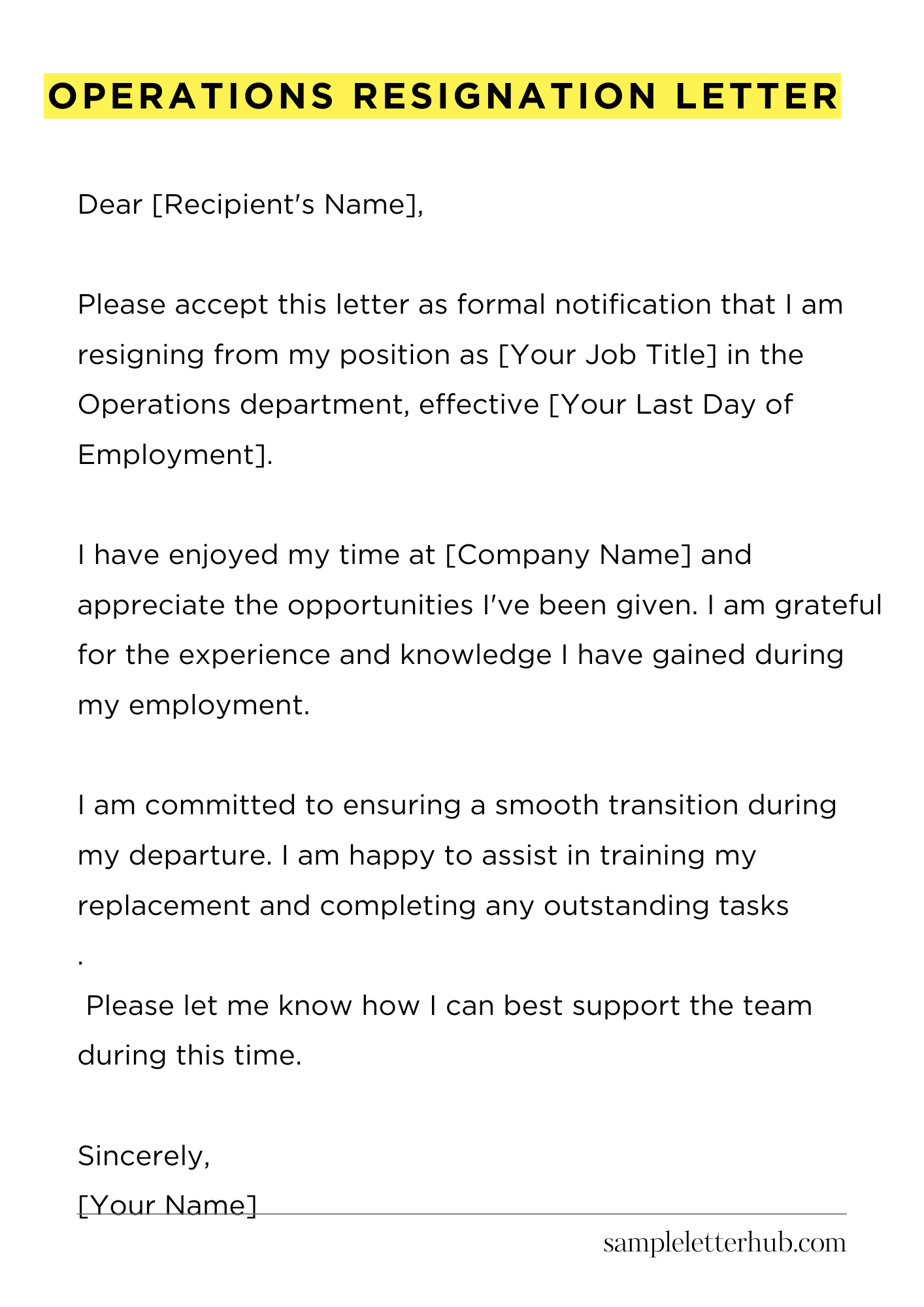
Please accept this letter as formal notification that I am resigning from my position as [Your Job Title] in the Operations department, effective [Your Last Day of Employment].
I have enjoyed my time at [Company Name] and appreciate the opportunities I’ve been given. I am grateful for the experience and knowledge I have gained during my employment.
I am committed to ensuring a smooth transition during my departure. I am happy to assist in training my replacement and completing any outstanding tasks. Please let me know how I can best support the team during this time.
I wish you and the company all the best in the future.
Sincerely,
[Your Name]
How to Write Operations Resignation Letter
1. Why is a Resignation Letter Necessary?
Leaving a job, especially in a critical field like operations, requires professionalism. You might be wondering, why bother with a letter at all? Well, a formal resignation letter serves multiple important purposes. First, it officially notifies your employer of your departure. This is a crucial step to initiate the process of your leaving the company.
It clearly states your intentions and the date you intend to leave. It’s also a written record. It provides documentation for HR and your employer. In the unlikely event of any disputes down the road, you have proof of your notice. Moreover, it’s a courteous gesture that preserves your professional reputation.
No matter the situation, it’s always wise to exit gracefully. A well-written letter also helps facilitate a smooth transition for your colleagues and the company as a whole.
2. Essential Elements to Include
So, what exactly needs to be in this letter? Start with the basics. Begin with your name, address, and the date. Address the letter to your direct supervisor or the appropriate HR representative.
Next, the core of the letter is clear: state your intention to resign from your position. Include the specific date of your last day of employment. This is vitally important. Be sure to reference the job title you held. Keep the tone professional. Then, you can briefly express your gratitude for the opportunity. You don’t need to write a novel.
A simple thank you is sufficient. Finally, you might offer to assist in the transition. This shows consideration for your colleagues and the operations of the company. A well-constructed ending with your signature will make everything perfect.
3. Crafting the Right Tone
The tone of your letter is incredibly important. You should always aim for a respectful and professional demeanor. Avoid negativity. Even if you had unpleasant experiences, now isn’t the time for venting.
Keep it concise. Focus on the facts. Express your appreciation for the opportunities you’ve received, if applicable. Refrain from making personal attacks or criticizing the company. Maintain a positive or neutral tone.
This will leave a good impression, even if things didn’t go as planned. Remember, you might need a reference from this employer someday. A respectful tone helps to preserve those future possibilities.
4. The Structure and Formatting
Formatting is not as important as the content. However, good formatting ensures readability. Use a standard business letter format. Start with your contact information. Then, add the date, followed by the recipient’s information.
Use a clear and easy-to-read font, such as Arial or Times New Roman. Ensure your letter is single-spaced with a space between paragraphs. Be brief. Keep the letter to one page if possible. Proofread it carefully before sending.
Check for any grammar mistakes and spelling errors. Double-check the date and your contact information. Presenting a polished and well-formatted letter reflects well on your professionalism and attention to detail. This makes a difference.
5. What to Avoid in Your Letter
There are a few things that you must avoid when writing your resignation letter. First of all, avoid excessive detail. Be concise. Do not include lengthy explanations of your reasons for leaving. Second, steer clear of complaints or negativity about the company or your colleagues. Keep the focus on your personal decision and future plans.
Do not burn any bridges. Avoid including personal information that is not necessary, such as the details of your new job unless you feel it is appropriate and necessary. Most importantly, do not write the letter in haste. Take your time, and proofread it thoroughly. This will reduce chances of any regrets.
FAQs about Operations Resignation Letter
What is the primary purpose of an Operations Resignation Letter?
The primary purpose of an Operations Resignation Letter is to formally communicate an employee’s decision to leave their position within an operations-focused role to their employer.
It provides a written record of the resignation, the effective date, and often includes a brief statement of appreciation and/or a willingness to assist with the transition. It ensures a clear and documented notification, protecting both the employee and the employer.
What key elements should I include in my Operations Resignation Letter?
Key elements to include are: a clear and concise statement of resignation, the specific job title and department (e.g., “Operations Manager, Inventory Control”), the effective date of your resignation, and a brief and professional expression of gratitude for the opportunity.
You can optionally include a sentence offering to assist with the transition, and it’s essential to proofread carefully for any errors.
How much notice should I provide in my Operations Resignation Letter?
The amount of notice required is typically dictated by your employment contract, company policy, or local labor laws. Common notice periods are two weeks, one month, or longer for senior positions.
Always review these guidelines carefully before submitting your letter to ensure you meet the required notice period. If you are unsure, consult your employment contract or HR department for clarification.
Should I provide a reason for my resignation in the Operations Resignation Letter?
Providing a reason is usually optional. While not required, you might choose to include a brief, neutral statement (e.g., “to pursue other opportunities,” “for personal reasons”). Avoid negative comments or overly detailed explanations. Keeping the reason simple and professional is generally advisable.
How should I deliver the Operations Resignation Letter?
The most common and recommended method is to provide a physical, printed copy of the letter to your immediate supervisor and/or Human Resources department. Following up with an email, confirming receipt and your intention to depart, is also a prudent step. Ensure you retain a copy for your records.
Related:
Resignation letter due to rude boss
Resignation letter moving to another state
Resignation letter due to illness of family member
Resignation letter due to study