

So, you’re a phlebotomist, and you’re moving on? A phlebotomist resignation letter is a formal document. It informs your employer of your departure. It officially ends your employment. It’s an important step when leaving a job.
Writing a resignation letter can feel tricky. That’s where we step in. We’ve got you covered. We’ll share some helpful examples. These include different templates and samples. These will help you craft your own perfect letter.
Whether you need a simple notice or something more specific, we’ve got something for you. Use these samples to make your letter writing easy. Your transition to your next adventure starts here!
Phlebotomist Resignation Letter
Below is a sample of a Phlebotomist Resignation Letter:
[Your Name]
[Your Address]
[Your Phone Number]
[Your Email Address]
[Date]
[Recipient Name] (If known, otherwise use title)
[Recipient Title]
[Clinic/Hospital Name]
[Clinic/Hospital Address]
Dear [Mr./Ms./Mx. Last Name or To Whom It May Concern],
Please accept this letter as formal notification that I am resigning from my position as a Phlebotomist at [Clinic/Hospital Name]. My last day of employment will be [Your Last Day of Employment].
I would like to express my gratitude for the opportunities I have been given during my time here. I have learned a great deal and appreciate the experience I have gained.
I am committed to assisting with a smooth transition during my departure. Please let me know how I can be of assistance in training a replacement or completing any outstanding tasks.
I wish the clinic/hospital continued success in the future.
Sincerely,
[Your Signature]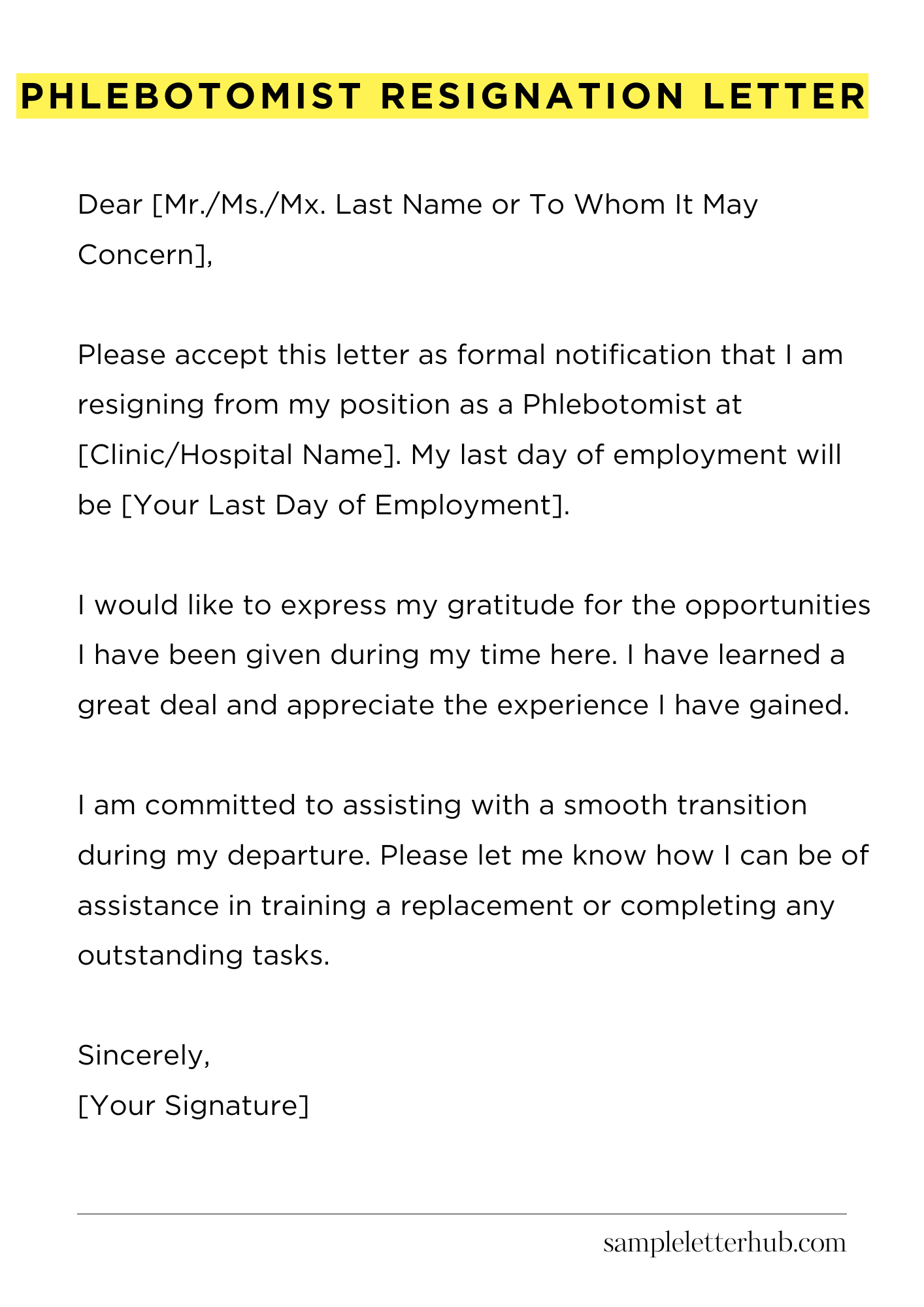
How to Write a Phlebotomist Resignation Letter
1. Why You Need a Resignation Letter
Leaving a job, even one you may not love, requires a professional approach. A formal resignation letter is crucial. It serves as your official record of departure. This document helps avoid misunderstandings with your employer.
Furthermore, it protects your professional reputation. Think of it as a bridge; you want to cross it without burning it down. Leaving on good terms is always the best strategy for your future.
2. Essential Elements to Include
Certain components are non-negotiable in your letter. First, state your intent clearly and directly. Second, provide your official last day of employment. This is important for payroll and transition purposes.
Next, express gratitude for the opportunities you’ve been given. Briefly mention any key accomplishments if you wish. You should always keep it polite and concise. Lastly, offer to assist with the handover process. This shows you’re a responsible employee even on your way out the door.
3. Crafting the Perfect Tone
Your tone dictates the impression you leave. Keep it professional and respectful at all times. Avoid any negativity or complaints. This isn’t the time to air grievances. Instead, focus on the positives.
Express appreciation for the experience you gained. Maintain a courteous and friendly language. Think of the letter as a final professional interaction. A well-written letter can often pave the way for a positive reference.
4. Formatting and Delivery Tips
Format matters. Use a standard business letter format. Include your contact information, the date, and your supervisor’s information. Keep the letter concise; aim for one page. Use clear and easy-to-read font, such as Times New Roman or Arial.
Always proofread your letter carefully for any grammatical errors or typos. Finally, deliver your letter in person if possible. Give your supervisor enough time to process your resignation (usually two weeks’ notice is standard). Obtain confirmation that your letter was received.
5. Sample Resignation Letter
Here’s a basic template to get you started. Remember to customize it for your specific situation.
[Your Name]
[Your Address]
[Your Phone Number]
[Your Email Address]
[Date]
[Supervisor’s Name]
[Supervisor’s Title]
[Company Name]
[Company Address]
Dear [Supervisor’s Name],
Please accept this letter as formal notification that I am resigning from my position as Phlebotomist at [Company Name]. My last day of employment will be [Your Last Day].
I am grateful for the opportunities I have been given during my time here. I have learned a great deal and appreciate the experience. I am available to assist with the transition of my responsibilities during my remaining time.
Thank you again for everything.
Sincerely,
[Your Signature]
[Your Typed Name]
FAQs about Phlebotomist Resignation Letter
What is the primary purpose of a phlebotomist resignation letter?
The primary purpose of a phlebotomist resignation letter is to formally notify their employer of their intent to leave their position. It serves as an official record of the employee’s departure and allows for a smooth transition, giving the employer time to find and train a replacement.
What essential information should be included in a phlebotomist resignation letter?
A well-crafted resignation letter should include: a clear statement of resignation, the effective date of the resignation, a brief expression of gratitude for the opportunity (optional, but recommended), and any relevant details regarding the handover of responsibilities. Contact information can also be included.
How much notice should a phlebotomist provide in their resignation letter?
The amount of notice required varies depending on company policy and employment contracts. Typically, it’s customary to provide at least two weeks’ notice. However, always refer to your employment agreement or company handbook to adhere to their specific guidelines to avoid potential issues.
What is the appropriate tone to use in a phlebotomist resignation letter?
The tone should be professional and polite. It is important to maintain a positive and respectful attitude, even if you are leaving due to negative experiences. Avoid using negative language about the employer or colleagues.
Can a phlebotomist resignation letter be delivered electronically?
Yes, phlebotomist resignation letters can typically be delivered electronically via email. However, always confirm with your employer or HR department regarding their preferred method of submission. It’s often a good practice to print a copy for your personal records.
Related:
Resignation letter due to rude boss
Resignation letter moving to another state
Resignation letter due to illness of family member
Resignation letter due to study