


A Performance Analyst resignation letter is a formal document. It is written when a Performance Analyst decides to leave their job. The main purpose is to officially inform the employer of the decision to resign. It also outlines the last day of employment.
Thinking of moving on? This article is for you. We understand writing these letters can be tricky. That’s why we’ve got you covered.
We’ll share various templates and examples. These samples will help you craft your own letter. They’ll make the process simple and stress-free.
Performance Analyst Resignation Letter
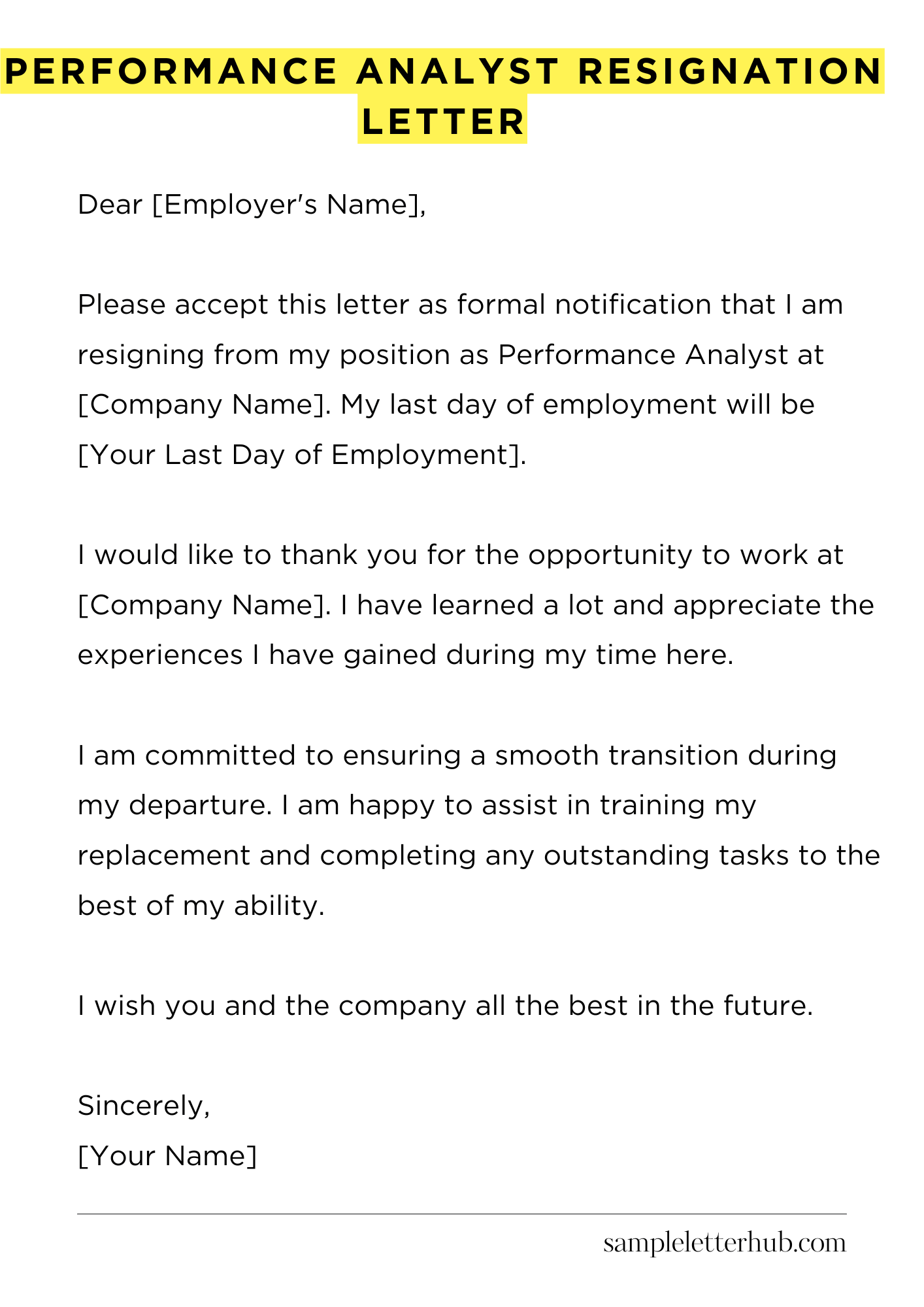
Below is a sample of a Performance Analyst Resignation Letter:
[Your Name]
[Your Address]
[Your Phone Number]
[Your Email Address]
[Date]
[Employer’s Name]
[Employer’s Title]
[Company Name]
[Company Address]
Dear [Employer’s Name],
Please accept this letter as formal notification that I am resigning from my position as Performance Analyst at [Company Name]. My last day of employment will be [Your Last Day of Employment].
I would like to thank you for the opportunity to work at [Company Name]. I have learned a lot and appreciate the experiences I have gained during my time here.
I am committed to ensuring a smooth transition during my departure. I am happy to assist in training my replacement and completing any outstanding tasks to the best of my ability.
I wish you and the company all the best in the future.
Sincerely,
[Your Name]
How to Write a Performance Analyst Resignation Letter
Leaving a job is a big step, no matter the profession. As a Performance Analyst, your skills are in demand. Therefore, when crafting your resignation letter, it’s crucial to be professional and leave a positive lasting impression. This letter serves as your formal notice, so make it count. Here’s how to do it right.
1. Start with the Basics: Formatting and Tone
Your letter needs a proper structure. Begin with your contact information. Include your name, address, phone number, and email. Then, add the date, followed by your employer’s information (name, company address). Next, the most important part: the greeting. Use a formal greeting like “Dear [Manager’s Name]”.
The tone should always be professional and respectful. Avoid negativity or any unnecessary drama. Keep it brief and to the point.
2. The Core: Stating Your Intent and Last Day
The first paragraph is where you declare your resignation. Clearly state your intention to resign from your position as Performance Analyst. Mention the effective date of your resignation.
For example: “Please accept this letter as formal notification that I am resigning from my position as Performance Analyst, effective [Date].” Be sure to give adequate notice, typically two weeks, unless your contract states otherwise. Be direct and unambiguous in this paragraph. This is the most crucial information.
3. Expressing Gratitude and Highlighting Contributions
This is where you showcase professionalism. Express your appreciation for the opportunity to work at the company. Briefly acknowledge any valuable experiences or skills you gained during your tenure. For instance: “I am grateful for the opportunities I’ve had during my time here and for the skills I’ve developed.”
Consider adding a sentence or two about specific contributions you made. Did you improve a process? Did you streamline reporting? This demonstrates your value and leaves a positive final impression. Remember to be sincere.
4. Smooth Transition: Offer Assistance
Offering to assist with the transition can make a huge difference. It reflects positively on your character. Offer to help train your replacement, complete ongoing projects, or document your processes.
For example, “I am committed to ensuring a smooth transition and am happy to assist in any way possible to train my replacement or document any outstanding projects.” This gesture demonstrates responsibility and professionalism. It is a very good idea to make this offer. This will reflect very well on you!
5. The Conclusion: Closing and Signature
End the letter with a polite closing statement. Something like, “I wish you and the company all the best for the future.” or “Thank you again for the opportunity. I wish the team continued success.”
Then, sign your name above your typed name. This signature makes the letter official. Double-check everything for grammar, spelling, and accuracy before sending it. Keep a copy for your records. Good luck!
FAQs about Performance Analyst Resignation Letter
What is the most important information to include in a Performance Analyst resignation letter?
The most crucial elements of a Performance Analyst resignation letter include a clear and concise statement of your intent to resign, the effective date of your resignation, and a professional expression of gratitude for the opportunity. It is also important to mention your final responsibilities and if you are willing to help the transition.
Optionally, you can briefly explain the reason for your departure, if you wish, and provide contact information.
How should I format my Performance Analyst resignation letter?
The format should be professional and straightforward. Start with a formal salutation (e.g., “Dear [Manager’s Name]”), followed by the body paragraphs. In the first paragraph, state your resignation and effective date. The following paragraphs can express gratitude and offer assistance with the transition.
Conclude with a professional closing (e.g., “Sincerely”) and your full name. It’s advisable to use a standard business letter format (single-spaced, with a clear font like Times New Roman or Arial and 1-inch margins).
What should be the tone of my Performance Analyst resignation letter?
Maintain a professional and positive tone throughout the letter. Express gratitude for your experience and the opportunities you’ve been given. Even if you have negative feedback, focus on the positive aspects of your employment. Avoid negativity, complaints, or making demands, as this can damage your professional reputation. Keep it brief, polite, and respectful.
Should I provide a reason for resigning in my Performance Analyst resignation letter?
Providing a reason for your resignation is optional. It is recommended to keep your reasoning simple and professional, such as “to pursue other opportunities.”
If you have a specific reason you wish to share (e.g., a new job, relocation), you can briefly mention it. Avoid going into excessive detail or including any negative comments about your current employer or colleagues. If you have no reason, you can skip this part.
What if I want to offer assistance with the transition after my resignation as a Performance Analyst?
Offering assistance with the transition can leave a positive impression. You can state your willingness to help train your replacement, document procedures, or complete any ongoing projects. This will demonstrate your professionalism and commitment to the company.
Be specific about the tasks you are willing to help with and any timeline. Make sure you don’t over promise, your focus is on your new job. This demonstrates good faith and can help maintain a positive relationship with your former employer.
Related:
Resignation letter due to rude boss
Resignation letter moving to another state
Resignation letter due to illness of family member
Resignation letter due to study