

Sometimes, game developers decide to move on. They might seek new opportunities. They might want a change of pace. A resignation letter officially informs an employer of their departure. The letter communicates the developer’s intent to leave their job. It also states their last day of employment.
Writing a resignation letter can be tricky. You want to be professional. You also want to be clear. We understand. That’s why we’re here to help.
Below, you’ll find helpful examples. These templates will simplify the process. They’ll guide you in crafting your own perfect letter. Use these samples to express yourself with confidence.
Game Developer Resignation Letter
Below is a sample of a Game Developer Resignation Letter:
[Your Name]
[Your Address]
[Your Phone Number]
[Your Email Address]
[Date]
[Hiring Manager Name] (If known, otherwise use title)
[Hiring Manager Title]
[Company Name]
[Company Address]
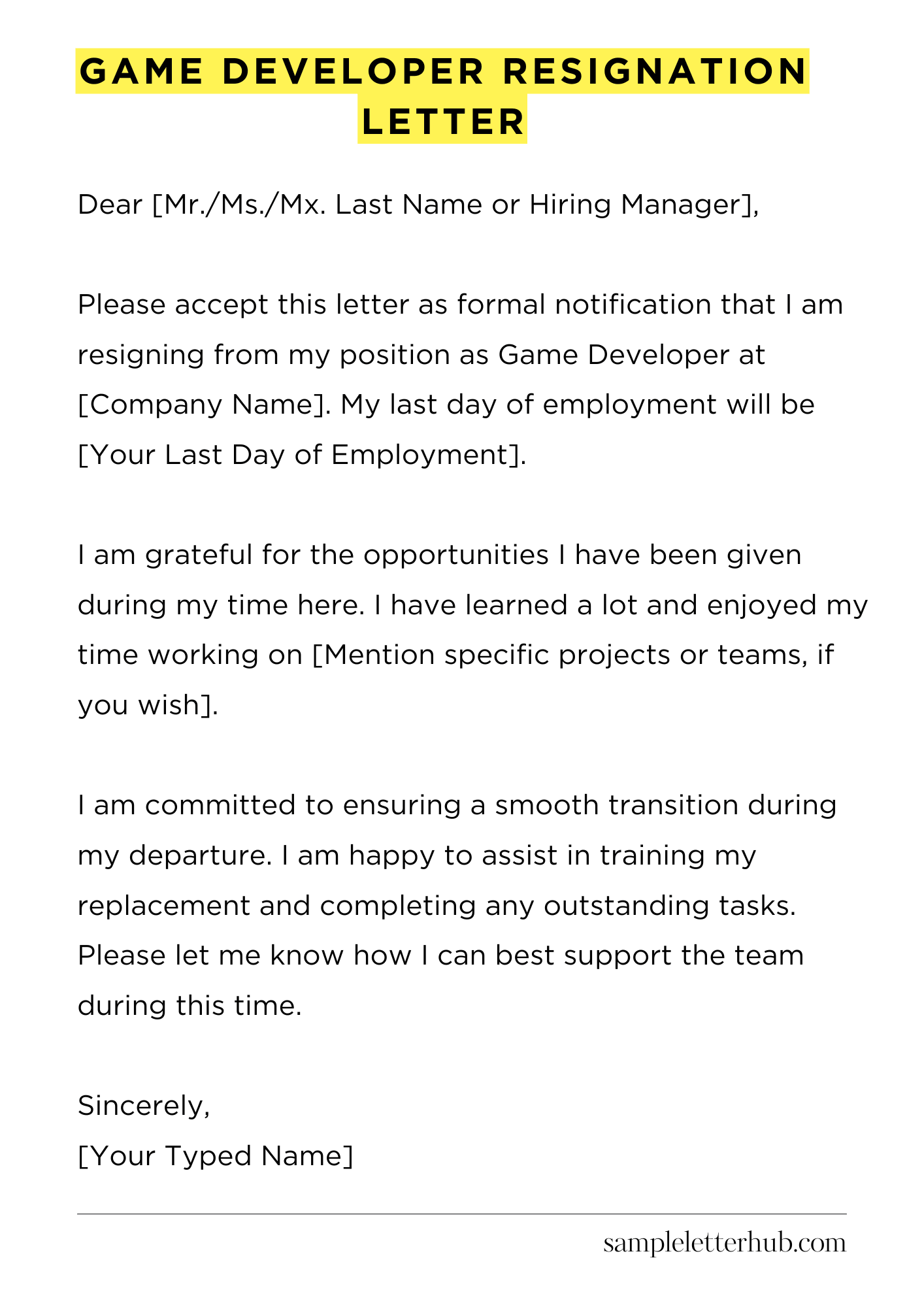
Dear [Mr./Ms./Mx. Last Name or Hiring Manager],
Please accept this letter as formal notification that I am resigning from my position as Game Developer at [Company Name]. My last day of employment will be [Your Last Day of Employment].
I am grateful for the opportunities I have been given during my time here. I have learned a lot and enjoyed my time working on [Mention specific projects or teams, if you wish].
I am committed to ensuring a smooth transition during my departure. I am happy to assist in training my replacement and completing any outstanding tasks. Please let me know how I can best support the team during this time.
Thank you again for the experience. I wish you and [Company Name] all the best in the future.
Sincerely,
[Your Typed Name]
How to Write a Game Developer Resignation Letter
Getting Started: The Basics You Absolutely Need
So, you’re moving on. Leaving the world of pixel pushing and level design. Congratulations! It’s a big step. First things first: you need a solid resignation letter. This isn’t just a formality; it’s a professional document that reflects on your career. Think of it as your final impression.
Begin with your full name, address, and contact information. Then, add the date. Next, you’ll want to address the letter to your direct manager, or to HR if that’s the company policy. Keep it concise.
Finally, your goal is to make sure your leaving process is smooth. So, let’s make it easy for everyone!
The Core Content: What to Actually Say
Now, onto the meat of the letter: the actual resignation. This is the crucial part. Start with a clear and direct statement of your intent. State that you are resigning from your position. Include your official last day of employment. Don’t beat around the bush; be upfront and professional.
Next, express your gratitude for the opportunity. You learned valuable skills. You built some lasting relationships. Even if it wasn’t a perfect fit, acknowledge the experience. This shows maturity and professionalism. Briefly mention something positive you gained from the role or company.
Offer assistance with the transition. Be willing to help train your replacement. Offer to complete your pending tasks, if possible. This demonstrates your commitment and leaves a positive final mark. Consider adding something like, “I am happy to assist in any way possible during the transition to ensure a seamless handover of my responsibilities.”
Keeping it Professional: Tone and Language
Remember this is a business document. The tone matters immensely. Keep it positive, respectful, and professional. Avoid negativity, complaints, or any personal grievances, even if you had them. This isn’t the time to air your frustrations.
Choose your words carefully. Use clear, concise language. Avoid jargon or slang. Proofread meticulously! Typos and grammatical errors make you look careless. Double-check everything before you send it.
Focus on your strengths. Leave with confidence. You are moving on to new opportunities.
Beyond the Basics: Extras to Consider
While not mandatory, you might want to include a brief statement about why you are leaving. Keep it general, such as “pursuing other opportunities” or “seeking new challenges.” You are not obligated to provide detailed explanations.
If you’re comfortable, you could offer to be a reference. This can be a sign of respect and willingness to maintain a positive relationship. Be mindful, however, of your personal needs. Do not be forced to do something you do not want to.
Finally, end the letter with a professional closing, such as “Sincerely” or “Best Regards,” followed by your typed name.
The Final Steps: Submitting and Following Up
Once you’re satisfied with your letter, get a copy for yourself. Then, submit it according to your company’s protocol. This typically means giving it to your manager or HR department. Check your company policies beforehand.
After submitting the letter, be prepared to discuss your departure with your manager. Answer any questions professionally and remain positive. Be prepared to discuss your remaining responsibilities.
Most importantly: be helpful during the transition. Make the process as smooth as possible for everyone involved. Your goal is to leave on good terms, preserving your professional reputation.
FAQs about Game Developer resignation letter
What information should I include in my game developer resignation letter?
A well-crafted game developer resignation letter should include your formal resignation, your last day of employment, a brief expression of gratitude (optional but recommended), and any necessary information regarding the handover of your projects or responsibilities. It’s often advisable to keep the tone professional and concise.
How far in advance should I submit my resignation letter as a game developer?
Typically, a game developer is expected to provide at least two weeks’ notice. However, this can vary based on your employment contract or local labor laws. Review your contract to confirm the required notice period. Providing more notice, if possible, is often appreciated, particularly in senior roles or for complex projects.
Should I provide a reason for leaving in my game developer resignation letter?
While not mandatory, it’s generally a good practice to briefly state your reason for leaving. You can keep it general, such as “pursuing other opportunities” or “seeking new challenges.” Avoid excessive detail or negativity. Maintaining a positive and professional tone is key.
Is it necessary to mention confidential information or project status in my resignation letter?
In most cases, your resignation letter should not include confidential project details. However, it’s appropriate to mention the status of your current tasks and responsibilities. Discuss any handover plans separately with your manager or team lead to ensure a smooth transition. Follow your company’s policy on handling confidential data.
What should I do after submitting my game developer resignation letter?
After submitting your letter, schedule a meeting with your manager to discuss your departure. Be prepared to discuss the handover process, answer any questions, and assist in training your replacement. Maintain a professional demeanor throughout your remaining time at the company and adhere to all company policies.
Related:
Resignation letter due to rude boss
Resignation letter moving to another state
Resignation letter due to illness of family member
Resignation letter due to study