

The “Cook resignation letter” is a document. It’s written by a cook. The purpose is to formally notify an employer of their intent to leave their job. This letter confirms the last day of employment. It helps with a smooth transition.
This article has you covered. We’ve compiled various templates. These are samples of “Cook resignation letters”. They can serve as a guide. Need to resign? These templates will assist you.
We provide diverse examples. You can adapt them. These letters fit various situations. Need to explain the reason? Need to express gratitude? You’ll find something helpful.
Cook Resignation Letter
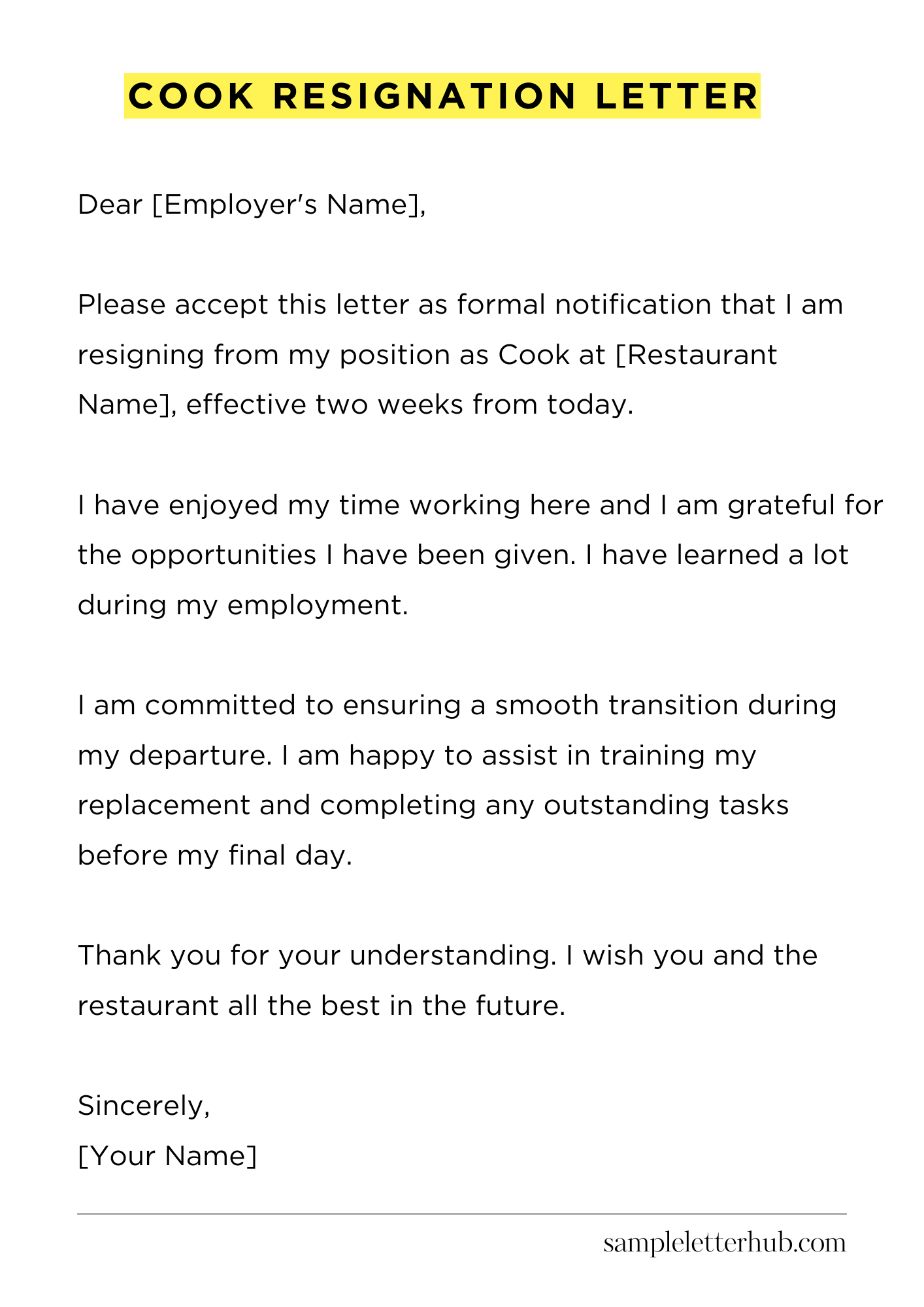
Below is a sample of a Cook Resignation Letter:
[Your Name]
[Your Address]
[Your Phone Number]
[Your Email Address]
[Date]
[Employer’s Name]
[Restaurant Name]
[Restaurant Address]
Dear [Employer’s Name],
Please accept this letter as formal notification that I am resigning from my position as Cook at [Restaurant Name], effective two weeks from today, [Your Last Day of Employment].
I have enjoyed my time working here and I am grateful for the opportunities I have been given. I have learned a lot during my employment.
I am committed to ensuring a smooth transition during my departure. I am happy to assist in training my replacement and completing any outstanding tasks before my final day.
Thank you for your understanding. I wish you and the restaurant all the best in the future.
Sincerely,
[Your Name]
How to Write a Cook Resignation Letter
Know Your Ingredients: What You Absolutely Need
Resigning from a job can feel a bit daunting. But it doesn’t have to be a complicated recipe! A cook’s resignation letter is essentially a professional farewell. First and foremost, you need to state clearly that you’re resigning. This might sound obvious, but it’s the most crucial element. Think of it like the base of your dish. Be sure to include your name and the date.
You must state the name of the recipient (your supervisor, usually) and their job title. Next, specify your last day of employment. Finally, don’t forget the date you’re sending the letter.
Simmering Down: Keep it Concise and Professional
Keep things brief and professional; avoid long, rambling paragraphs. You want to make a good impression, even on your way out the door. This isn’t the time for a novel. Think of it as a quick sauce, not a complex stew.
The tone should be respectful, even if you are leaving due to negative reasons. Focus on the essentials: your intention to leave, the effective date, and a brief expression of gratitude.
Adding Flavor: Expressing Gratitude (Optional, but Recommended)
While not strictly mandatory, adding a dash of gratitude can really enhance your letter. This step is like adding herbs and spices to your dish. Consider thanking your employer for the opportunity you were given.
You can mention any positive experiences you had or skills you gained. This shows respect for the position and the people you worked with. A simple “Thank you for the opportunity to have worked here” can go a long way. It makes a more pleasant read.
Avoiding Bitter Notes: What to Leave Out
Some ingredients just don’t belong in the final dish. This is where you want to eliminate any negativity. Avoid complaining about your coworkers, the management, or the working conditions.
Do not go into exhaustive detail about the reasons for your departure. This can be better addressed in a separate conversation, if necessary. Keep the letter focused on the positive aspect of your departure. Leave the drama out; it’s bad for the flavor.
Serving It Up: Formatting and Delivery
The final presentation is key. Type your letter; handwritten letters are generally considered unprofessional unless you know your employer prefers them that way. Use a standard business letter format. This means a clear header with your contact information, the recipient’s information, and the date. Proofread carefully for any spelling or grammatical errors.
Before you send it, you should make a copy for your records. Deliver the letter to your supervisor personally, if possible. This shows respect and allows for a final conversation. With a great resignation letter, you are leaving a good taste in everyone’s mouth.
FAQs about Cook resignation letter
How do I write a Cook resignation letter?
A cook resignation letter should be concise and professional. Begin by stating your intention to resign, including your last day of employment. Express gratitude for the opportunity to work at the establishment. You may briefly mention a reason for leaving, but this is optional. Keep the tone positive and finish by offering assistance in the transition if possible.
What should I include in my Cook resignation letter?
Essential components include a clear statement of resignation, your last day of employment, a brief expression of gratitude, and your signature. Adding your contact information is optional but recommended. While not required, you could also mention a brief, neutral reason for leaving.
What is the proper format for a Cook resignation letter?
A professional format is crucial. Use a standard business letter format. Include your name and address, the date, and the recipient’s name and title. The body of the letter should be single-spaced with a space between paragraphs. The closing should be formal (e.g., “Sincerely” or “Respectfully”), followed by your typed name and your signature above it.
When should I submit my Cook resignation letter?
It is generally best to submit your resignation letter at least two weeks before your intended last day of employment, giving your employer sufficient time to find a replacement. Check your employment contract or company policies for any specific notice requirements. It’s often advisable to hand it in person to your direct supervisor.
Should I provide a reason for resigning in my Cook resignation letter?
It is not usually necessary to include a detailed reason for resigning. A brief and neutral statement, such as “to pursue other opportunities,” is acceptable. Avoid negative comments or complaints. If you have a particularly sensitive reason, you may choose to discuss it separately with your manager, but this is not a requirement of the letter itself.
Related:
Resignation letter due to rude boss
Resignation letter moving to another state
Resignation letter due to illness of family member
Resignation letter due to study