

A “Tester resignation letter” is a formal document. It informs your employer you are leaving your testing role. This letter officially marks the end of your employment. It’s a crucial step in the resignation process.
Need to resign? This article is here to help. We understand it can be difficult to pen a professional letter. We have compiled various templates for you. These are ready-to-use samples.
Explore our collection. Find a format that suits your needs. Adapt the examples to fit your situation. Resigning can be easier with our help.
Tester Resignation Letter
Below is a sample of a Tester Resignation Letter:
[Your Name]
[Your Address]
[Your Phone Number]
[Your Email Address]
[Date]
[Recipient Name]
[Recipient Title]
[Company Name]
[Company Address]
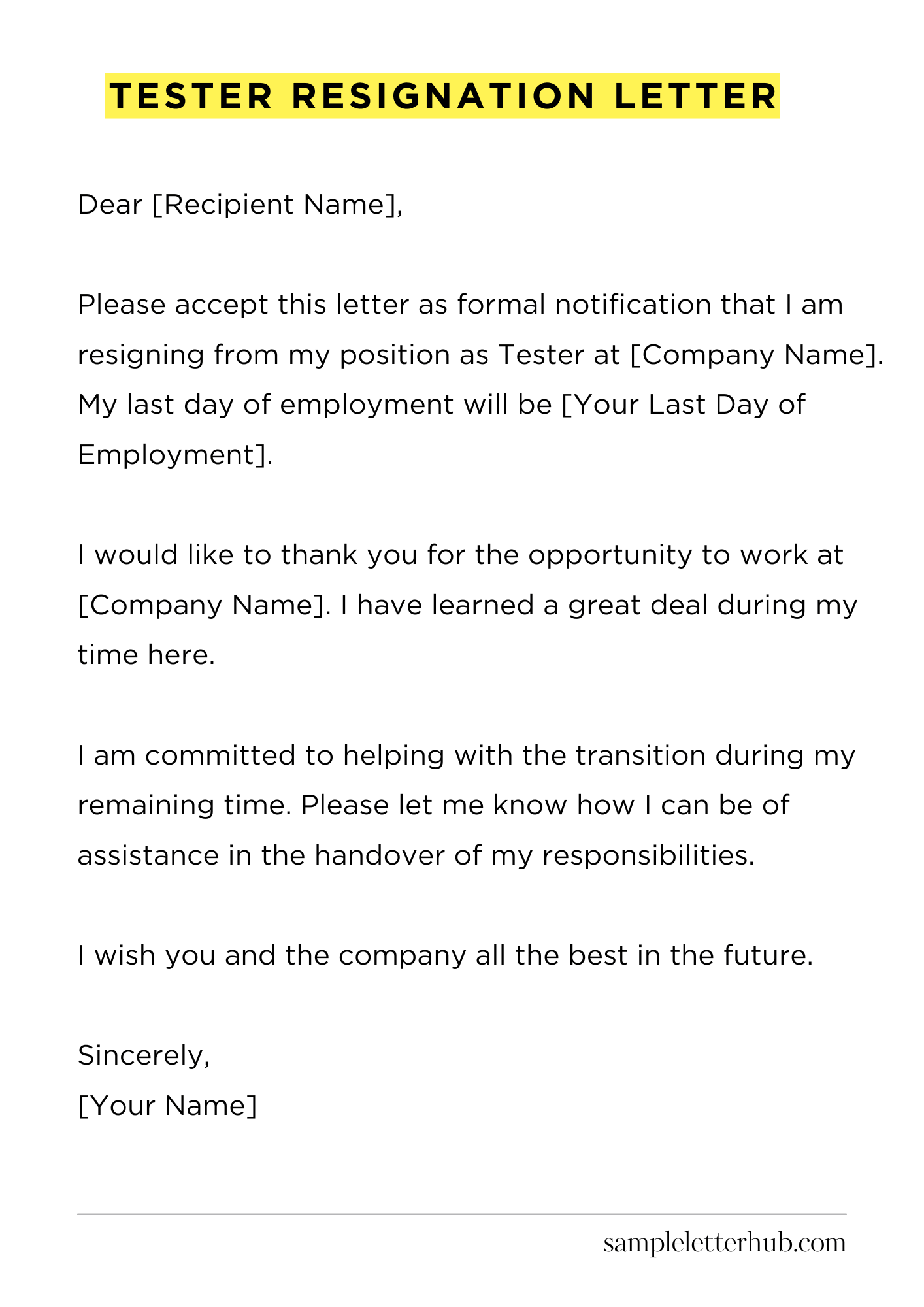
Dear [Recipient Name],
Please accept this letter as formal notification that I am resigning from my position as Tester at [Company Name]. My last day of employment will be [Your Last Day of Employment].
I would like to thank you for the opportunity to work at [Company Name]. I have learned a great deal during my time here.
I am committed to helping with the transition during my remaining time. Please let me know how I can be of assistance in the handover of my responsibilities.
I wish you and the company all the best in the future.
Sincerely,
[Your Name]
How to Write a Tester Resignation Letter
Getting Started: The Essentials
Resigning from a job can be a big step. Especially when it comes to tester roles in the fast-paced world of software development. You’ll need to write a proper resignation letter. This is your formal declaration of leaving. Don’t worry, it’s not as hard as debugging a tricky piece of code.
First and foremost, you need a clear and concise opening. Start with your intent. State the date of your resignation and your last day of employment. This is crucial for HR purposes. Address the letter to your immediate supervisor or the appropriate manager. Keeping things polite and professional is key. Remember, you want to leave on good terms.
What to Include: The Core Components
The body of your letter needs key information. Your letter should be a formal business communication. Briefly state your reason for leaving. You don’t have to go into extreme detail. Keep it simple and focused. It could be for a new opportunity, personal reasons, or anything else you deem appropriate.
Express gratitude. Thank your employer for the opportunity to work there. Mention anything you’ve gained during your time. This adds a nice touch of professionalism. Offer to assist with the transition. Offer help with knowledge transfer, training or finding your replacement. This shows you are willing to make the exit smooth.
Formatting and Tone: Making it Professional
Presentation matters. Use a professional business letter format. Include your contact information (name, address, email). Your manager should know how to contact you. Use a standard font like Arial or Times New Roman.
Ensure your text is easy to read. Proofread your letter carefully for any spelling or grammatical errors. A poorly written letter doesn’t reflect well on you.
Keep the tone positive and professional. Avoid negativity or complaints. This isn’t the time to air grievances. Maintain a respectful tone throughout the letter. Focus on moving forward and expressing gratitude. This also will leave a positive impact.
Specific Examples for a Tester Role
Since you are a tester, tailor your letter to your specific role. You might mention any projects you worked on, or skills you developed. Highlight contributions you have made to the company. If you’ve contributed to improved quality, or helped in a big launch, feel free to mention it briefly. However, keep the focus on a polite and professional tone. This is just a good way to personalize the letter.
Final Steps: Before You Send
Before you send your resignation letter, make sure you have a copy for your records. Consider scheduling a meeting with your supervisor to discuss your resignation in person. It is always a good idea to maintain a professional relationship. Deliver your letter in person or via email. Always adhere to your company’s policy for submitting resignations. This will avoid any unexpected issues.
Resigning should be a process and following these steps will make it simpler.
FAQs about Tester resignation letter
How do I write a professional Tester resignation letter?
A professional Tester resignation letter should clearly state your intention to resign, your last day of employment, and a brief expression of gratitude for the opportunity. Keep it concise, professional, and positive. You might also offer to assist with the transition of your duties.
What should I include in my Tester resignation letter?
Include the following: Your formal resignation statement, your last day of employment, a statement of appreciation for the opportunity, any relevant information regarding the handover of your duties (if applicable), and your contact information. You can also include a brief, positive closing.
When should I submit my Tester resignation letter?
Generally, it’s best to submit your resignation letter at least two weeks before your intended last day of employment. This allows your employer ample time to find a replacement and facilitate a smooth transition. Always adhere to your company’s policy if they have a different notice period.
Should I provide a reason for resigning in my Tester resignation letter?
While not mandatory, providing a brief reason for your resignation is optional. You can keep it general (e.g., “pursuing a new opportunity”) or, if you’re comfortable, be more specific. However, it’s not required, and you should always maintain professionalism and avoid negative comments about your current employer.
How can I ensure a smooth transition when resigning as a Tester?
To ensure a smooth transition, offer to assist with the handover of your responsibilities, document your key tasks and processes, train your replacement if possible, and be available to answer any questions after your departure within a reasonable timeframe, if asked. Maintain a positive and cooperative attitude throughout your notice period.
Related:
Resignation letter due to rude boss
Resignation letter moving to another state
Resignation letter due to illness of family member
Resignation letter due to study