

A “Head Resignation Letter” is a formal document. It is written by someone in a leadership position. The purpose? To officially announce their departure from the company. It’s the first step towards a new chapter.
This article is your guide. We’ll provide you with various templates. You’ll find different examples here. Need to resign gracefully? We have the perfect samples.
Consider these samples your secret weapon. Craft the perfect letter with ease. Navigate the resignation process confidently. Let’s make saying goodbye simple!
Head Resignation Letter
Below is a sample of a Head Resignation Letter:
[Your Name]
[Your Address]
[Your Phone Number]
[Your Email Address]
[Date]
[Recipient Name]
[Recipient Title]
[Company Name]
[Company Address]
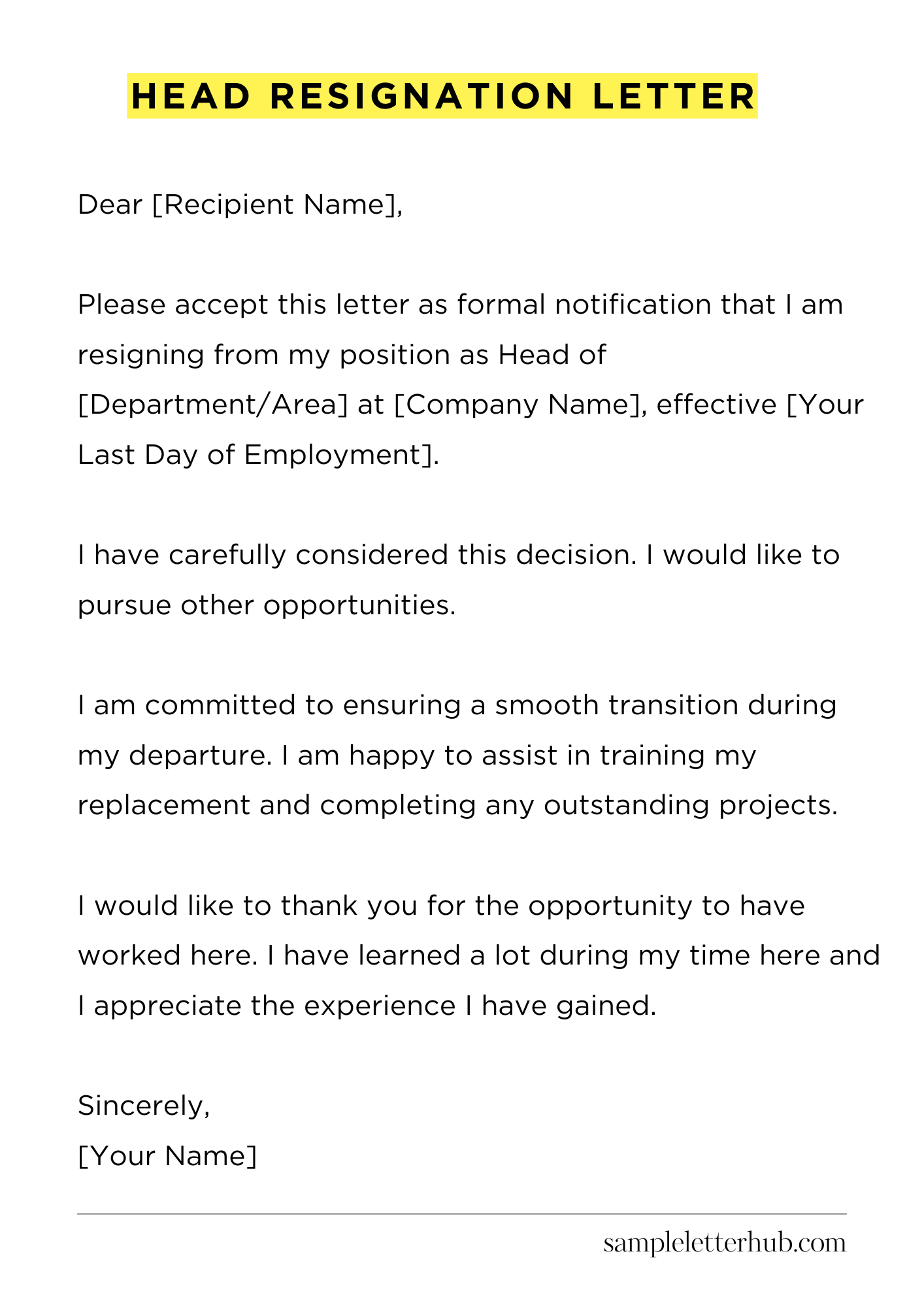
Dear [Recipient Name],
Please accept this letter as formal notification that I am resigning from my position as Head of [Department/Area] at [Company Name], effective [Your Last Day of Employment].
I have carefully considered this decision. I would like to pursue other opportunities.
I am committed to ensuring a smooth transition during my departure. I am happy to assist in training my replacement and completing any outstanding projects. I will do my best to complete all my responsibilities before my last day.
I would like to thank you for the opportunity to have worked here. I have learned a lot during my time here and I appreciate the experience I have gained.
I wish the company continued success in the future.
Sincerely,
[Your Name]
How to Write a Head Resignation Letter
Resigning from a job can be a daunting task. However, it’s a necessary step for many, opening doors to new opportunities. Crafting a professional and effective resignation letter is key to a smooth transition. This guide will help you navigate the process, ensuring you leave on good terms and protect your professional reputation.
Start with the Basics: Formatting and Tone
First impressions matter, even in a resignation. Keep it simple; choose a clean, readable font like Arial or Times New Roman. A formal business letter format is best.
This means including your name, address, and the date. Your head’s name, their title, and the company address go below that. Be direct, and professional. The tone should be respectful, even if you’re leaving due to dissatisfaction.
Clearly State Your Intent to Resign
The core of your letter should clearly and unequivocally state your intention to resign. Avoid ambiguity! State it plainly and concisely. Something like, “Please accept this letter as formal notification that I am resigning from my position as [Your Position] at [Company Name].” The clearer, the better.
The date of your last day of employment should also be specified. Make sure you adhere to the notice period outlined in your employment contract.
Express Gratitude and Briefly Acknowledge Contributions
Even if the job wasn’t perfect, showing gratitude can make a big difference. Express appreciation for the opportunities you’ve been given and any positive experiences you’ve had.
You can acknowledge the value the company has added to you. This is also a good place to mention anything you feel proud of having done. This small effort of expressing gratitude can significantly improve how you leave.
Offer Assistance with the Transition and Closing
Demonstrate your professionalism by offering assistance during the transition period. Are you willing to help train your replacement? Do you offer any handover notes? Include something like, “I am committed to ensuring a smooth transition during my departure and am happy to assist in any way possible to train my replacement.”
In your closing, reiterate your resignation date and reiterate your thanks. “Thank you again for the opportunity to work at [Company Name]. I wish you and the company all the best in the future.” Sign your name, and print your name below the signature.
Proofread and Review Before Sending
Before you hit send or print, proofread your letter carefully. Check for any grammatical errors or typos. Double-check the dates and all names. Ensure you’ve adhered to your employment contract’s stipulations.
A polished, error-free letter reflects well on you. Ask a friend or colleague to review it as a fresh pair of eyes can often catch mistakes you might miss. Consider your resignation letter a final mark of your professionalism and a lasting impression.
FAQs about Head resignation letter
What is the primary purpose of a Head resignation letter?
The primary purpose of a Head resignation letter is to formally notify an employer of an employee’s intent to leave their position. It serves as an official record of the resignation, the last day of employment, and often includes expressions of gratitude or well wishes. The letter is a crucial step in ensuring a professional and smooth departure.
What key elements should be included in a Head resignation letter?
Essential components include a clear statement of resignation, the effective date of departure, the employee’s title, and a concise expression of gratitude for the employment opportunity. Some individuals may also opt to include reasons for leaving, information about assisting with the transition, and contact information for future correspondence. Accuracy and professionalism are key.
How much notice should a Head typically give when resigning?
The standard notice period varies depending on the employment contract, company policy, and local laws. However, a general rule of thumb is to provide at least two weeks’ notice. Higher-level positions, such as heads of departments or executives, may be expected to provide a longer notice period, often 30-90 days, to facilitate a proper handover of responsibilities.
What is the appropriate tone and format for a Head resignation letter?
A professional and courteous tone is paramount. The letter should be concise, clear, and free of negativity. The format should be business-like, including the date, the recipient’s name and title, a formal salutation (e.g., “Dear [Manager’s Name]”), and a closing (e.g., “Sincerely,”). Proofreading for grammar and spelling errors is essential.
How can a Head resignation letter impact the employee’s future career prospects?
A well-written and professional resignation letter can positively influence future job prospects. It demonstrates professionalism, respect, and a commitment to maintaining positive relationships.
Conversely, a letter filled with complaints or negativity can damage an employee’s reputation and potentially affect future opportunities. A thoughtful and well-executed resignation letter leaves a lasting positive impression.
Related:
Resignation letter due to rude boss
Resignation letter moving to another state
Resignation letter due to illness of family member
Resignation letter due to study