


A Human Resources Analyst resignation letter is a formal document. It is written to inform your employer of your intention to leave your job. The purpose is to officially announce your departure and provide necessary details.
Crafting the perfect letter can feel daunting. We’ve got you covered. We’ll provide a variety of templates. These samples will guide you. They’ll help you create your own professional resignation letter.
Whether you’re moving on to a new opportunity or changing career paths, these examples will help. They offer easy-to-adapt formats. Use them to communicate your resignation clearly and respectfully.
Human Resources Analyst Resignation Letter
Below is a sample of a Human Resources Analyst Resignation Letter:
[Your Name]
[Your Address]
[Your Phone Number]
[Your Email Address]
[Date]
[Hiring Manager Name] (If known, otherwise use title)
[Hiring Manager Title]
[Company Name]
[Company Address]
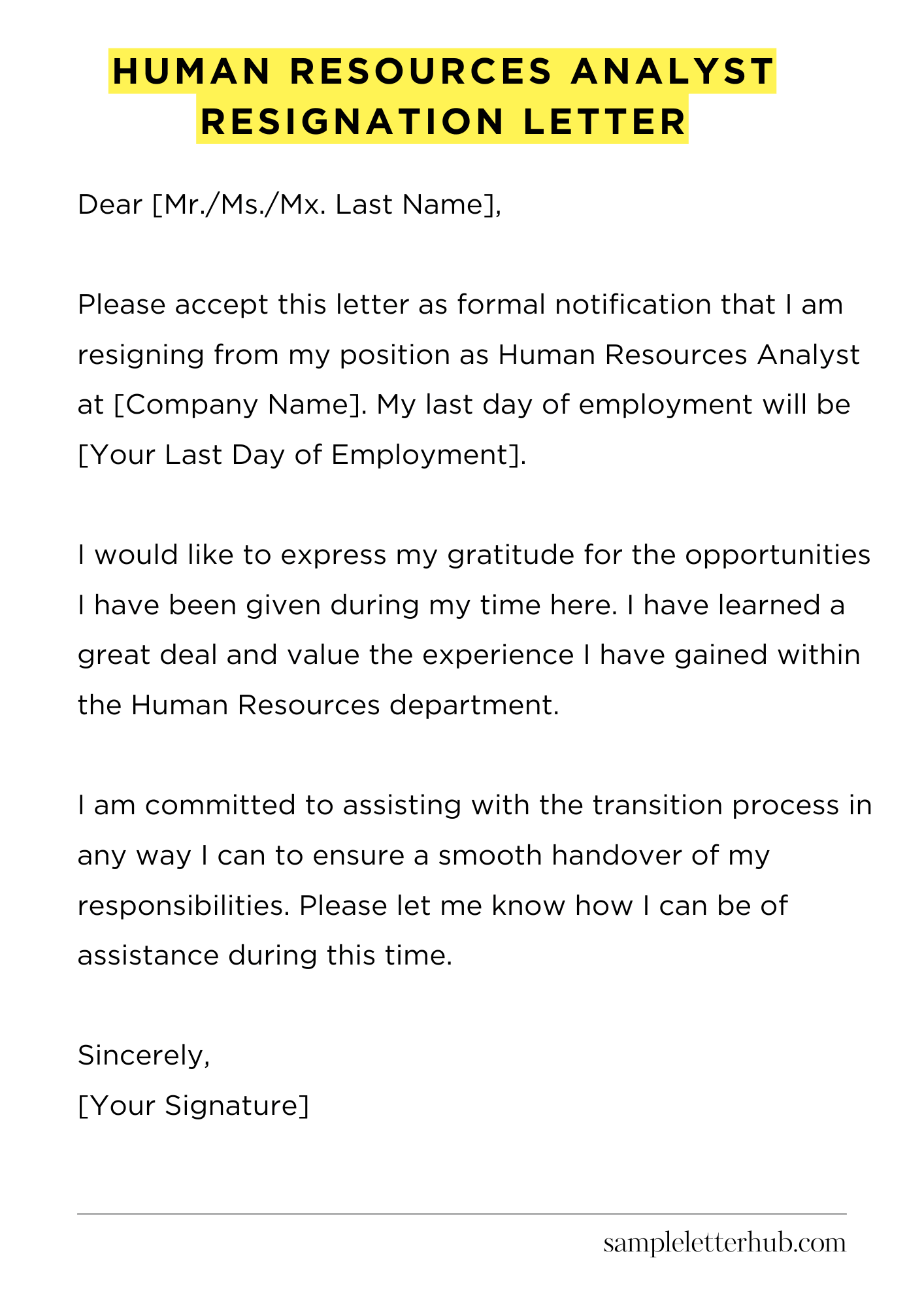
Dear [Mr./Ms./Mx. Last Name],
Please accept this letter as formal notification that I am resigning from my position as Human Resources Analyst at [Company Name]. My last day of employment will be [Your Last Day of Employment].
I would like to express my gratitude for the opportunities I have been given during my time here. I have learned a great deal and value the experience I have gained within the Human Resources department.
I am committed to assisting with the transition process in any way I can to ensure a smooth handover of my responsibilities. Please let me know how I can be of assistance during this time.
I wish you and [Company Name] all the best in the future.
Sincerely,
[Your Signature]
How to Write a Human Resources Analyst Resignation Letter
1. Getting Started: The Basic Structure
Resigning from a job is a big step. You must get the details right. First things first: your resignation letter needs a professional layout. Begin with your contact information at the top. This includes your name, address, phone number, and email.
Below that, on the same side, add the date. Next, address the letter to your direct supervisor or the appropriate HR representative, using their correct title. A well-formatted letter shows respect and attention to detail. This is important, no matter the job. Consider these core components as non-negotiable.
2. The Opening: State Your Intent Clearly
The first paragraph is crucial. It’s where you state your intention to resign. Keep it direct and to the point. Start with a straightforward sentence like, “Please accept this letter as formal notification that I am resigning from my position as Human Resources Analyst at [Company Name].” That’s it. No need for lengthy preambles.
This clarity sets the tone for the rest of the letter. This is what you should always do at the very beginning. Avoid any ambiguity. Don’t beat around the bush; it is not necessary.
3. Expressing Gratitude and Acknowledgment
Even if you’re leaving for a challenging reason, professionalism is key. This is the place to express gratitude for the opportunities you’ve been given. Briefly mention anything positive you’ve gained during your time there. You could say, “I am grateful for the experience and opportunities I’ve had during my time here.”
Or you could state it in another way. Remember that simple sentences are powerful. This is your chance to leave a positive lasting impression. This shows respect, and it’s a good practice, even if the situation wasn’t perfect. Be sincere in this segment.
4. Detailing Your Last Day and Transition Support
Clearly state your last day of employment. This is essential for the company to plan its operations. Make it easy for them. Specify the date. “My last day of employment will be [Date].”
Next, offer your assistance with the transition. Include a sentence like, “I am committed to ensuring a smooth handover of my responsibilities and am available to assist in training my replacement.” This is a considerate gesture. It can make a difference in your final interactions with the company. Consider this as your professional obligation.
5. Closing and Final Thoughts
The closing paragraph should be brief and professional. Reiterate your appreciation, if desired. You could simply end with, “Thank you again for the opportunity. I wish you and the company all the best in the future.” Then, sign your name at the bottom. Type your full name, too. Finally, a typed signature is standard.
Your resignation letter is a formal document. Make sure it reflects your professionalism. Remember, your goal is to leave on a positive note, maintaining a good relationship with your former employer. The letter is complete once you have these five headings covered. Good luck!
FAQs about Human Resources Analyst Resignation Letter
What is the essential information to include in a Human Resources Analyst resignation letter?
A Human Resources Analyst resignation letter should include your formal resignation, your last day of employment, and a brief, professional statement of your reason for leaving (if you choose to include one). It’s also courteous to express gratitude for the opportunities you’ve been given and offer assistance with the transition process.
What is the appropriate tone and format for a Human Resources Analyst resignation letter?
The tone of the letter should be professional, respectful, and concise. It should be formatted as a formal business letter, including your contact information, the date, the recipient’s information, a formal salutation (e.g., “Dear [Manager’s Name]”), the body of the letter, a closing (e.g., “Sincerely”), and your typed name. Avoid overly emotional language.
Should I provide a reason for resigning in my Human Resources Analyst resignation letter?
While not mandatory, it’s generally a good practice to briefly state your reason for leaving. This can be as simple as “pursuing other opportunities” or “to focus on personal commitments.”
Keep it brief and positive. If you are leaving due to a specific issue, it’s usually best to discuss this separately with your manager or HR department rather than detailing it in your resignation letter.
How much notice should a Human Resources Analyst give when resigning?
The standard notice period is typically two weeks, but this can vary depending on your employment contract, company policy, or local laws. Always review your employment agreement to understand the required notice period. Providing more notice is always appreciated and can help maintain positive relationships.
What actions should I take after submitting my Human Resources Analyst resignation letter?
After submitting your letter, you should follow up with your manager to discuss the transition process. Cooperate fully with any requests for information or assistance during your remaining time.
Also, start preparing for your departure by gathering personal belongings, completing any outstanding tasks, and ensuring all company property is returned. Finally, maintain professionalism and a positive attitude throughout your final days.
Related:
Resignation letter due to rude boss
Resignation letter moving to another state
Resignation letter due to illness of family member
Resignation letter due to study