

A teaching resignation letter is a formal document. Teachers use it to officially notify their employer of their intent to leave their position. The purpose is to communicate the decision professionally and respectfully. It also provides a record of the resignation date.
Crafting the perfect resignation letter can be tricky. You want to express yourself clearly. It should be respectful and professional. But where to start?
We have you covered. We’re sharing a collection of teaching resignation letter templates. Consider these examples your starting point. You can customize them to fit your specific needs and situation. Ready to begin?
Teaching Resignation Letter
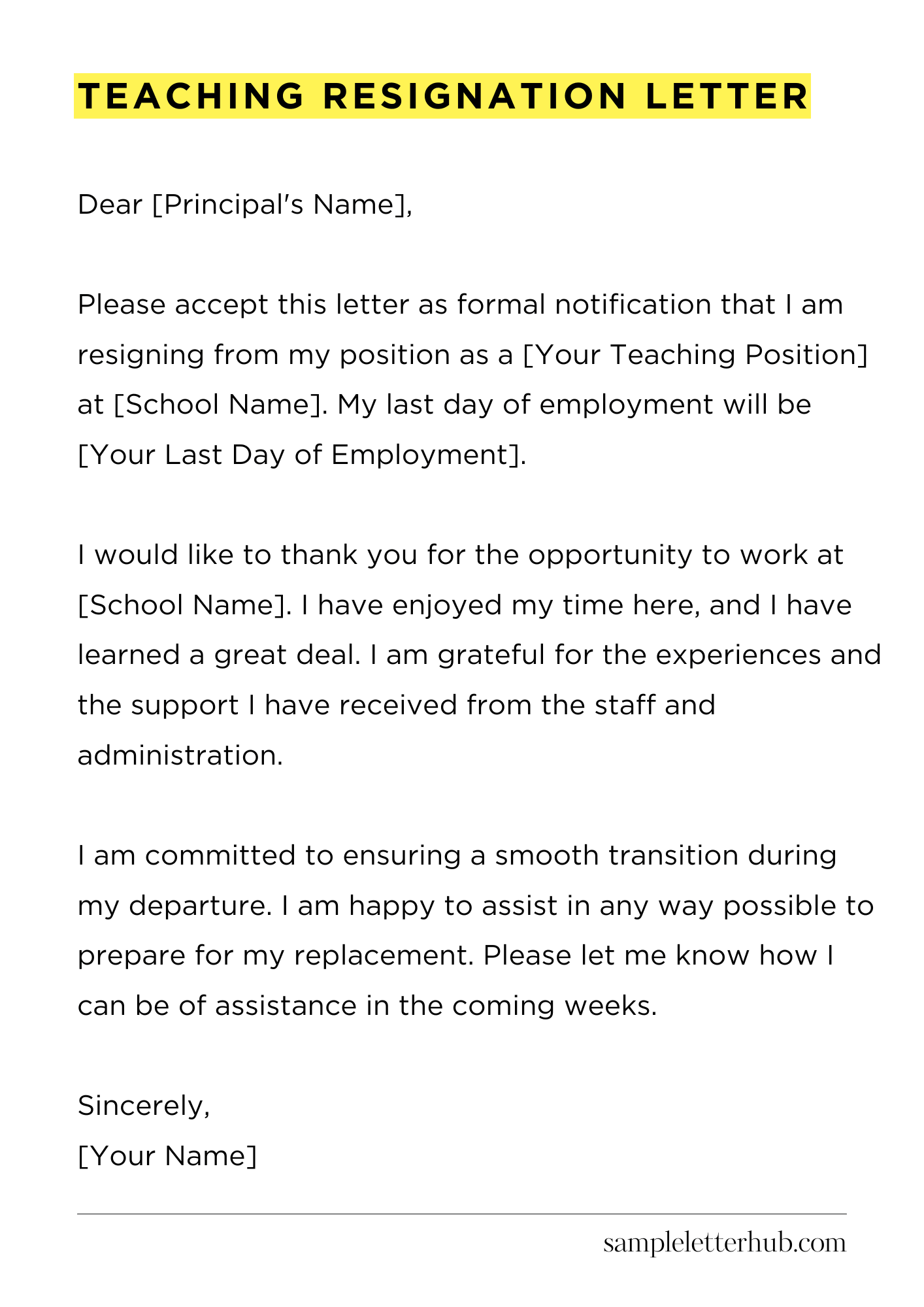
Below is a sample of a Teaching Resignation Letter:
[Your Name]
[Your Address]
[Your Phone Number]
[Your Email Address]
[Date]
[Principal’s Name]
[School Name]
[School Address]
Dear [Principal’s Name],
Please accept this letter as formal notification that I am resigning from my position as a [Your Teaching Position] at [School Name]. My last day of employment will be [Your Last Day of Employment].
I would like to thank you for the opportunity to work at [School Name]. I have enjoyed my time here, and I have learned a great deal. I am grateful for the experiences and the support I have received from the staff and administration.
I am committed to ensuring a smooth transition during my departure. I am happy to assist in any way possible to prepare for my replacement. Please let me know how I can be of assistance in the coming weeks.
I wish you and [School Name] all the best in the future.
Sincerely,
[Your Name]
How to Write a Teaching Resignation Letter
Know Your Audience and Purpose
Resigning from a teaching position is a significant decision. You’ve poured your heart and soul into shaping young minds. It’s time to move on, but your departure requires a professional approach.
Before you even begin to draft your letter, consider who you’re writing to: usually your principal or head of school. Your purpose is simple: to formally announce your departure and express your gratitude. This letter serves as your official record of leaving.
Think about the context. What’s the school’s culture like? Are they generally formal or informal? This will help you determine the tone.
Essential Elements to Include
Every resignation letter should contain specific details to be effective. First, clearly state your intention to resign. This is a must-have! Next, mention your official last day of employment. This allows the school to plan for your replacement. Keep it clear and concise.
Express your gratitude for the opportunity to have worked there. Highlight any positive experiences or accomplishments during your tenure. Thank them for the learning and experiences.
Consider offering assistance with the transition. Suggesting you’re available to help with handing over responsibilities shows professionalism. You will need to provide your contact information to the school as well.
Crafting the Right Tone
The tone of your letter is crucial. It should be professional, respectful, and positive, even if your reasons for leaving are less than ideal. Avoid negativity and complaints, even if you had a negative experience. You’ll not want to burn bridges.
Use a tone of gratitude. Acknowledge what you learned and the relationships you’ve built. Remember, a well-written letter reflects well on you. It’s not about what they did wrong; it’s about your next chapter.
Keep the language simple and direct. Use polite and formal language.
Formatting and Presentation
Pay attention to the formatting of your letter. Use a standard business letter format. Include your name, address, and the date at the top. Below that, include the principal’s or head of school’s name and address. This indicates that this is a professional communication.
Use a clear font like Arial or Times New Roman. Ensure proper spacing between paragraphs. Proofread carefully before sending it. Check for any errors in grammar and punctuation.
Keep your letter to one page. Be concise.
The Finishing Touches and Follow-Up
Conclude your letter with a sincere closing. Something like “Sincerely,” or “Respectfully,” is perfect. Sign your name above the typed version. After sending the letter, consider a brief follow-up. This shows you are engaged.
If you feel comfortable, schedule a meeting to discuss your resignation in person. This can help prevent any misunderstandings. Keep all of your communications professional and positive.
Once you have officially resigned, start planning for your next steps. The future is bright!
FAQs about Teaching Resignation Letters
Understanding how to properly resign from a teaching position is crucial for maintaining a positive professional reputation and ensuring a smooth transition. Here are some of the most frequently asked questions on the topic:
What information should I include in my teaching resignation letter?
Your resignation letter should include your official resignation statement, the effective date of your resignation, and a brief expression of gratitude for the opportunity to have worked at the school. It is also common to include a concise statement of the reason for your departure (optional, but can be helpful).
Include your full name, the school’s name, and your position. Some teachers also choose to mention their contributions and wish their colleagues and students the best.
How much notice should I give when resigning from a teaching position?
The standard notice period for teachers is usually outlined in your employment contract or the school district’s policies. Typically, this is 30 days, or sometimes a full semester. Check your contract and local regulations to determine the required amount of notice. Providing adequate notice is professional and allows the school time to find a replacement.
Should I provide a reason for resigning in my teaching resignation letter?
While not always mandatory, offering a brief reason for your resignation can be beneficial. It helps provide context, and it allows the school to understand your departure better.
If you are comfortable, you can state your reasons briefly (e.g., “pursuing other opportunities,” “relocating,” or “personal reasons”). Keep it concise and professional. If you are unhappy, it is wise not to list any complaints.
How should I deliver my teaching resignation letter?
It’s generally recommended to submit your resignation letter in writing to your principal or supervisor. You can deliver it via email (as a formal letter and as a PDF attachment for security) or, if preferred, in person. Be sure to obtain confirmation of receipt and keep a copy of the letter for your records. The best way is to talk to your principal about it first.
What should I do after submitting my teaching resignation letter?
After submitting your letter, be prepared to discuss your departure with your principal or supervisor. Cooperate with any requests related to the transition, such as assisting with lesson plans, completing necessary paperwork, and preparing for your replacement. Maintain a professional attitude and focus on a smooth handover to leave a positive lasting impression.
Related:
Resignation letter due to rude boss
Resignation letter moving to another state
Resignation letter due to illness of family member
Resignation letter due to study