


Sometimes, clients decide to end their professional relationships. They formally announce this through a client resignation letter. This letter is a written notice. It officially informs you about their decision to discontinue services or partnerships. Its purpose is to provide clear and respectful communication. It allows for a smooth transition.
Writing a client resignation letter can be tricky. Knowing what to include helps. We have prepared something special. We will share various templates and examples. This will help you craft your own effective letters.
Our goal is simple. We aim to make the process easier for you. Use these samples as your guide. Adapt them to fit your specific needs. Say goodbye to the stress of writing these letters.
Client Resignation Letter
Below is a sample of a Client Resignation Letter:
[Your Name/Company Name]
[Your Address]
[Your Phone Number]
[Your Email Address]
[Date]
[Client Name]
[Client Address]
Subject: Regarding Your Account
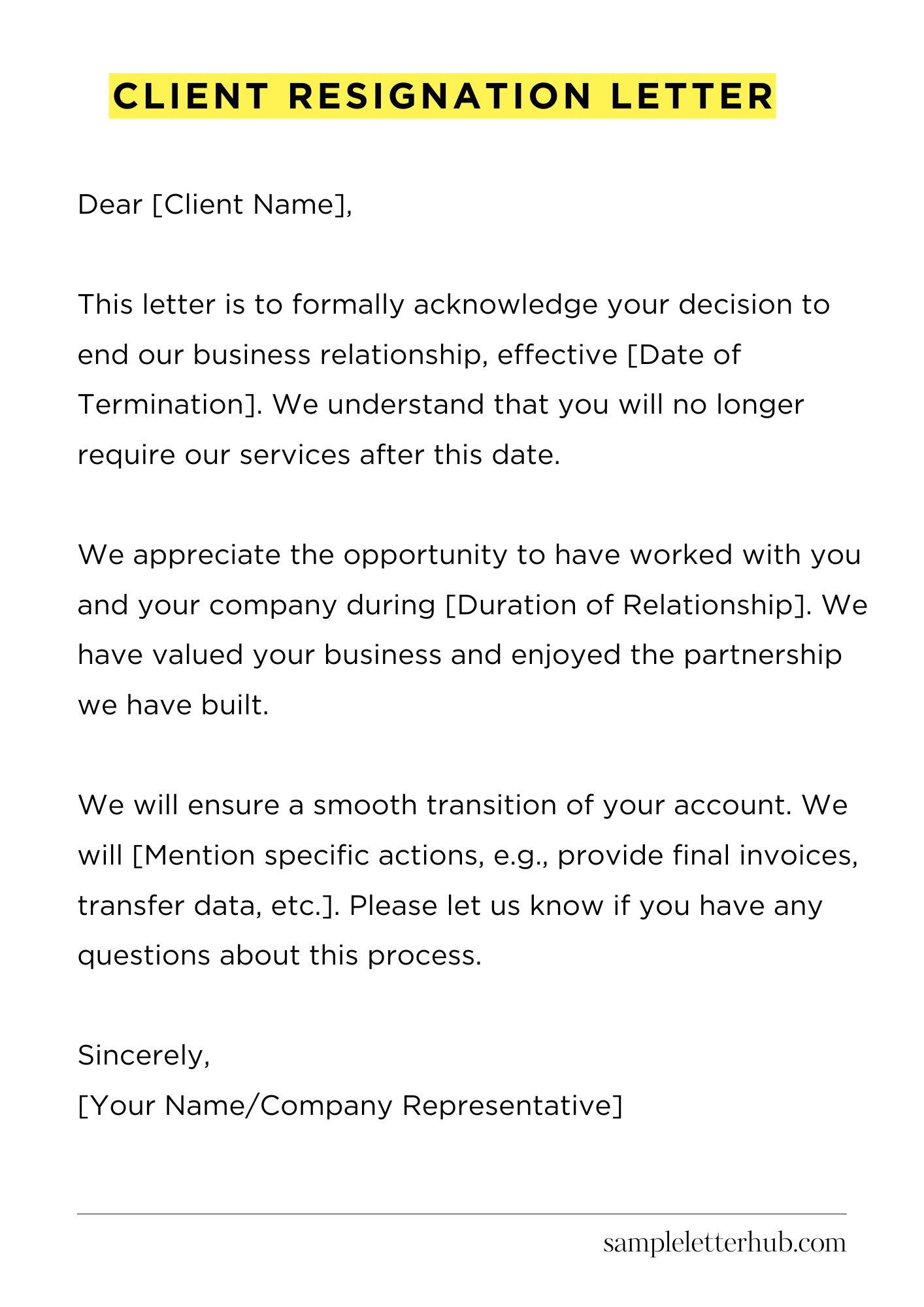
Dear [Client Name],
This letter is to formally acknowledge your decision to end our business relationship, effective [Date of Termination]. We understand that you will no longer require our services after this date.
We appreciate the opportunity to have worked with you and your company during [Duration of Relationship]. We have valued your business and enjoyed the partnership we have built.
We will ensure a smooth transition of your account. We will [Mention specific actions, e.g., provide final invoices, transfer data, etc.]. Please let us know if you have any questions about this process.
We wish you all the best in your future endeavors. We hope that our paths may cross again in the future.
Sincerely,
[Your Name/Company Representative]
How to Write a Client Resignation Letter
Why You Need to Write One (and Why It Matters)
Sometimes, business relationships just don’t work out. It’s a fact of life. Perhaps the project scope shifted, or the client’s needs changed dramatically. Maybe the personalities clashed. Whatever the reason, there comes a time when you have to end the working relationship. A client resignation letter is a professional way to do it.
It provides a formal record and protects your interests. Think of it as a crucial step for maintaining your reputation. It’s not just a formality; it is essential to the future. Without it, things can get messy. Clarity is always key.
The Anatomy of a Great Resignation Letter
A well-crafted resignation letter follows a simple structure. First, you need a polite opening. Start by stating the purpose of the letter: your intention to end the business relationship. Next, provide a clear, concise reason for your decision. Keep it brief and professional. Avoid lengthy explanations or negative comments.
Third, state the effective date of the resignation. Be specific! Fourth, address outstanding tasks or deliverables. Outline the handover process. Explain how you will ensure a smooth transition. Finally, express gratitude, offer assistance, and end with a professional closing. This is standard procedure.
Key Ingredients: What to Include (and Exclude)
Several elements are crucial in every letter. Be clear about the termination date. Provide it in a straightforward manner. Offer to assist with the handover. This demonstrates professionalism.
Always express your gratitude for the opportunity to work with the client, even if it was challenging. Now, what should you avoid? Don’t get personal. Stay away from lengthy explanations of why it didn’t work. Don’t place blame or criticize the client. Don’t burn bridges! Keep it concise.
Example Letter Template: Get Started Quickly
Here’s a basic template to get you started. Adapt it to your specific situation.
        [Your Company Letterhead/Contact Information]

        [Date]

        [Client Name]
        [Client Company]
        [Client Address]

        Dear [Client Name],

        This letter confirms my decision to terminate our business relationship, effective [Date].

        [Briefly and professionally state the reason for the termination. For example: "Due to a shift in our company's strategic focus, we are no longer able to provide the services required." or "After careful consideration, we believe that our services are no longer the best fit for your needs."]

        We will ensure a smooth transition. [Detail handover plan: "We will complete all outstanding deliverables by [Date] and will be available for brief consultations through [Date]."]

        We appreciate the opportunity to have worked with you.

        Sincerely,

        [Your Name]
        [Your Title]
Remember to customize this template to fit your individual client and circumstances.
Going the Extra Mile: Polishing Your Farewell
Once you have the basics down, you can add a few extra touches. Proofread carefully. Check for any typos or grammatical errors. If possible, deliver the letter in a professional format, such as a formal letter or an email. Consider including a brief, positive note about the client’s strengths or successes.
This adds a personal touch. Follow up with a phone call to answer any questions. Finally, always keep a copy of the letter for your records. These little touches reflect well on you and your brand.
FAQs about Client Resignation Letter
What is the primary purpose of a client resignation letter?
The primary purpose of a client resignation letter is to formally notify a client that you are ending your professional relationship with them. It serves as an official record of the termination, protecting both you and the client by clearly stating the effective date and any other relevant details regarding the transition.
What key elements should be included in a client resignation letter?
A comprehensive client resignation letter should include: your name and contact information, the client’s name and address, the date, a clear and concise statement of your intention to resign, the effective date of your resignation, any necessary details about the handover of responsibilities, expressions of gratitude, and your signature.
It’s often beneficial to include contact information for a replacement or a suggestion for future support if applicable.
How much notice should I give when resigning from a client?
The amount of notice you should give depends on your contractual agreement with the client, the nature of your services, and the industry standards. Review your contract carefully for any stipulations regarding termination notice. As a general rule, a notice period of two weeks to one month is common, but it’s essential to comply with any contractual obligations.
How should I handle outstanding invoices or payments in the resignation letter?
Your resignation letter should clearly address any outstanding invoices or payments. State whether the client has any outstanding balance, and if so, include the amount due and the payment terms. If possible, provide a final invoice or a clear summary of the outstanding financial obligations. Be polite yet firm in your request for payment.
Should I offer assistance with the transition process in my resignation letter?
Offering assistance with the transition process is often a professional courtesy that can help maintain a positive relationship. Depending on your role, you might offer to provide documentation, train a replacement, or assist in the handover of any ongoing projects.
Clearly outline what support you are willing to offer and the timeframe in which you can provide it. However, it’s crucial to specify the scope of your assistance to avoid any misunderstandings.
Related:
Resignation letter due to rude boss
Resignation letter moving to another state
Resignation letter due to illness of family member
Resignation letter due to study