

A Fresher resignation letter is a formal document. It is written by someone who has recently started a job. The purpose is to officially inform the employer of the decision to leave. This letter initiates the process of ending employment.
Leaving a job can be tricky. Writing the letter is often the hardest part. Don’t worry, we’re here to help. We’ll share several templates. These templates are easy to adapt.
You’ll find various examples of resignation letters here. They cover different situations. Use them to craft your own perfect letter. Making your letter is now much easier.
Fresher Resignation Letter
Below is a sample of a Fresher Resignation Letter:
[Your Name]
[Your Address]
[Your Phone Number]
[Your Email Address]
[Date]
[Hiring Manager Name] (If known, otherwise use title)
[Hiring Manager Title]
[Company Name]
[Company Address]
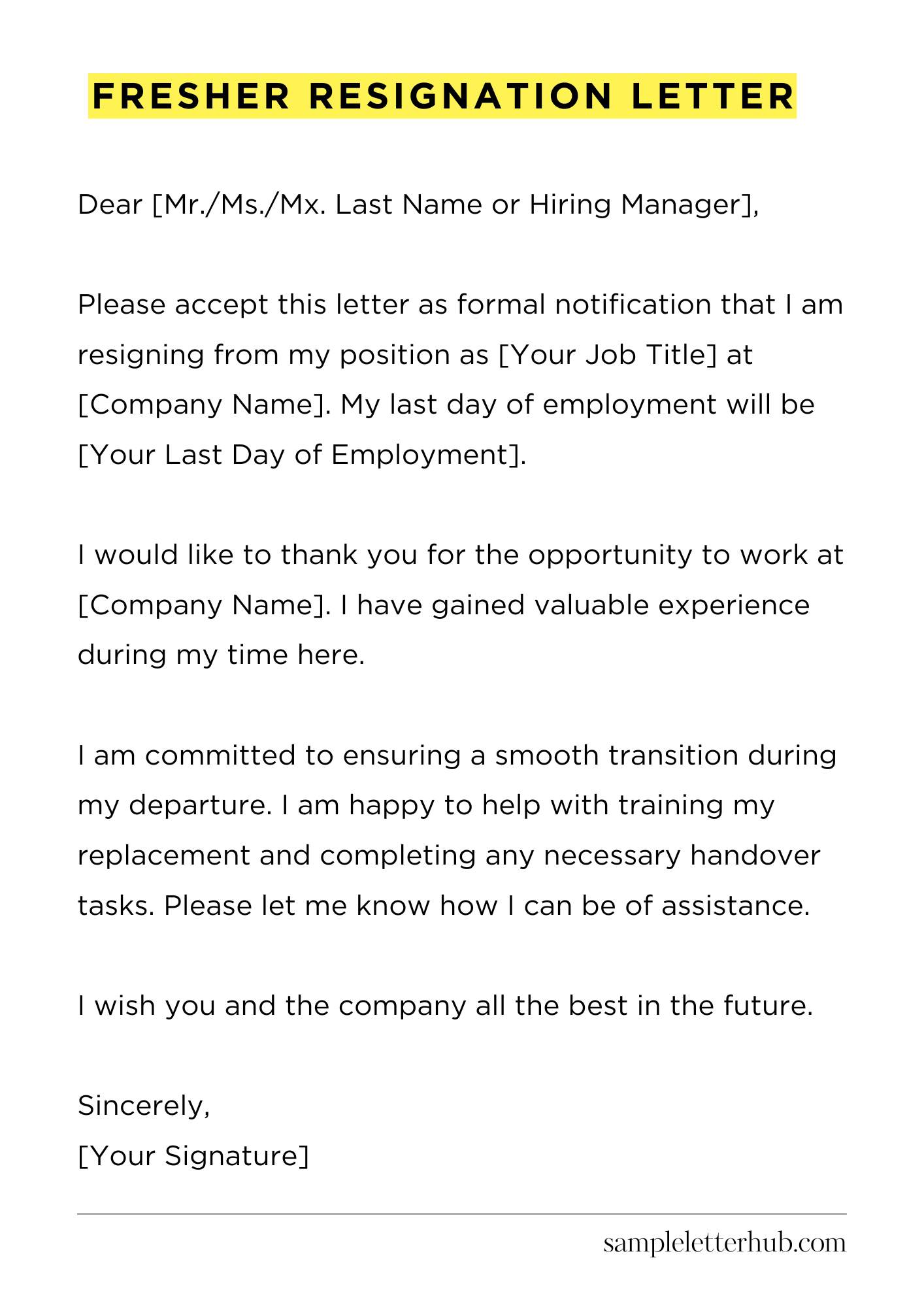
Dear [Mr./Ms./Mx. Last Name or Hiring Manager],
Please accept this letter as formal notification that I am resigning from my position as [Your Job Title] at [Company Name]. My last day of employment will be [Your Last Day of Employment].
I would like to thank you for the opportunity to work at [Company Name]. I have gained valuable experience during my time here.
I am committed to ensuring a smooth transition during my departure. I am happy to help with training my replacement and completing any necessary handover tasks. Please let me know how I can be of assistance.
I wish you and the company all the best in the future.
Sincerely,
[Your Signature]
How to Write a Fresher Resignation Letter
Why is a Resignation Letter Important?
Leaving your first job can be a big deal. You’ve learned, grown, and probably made some good memories. However, moving on professionally is sometimes necessary. Regardless of the reason, you’ll need a resignation letter. This isn’t just a formality; it’s a professional courtesy and a crucial part of your employment record.
It formally notifies your employer of your departure. Think of it as your official goodbye note. It ensures everything is clear, concise, and documented. And trust me, you want to leave on good terms! This letter sets the tone for your future interactions and references.
What to Include in Your Resignation Letter
Okay, so what exactly goes into this letter? First, keep it brief and to the point. Start with the date and your name. Next, clearly state your intention to resign. Include your job title and the date of your last day of employment. This is the most crucial information. After that, express your gratitude for the opportunity.
Briefly mention what you’ve learned or any positive experiences you’ve had. This shows respect. It’s not necessary to go into lengthy detail about your reasons for leaving, unless you choose to. Finally, end with a polite closing, like “Sincerely” or “Best regards”, followed by your typed name.
Sample Resignation Letter Template for Freshers
Need a little help getting started? Here’s a basic template to get you going. Remember to personalize it to fit your situation. Here is an example you can modify.
    [Your Name]
    [Your Address]
    [Your Phone Number]
    [Your Email Address]

    [Date]

    [Name of Your Supervisor/Manager]
    [Title of Your Supervisor/Manager]
    [Company Name]
    [Company Address]

    Dear [Mr./Ms./Mx. Last Name of Supervisor],

    Please accept this letter as formal notification that I am resigning from my position as [Your Job Title] at [Company Name]. My last day of employment will be [Your Last Day of Employment].

    I am grateful for the opportunities I have been given during my time here. [Optional: Briefly mention a specific positive experience or skill gained].

    I wish the company continued success in the future.

    Sincerely,

    [Your Typed Name]
Modify the bracketed information with your own details. Keep it professional.
Things to Avoid in Your Resignation Letter
While professionalism is key, there are some things you should avoid. Steer clear of negativity. Don’t use your resignation letter to complain about your job, colleagues, or the company. It’s better to maintain a positive tone. Avoid burning bridges! Don’t criticize anyone. Also, it’s best not to over-explain your reasons for leaving unless asked.
Keep it simple and focused on the facts. Don’t include personal opinions. Stick to the essential details of your resignation. Finally, do not forget to proofread your letter carefully before sending it. Errors can undermine your professionalism.
Next Steps After Submitting Your Letter
So, you’ve written and submitted your letter. Now what? First, make a copy for your records. Then, prepare for your exit interview, if one is scheduled. During this interview, be prepared to discuss your experiences and answer questions about your reasons for leaving. This is your last chance to be a good employee, so be respectful and professional.
Ensure you return all company property. Lastly, be sure to connect with your colleagues and maintain those important professional relationships. Remember that leaving on a positive note can lead to future opportunities and strong references. Your reputation is important, so treat this situation accordingly.
FAQs about Fresher resignation letter
How do I write a resignation letter as a fresher?
As a fresher, your resignation letter should be concise, professional, and courteous. Begin by stating your intention to resign, followed by your official job title and the date of your last day of employment.
Briefly express your gratitude for the opportunity and any specific learning experiences gained. Keep the tone positive, and avoid any negative comments about your experience or reasons for leaving. Proofread carefully before sending.
What should I include in my fresher resignation letter?
Your resignation letter should include: your name, the date, the recipient’s name and title, a clear statement of resignation, your job title, your last day of employment, a brief expression of gratitude, and your signature. Optional additions might include a very brief reason for leaving (if desired), and your contact information. Be sure to keep it professional and respectful.
Is it okay to give a shorter notice period as a fresher?
The notice period is usually determined by your employment contract or company policy. While it may be tempting to give a shorter notice period, it’s generally advisable to adhere to the agreed-upon timeframe.
Giving proper notice is crucial for maintaining a professional image and ensuring a smooth transition. If you have extenuating circumstances, discuss them with your manager, but always aim to follow your contract’s guidelines.
How do I handle the resignation conversation with my manager as a fresher?
Schedule a meeting with your manager. Be prepared to inform them of your decision and provide a copy of your resignation letter. Be professional and thank them for the opportunity.
Be prepared to answer questions about your reason for leaving, but you are not obligated to go into significant detail. Offer to assist with the transition of your responsibilities. Maintain a positive and respectful attitude throughout the conversation.
What are the common mistakes to avoid in a fresher resignation letter?
Avoid these common mistakes: Being overly negative or critical, including lengthy personal explanations, using slang or unprofessional language, not stating your last day of employment clearly, failing to proofread the letter, and not handing in the letter in person (if possible). It’s also unwise to burn bridges or make demands. Keep it concise, respectful, and professional.
Related:
Resignation letter due to rude boss
Resignation letter moving to another state
Resignation letter due to illness of family member
Resignation letter due to study