

A Chief of Staff resignation letter is a formal document. It is written by a Chief of Staff. The purpose is to officially announce their departure from the position. This letter informs the employer of the resignation. It also often includes a departure date.
Navigating the resignation process can be tricky. We want to help make it easier. We will provide you with various letter templates. You can use these as a guide. They will give you a head start.
Need to create a letter that reflects your needs? You’re in luck. We will share examples. These examples will show different approaches. This will help you craft your own unique letter.
Chief Of Staff Resignation Letter
Below is a sample of a Chief Of Staff Resignation Letter:
[Your Name]
[Your Address]
[Your Phone Number]
[Your Email Address]
[Date]
[Chief Executive Officer’s Name]
[Chief Executive Officer’s Title]
[Company Name]
[Company Address]
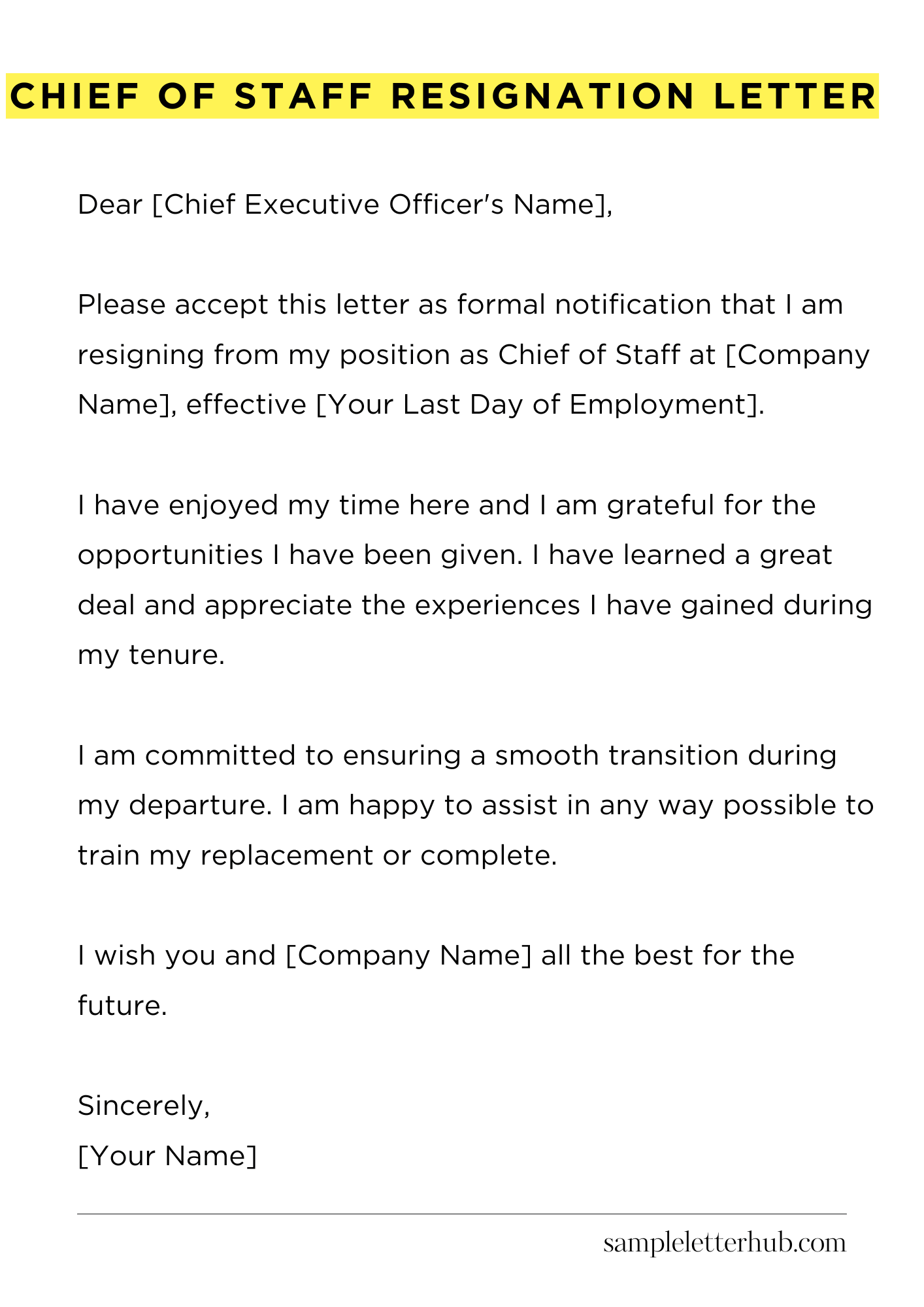
Dear [Chief Executive Officer’s Name],
Please accept this letter as formal notification that I am resigning from my position as Chief of Staff at [Company Name], effective [Your Last Day of Employment].
I have enjoyed my time here and I am grateful for the opportunities I have been given. I have learned a great deal and appreciate the experiences I have gained during my tenure.
I am committed to ensuring a smooth transition during my departure. I am happy to assist in any way possible to train my replacement or complete any ongoing projects before my last day.
I wish you and [Company Name] all the best for the future.
Sincerely,
[Your Name]
How to Write a Chief of Staff Resignation Letter
Know Your Reason
Before you even think about putting pen to paper (or fingers to keyboard), you need to be clear about *why* you’re leaving. This is crucial. Reflect on your reasons. Are you pursuing a new opportunity?
Do you need a change of pace? Maybe there are personal circumstances. Whatever the case, pinpoint the core motivation behind your decision. This clarity will significantly influence the tone and content of your letter. It’s also a good exercise to do for yourself.
Honesty is usually the best policy, within reason.
Craft the Structure: The Essentials
Your resignation letter needs a professional structure. First, start with the basics: your name, the date, and the recipient’s name (usually the CEO or your direct supervisor) and title.
Next comes the core of the letter. Start with a clear statement of your intention to resign from your position as Chief of Staff. State your effective date of resignation. Be precise here – this is non-negotiable.
Following this, express your gratitude for the opportunity to have worked with the company. Mentioning specific positive experiences is a nice touch. Remember, you want to leave on a positive note, even if your departure isn’t entirely by choice.
Finally, offer to assist with the transition. This is not strictly mandatory, but it’s a sign of professionalism and shows you’re committed to a smooth handover.
The Tone: Professionalism is Key
Your tone is critical. Keep it professional, respectful, and positive. Avoid negativity. Do not air grievances or make accusations. This is not the place for that. This is the place to be gracious and clear.
Focus on the positive aspects of your experience.
Keep the language clear and concise. Avoid jargon, overly complex sentences, or anything that could be misconstrued. Proofread carefully. Spelling and grammatical errors can undermine your credibility.
What to Include (and What to Avoid)
What should you actually say? As mentioned, you need to state your resignation and effective date.
Then, express your gratitude for the opportunity. Briefly mention any specific contributions you’re proud of. Offer to help with the transition.
What should you avoid? Avoid criticizing the company, your colleagues, or your boss. Do *not* give a laundry list of complaints. Keep it short and sweet. Do not include personal issues unless absolutely necessary.
It’s all about keeping things on a professional level.
Final Touches and Delivery
Before sending your letter, proofread it multiple times. Get a second opinion from a trusted friend or colleague. A fresh set of eyes can often catch errors that you might have missed.
Consider the delivery method. While email is standard, if you have a strong relationship with your boss, consider handing them a printed copy in person. Make sure you keep a copy for your records, too.
Follow up with your boss or HR to confirm receipt and discuss the transition plan. This is a good final step and shows you have good business skills.
FAQs about Chief Of Staff resignation letter
What information should I include in my Chief of Staff resignation letter?
Your resignation letter should include your formal announcement of resignation, the effective date of your departure, a concise and professional statement of your reason for leaving (if you choose to include one), and an expression of gratitude for the opportunity. It is also customary to offer assistance during the transition period. Avoid negativity and maintain a respectful tone.
How much notice should I give when resigning as Chief of Staff?
The standard notice period for a Chief of Staff is generally between two to four weeks. However, this can vary based on your employment contract, company policy, and the specific circumstances of your role. Review your contract and consider the impact your departure will have on the organization when determining the appropriate notice period.
Should I provide a reason for resigning in my Chief of Staff resignation letter?
You are not legally obligated to provide a reason for leaving. However, it is often considered courteous to include a brief and professional reason. This could be to pursue a new opportunity, for personal reasons, or to relocate. Keep it brief and positive, avoiding any negative comments about your current employer.
What should I do after submitting my resignation letter?
After submitting your resignation letter, schedule a meeting with your supervisor to discuss your departure. Cooperate fully with the transition process, including training your replacement, documenting your key responsibilities, and ensuring a smooth handover of your duties. Be professional and maintain a positive attitude throughout this period.
What are some common mistakes to avoid in a Chief of Staff resignation letter?
Avoid burning bridges by including any negativity, personal complaints, or lengthy explanations for your departure. Do not discuss confidential company information or use the letter as a platform to criticize your employer or colleagues.
Keep it concise, professional, and focused on facilitating a smooth transition. Ensure all details such as the date and your effective date of resignation are accurate.
Related:
Resignation letter due to rude boss
Resignation letter moving to another state
Resignation letter due to illness of family member
Resignation letter due to study