

A model resignation letter is a template. It helps employees write their resignation letters. Its purpose is to provide a clear and professional way to inform an employer of their departure. It is a vital tool for a smooth transition.
Preparing to resign can be daunting. We are here to help. This article provides various examples. These samples cover different situations. We offer a variety of options.
You will find ready-made templates. Adapt them to fit your needs. These templates are easy to use. Craft your perfect letter today!
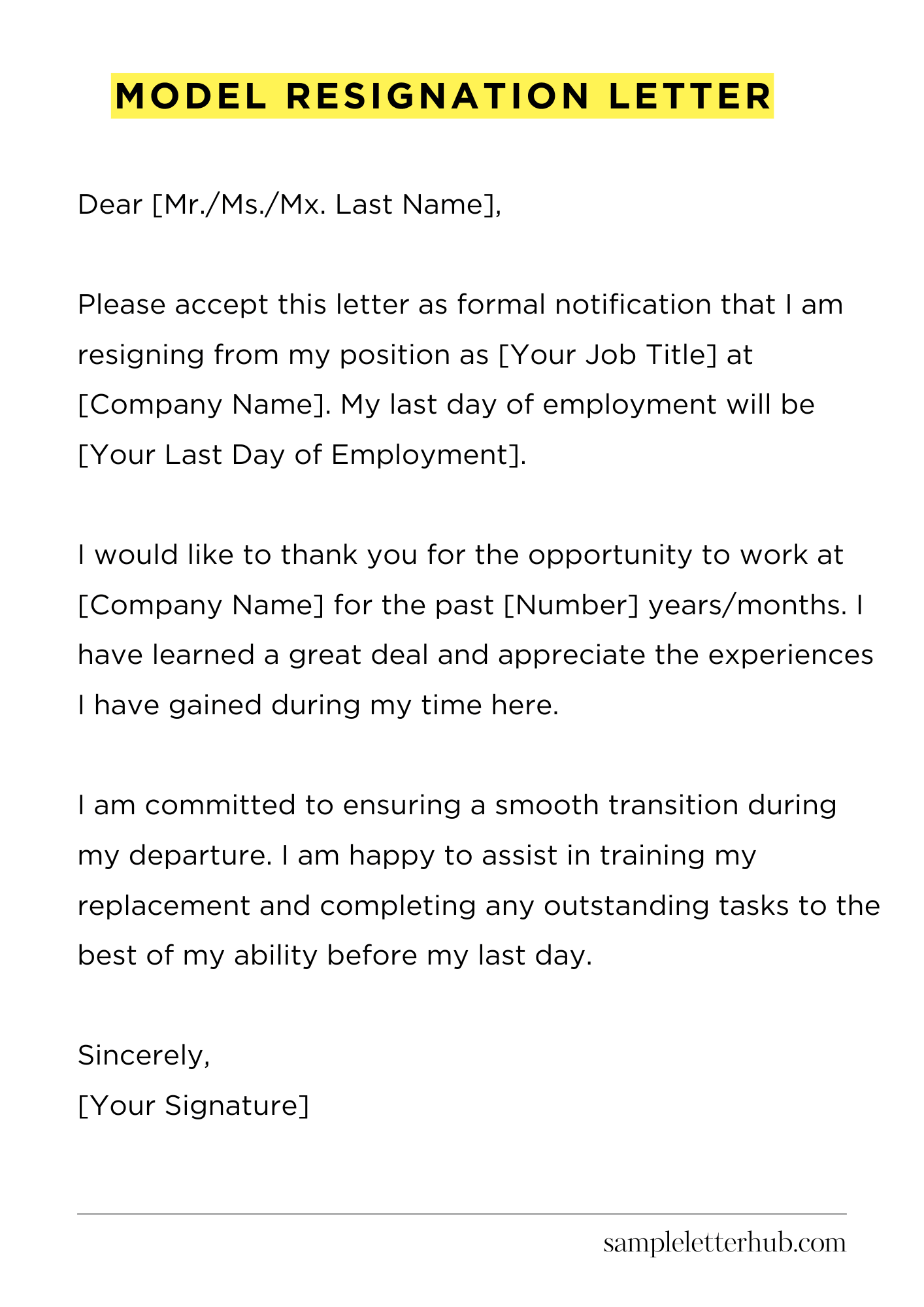
Model Resignation Letter
Below is a sample of a Model Resignation Letter:
[Your Name]
[Your Address]
[Your Phone Number]
[Your Email Address]
[Date]
[Employer’s Name]
[Employer’s Title]
[Company Name]
[Company Address]
Dear [Mr./Ms./Mx. Last Name],
Please accept this letter as formal notification that I am resigning from my position as [Your Job Title] at [Company Name]. My last day of employment will be [Your Last Day of Employment].
I would like to thank you for the opportunity to work at [Company Name] for the past [Number] years/months. I have learned a great deal and appreciate the experiences I have gained during my time here.
I am committed to ensuring a smooth transition during my departure. I am happy to assist in training my replacement and completing any outstanding tasks to the best of my ability before my last day.
I wish the company continued success in the future.
Sincerely,
[Your Signature]
How to Write a Model Resignation Letter
1. Why is a Resignation Letter Important?
Leaving a job is a big decision. You have likely thought about this for a while. It’s also important to do it professionally. This is where a well-crafted resignation letter comes into play. It’s more than just a formality. This written notice serves as your official record of departure.
Think of it as a crucial piece of documentation for your employment history. It protects you and the company. A good resignation letter will make sure your transition is smooth. It helps to maintain a positive relationship with your employer. This is important, as you never know when you might need a reference or want to work with them again in the future.
2. Essential Elements to Include
So, what exactly should you put in your letter? First, keep it concise and direct. State your intention to resign clearly. Include your official resignation date, which should align with your employment contract or any agreed-upon notice period. Also, it’s customary to express your gratitude for the opportunity.
Mention your appreciation for your time at the company. Keep the tone positive. Briefly acknowledge any valuable experiences or skills you gained. It is also good practice to offer assistance during the transition.
Offer to help train a replacement or complete ongoing projects if you can. Finally, provide your contact information for any follow-up questions. Make sure it’s up-to-date.
3. Crafting the Perfect Tone
The tone of your letter is critical. It should be professional, respectful, and courteous. Avoid negativity. Don’t use the letter as a place to air grievances. Steer clear of any harsh criticism.
Stay neutral and factual. Focus on your departure and any positive experiences. Proofread your letter carefully. Check for any grammar mistakes or typos. A polished letter shows that you care about your professionalism. If you are struggling, you can always seek advice from your friends.
4. Sample Resignation Letter Template
Here’s a basic template that you can adapt for your own use:
        [Your Name]
        [Your Address]
        [Your Phone Number]
        [Your Email Address]

        [Date]

        [Employer’s Name]
        [Employer’s Title]
        [Company Name]
        [Company Address]

        Dear [Mr./Ms./Mx. Last Name],

        Please accept this letter as formal notification that I am resigning from my position as [Your Job Title] at [Company Name]. My last day of employment will be [Your Last Day of Employment].

        I am grateful for the opportunities I have been given during my time here. I have learned a lot and appreciate the experience.

        I am happy to assist with the transition process in any way I can. Please let me know how I can help.

        I wish you and the company all the best in the future.

        Sincerely,

        [Your Signature]
        [Your Typed Name]
5. What To Do After Submitting Your Letter
Once you hand in your letter, what comes next? Follow up with your manager to confirm they received it. Discuss the handover process. Be prepared for an exit interview.
This is your chance to provide constructive feedback. However, stay professional. Then, of course, there’s the practical side. Make sure you clear up your personal belongings and return any company property. Finally, maintain a positive attitude until your last day. This will leave a good impression. And, most importantly, enjoy your next adventure!
FAQs about Model Resignation Letter
What is the primary purpose of a model resignation letter?
The primary purpose of a model resignation letter is to provide a clear, concise, and professional document that formally informs an employer of an employee’s intent to leave their position. It serves as an official notification, outlining the employee’s last day of employment and often including a brief statement of gratitude or a request for assistance with the transition.
What key elements should always be included in a model resignation letter?
A well-structured model resignation letter typically includes: the employee’s name and contact information, the date, the employer’s name and address, a formal salutation (e.g., “Dear [Manager’s Name]”), a clear statement of resignation, the employee’s last day of employment, a brief expression of gratitude (optional but recommended), a closing (e.g., “Sincerely”), and the employee’s signature.
How much notice should be given in a resignation letter, and how is it determined?
The amount of notice to give is typically determined by the employment contract, company policy, or local labor laws. Often, it’s two weeks, but it can vary. Review the employment contract or company handbook to understand the required notice period. Adhering to the agreed-upon timeframe is crucial for maintaining a professional relationship.
Can a model resignation letter be customized, and if so, how?
Yes, model resignation letters should always be customized to fit the individual’s specific situation. While the basic structure remains the same, customization includes personalizing the tone (professional and respectful), adding specific details about the role, expressing genuine appreciation for the opportunity.
What are some common mistakes to avoid when writing a resignation letter?
Common mistakes to avoid include: being overly emotional or negative, including confidential information or complaints, neglecting to state the last day of employment clearly, failing to maintain a professional tone, and not proofreading for grammar and spelling errors. It’s also unwise to burn bridges by being disrespectful or unprofessional; always maintain a positive or neutral tone.
Related:
Resignation letter due to rude boss
Resignation letter moving to another state
Resignation letter due to illness of family member
Resignation letter due to study