

A Senior Civil Engineer resignation letter is a formal document. It notifies your employer of your intention to leave your job. The purpose of this letter is to officially resign. It also helps to maintain a professional relationship.
Planning your exit can be tough. This article will help with the actual writing. We will provide different templates. You can find various examples of Senior Civil Engineer resignation letters.
We’ve done the work. You can adapt these samples to fit your situation. Craft your letter with ease and confidence. Make your transition smoother.
Senior Civil Engineer Resignation Letter
Below is a sample of a Senior Civil Engineer Resignation Letter:
[Your Name]
[Your Address]
[Your Phone Number]
[Your Email Address]
[Date]
[Employer’s Name]
[Employer’s Title]
[Company Name]
[Company Address]
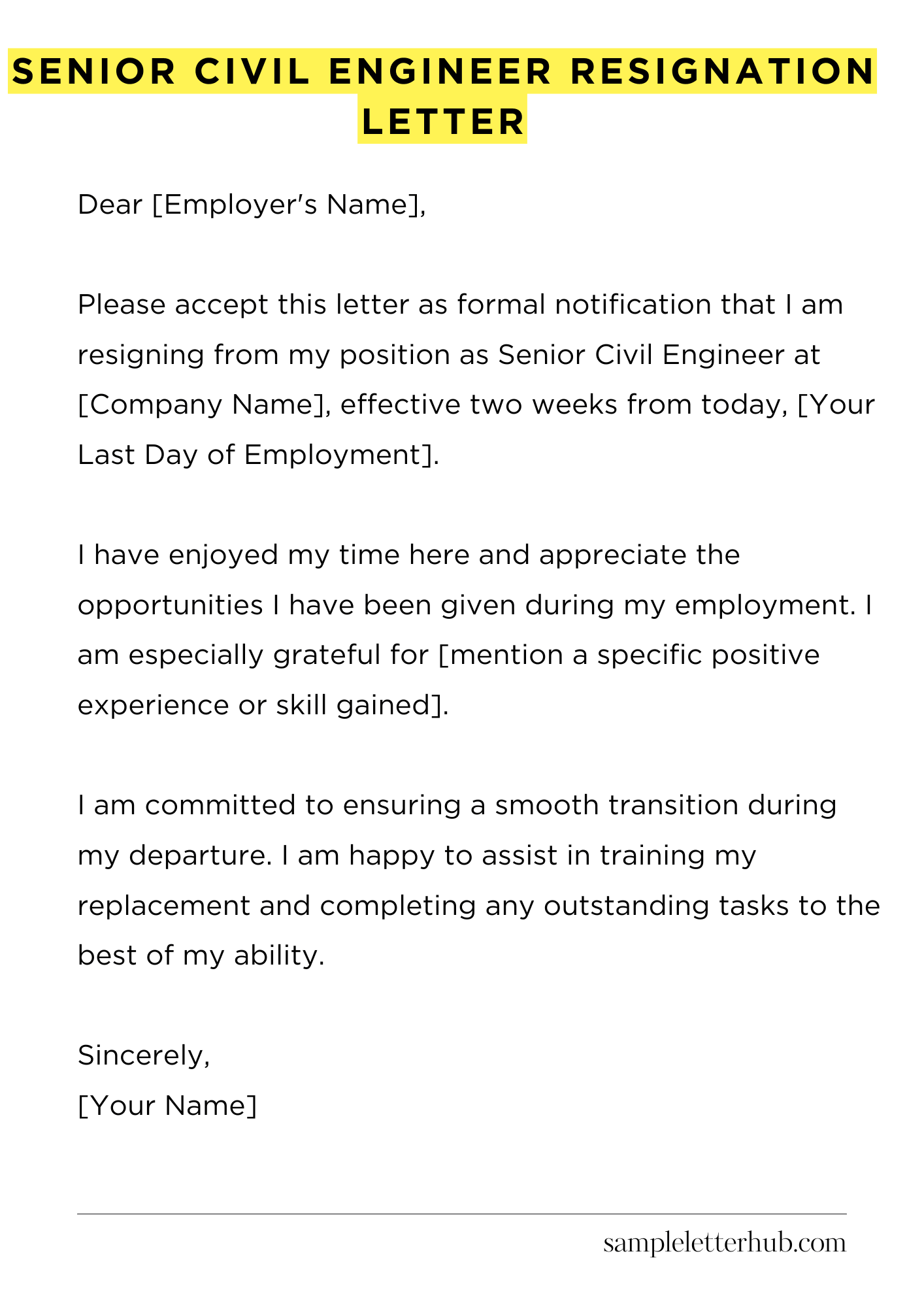
Dear [Employer’s Name],
Please accept this letter as formal notification that I am resigning from my position as Senior Civil Engineer at [Company Name], effective two weeks from today, [Your Last Day of Employment].
I have enjoyed my time here and appreciate the opportunities I have been given during my employment. I am especially grateful for [mention a specific positive experience or skill gained].
I am committed to ensuring a smooth transition during my departure. I am happy to assist in training my replacement and completing any outstanding tasks to the best of my ability.
I wish you and [Company Name] all the best in the future.
Sincerely,
[Your Name]
How to Write a Senior Civil Engineer Resignation Letter
Getting Started: Planning Your Departure
Resigning from your role as a Senior Civil Engineer is a big step. You’ve likely dedicated years to your company and career. Before you even begin drafting your letter, take a deep breath. First, consider the reasons behind your decision. Are you pursuing a new opportunity? Do you require a change of pace? Or is it something else?
Understanding your motivations will help you articulate them effectively. Think about the date you’d like your resignation to be effective. This is important to consider the terms of your contract and any notice period requirements your company may have. Thorough planning will make the whole process smoother.
Crafting the Core: The Body of Your Letter
Your resignation letter should be professional and concise. Start with a clear and direct statement of your intent. For example, “Please accept this letter as formal notification that I am resigning from my position as Senior Civil Engineer, effective [Your Last Day].”
This is the core of your statement. Next, briefly and respectfully mention your reasons for leaving. You don’t need to go into extensive detail. A simple statement such as, “I have accepted another opportunity that aligns more closely with my long-term career goals” or, “I am seeking a new challenge” will suffice.
Then, express your gratitude for the opportunities and experiences you’ve gained during your tenure. A little appreciation can go a long way. This shows you are thankful.
Smooth Transitions: Offering Assistance and Remaining Professional
One of the most crucial elements of a well-written resignation letter is offering assistance. This demonstrates professionalism and a commitment to ensuring a smooth transition.
Consider offering to assist in training your replacement or helping with the handover of ongoing projects. This will show that you are going above and beyond. State your willingness to help in a positive manner such as, “I am committed to ensuring a seamless transition and am available to assist in any way possible to help train my replacement.”
Finally, maintain a professional tone throughout the letter. Avoid any negativity or criticism of your current employer. Keep your focus on moving forward.
Formalizing the Close: The End of the Letter
Conclude your letter with a formal closing and your signature. Use a professional closing like “Sincerely,” or “Respectfully,” followed by your typed name and, ideally, your signature. You can also include your contact information below your signature. This could include your phone number and email address.
Ensure you also provide the date the letter was written. This adds a level of professionalism. Proofread the letter carefully before submitting it. Check for any grammatical errors or typos. Double-checking will avoid any mistakes.
Final Steps: Delivery and Follow-Up
Once your letter is ready, decide how you’ll deliver it. Typically, you’ll hand the letter to your direct supervisor or the Human Resources department. It’s always best to deliver your letter in person. If possible, set up a meeting to deliver the letter and discuss your departure. This demonstrates respect for your employer.
After delivering the letter, keep it professional. Focus on completing your tasks to a high standard during your remaining time at the company. Remain positive and helpful, and you’ll leave a lasting positive impression. This approach will benefit your reputation.
FAQs about Senior Civil Engineer Resignation Letter
What is the essential information to include in a Senior Civil Engineer’s resignation letter?
A Senior Civil Engineer’s resignation letter should contain: a clear statement of resignation, the effective date of resignation, a concise statement of appreciation for the opportunity, and any relevant details regarding the transition of ongoing projects or responsibilities. It is also good practice to include a brief, professional expression of gratitude.
How much notice should a Senior Civil Engineer provide when resigning?
The standard notice period is typically two to four weeks, but this can vary depending on the employment contract, company policy, and local labor laws. Senior roles may warrant a longer notice period. Always review the employment agreement to determine the required timeframe.
Should a Senior Civil Engineer state the reason for leaving in the resignation letter?
While not mandatory, briefly mentioning the reason for leaving can be helpful, especially if it is for career advancement or a different opportunity. Keep the explanation concise and professional. Avoid negativity or providing excessive details about internal issues. A general statement, such as “pursuing a new career opportunity,” is often sufficient.
How should a Senior Civil Engineer address the letter and who should it be sent to?
The resignation letter should be addressed to the direct supervisor or the Human Resources department, depending on company protocol. Use the supervisor’s or HR manager’s full name and title. The letter should be sent in written form and may be submitted electronically or in hard copy depending on the company policy.
What should a Senior Civil Engineer do after submitting the resignation letter?
After submitting the resignation letter, a Senior Civil Engineer should cooperate with their employer to ensure a smooth transition. This includes providing assistance in training a replacement, documenting projects and processes, and attending any exit interviews. Be professional and maintain a positive attitude throughout the transition period.
Related:
Resignation letter due to rude boss
Resignation letter moving to another state
Resignation letter due to illness of family member
Resignation letter due to study