


A coach resignation letter is a formal document. It is how a coach officially quits their job. This letter informs the employer of the coach’s departure. It also states the last day of employment.
Are you a coach looking to move on? Do you need to craft the perfect resignation letter? We have got you covered. We’ve compiled various templates. They cover a range of coaching scenarios.
This article offers several helpful examples. They are easy to adapt. You can use them as a starting point. Make your letter clear and professional. It will make your process smoother.
Coach Resignation Letter
Below is a sample of a Coach Resignation Letter:
[Your Name]
[Your Address]
[Your Phone Number]
[Your Email Address]
[Date]
[Recipient Name]
[Recipient Title]
[Organization Name]
[Organization Address]
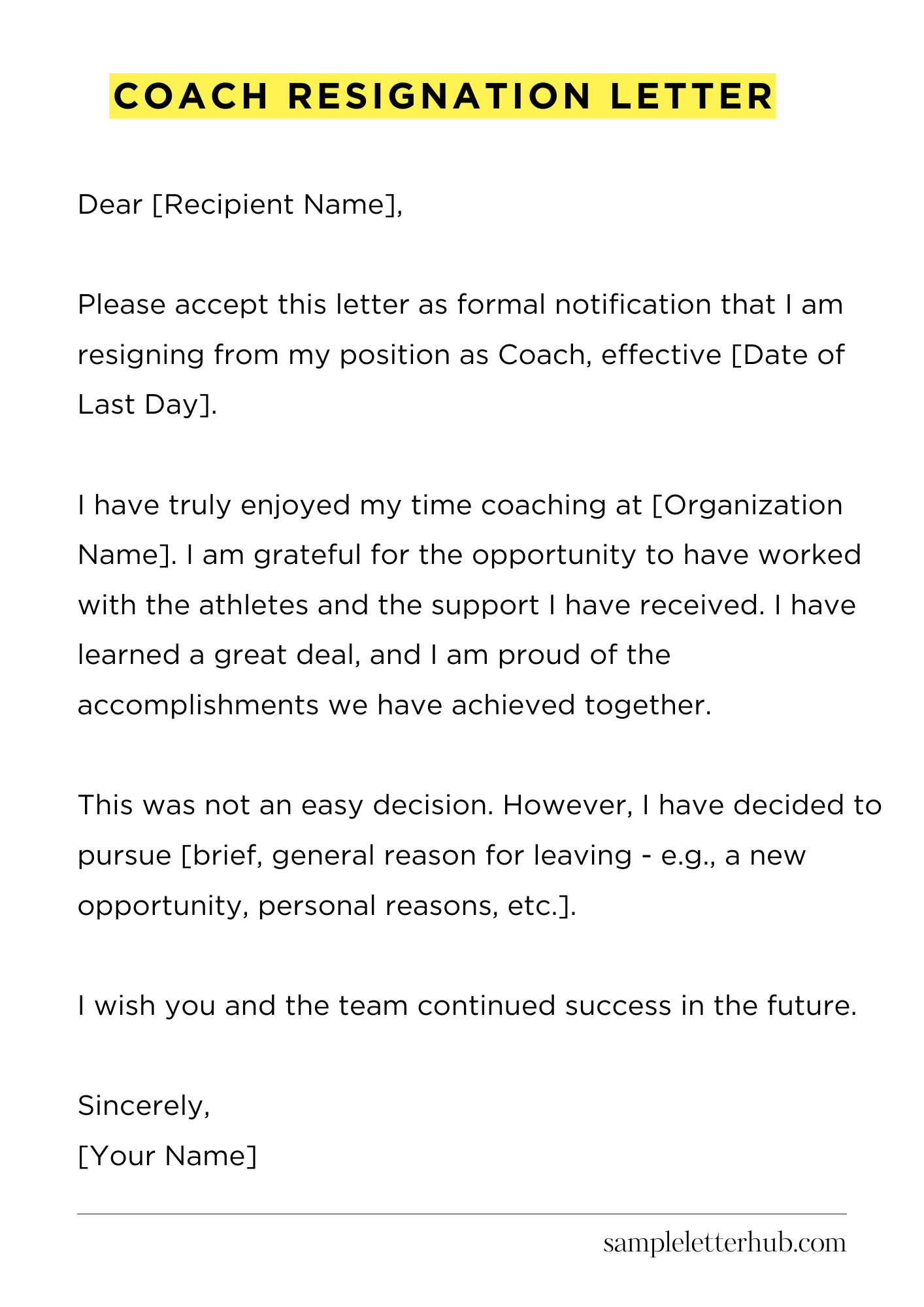
Dear [Recipient Name],
Please accept this letter as formal notification that I am resigning from my position as Coach, effective [Date of Last Day].
I have truly enjoyed my time coaching at [Organization Name]. I am grateful for the opportunity to have worked with the athletes and the support I have received. I have learned a great deal, and I am proud of the accomplishments we have achieved together.
This was not an easy decision. However, I have decided to pursue [brief, general reason for leaving – e.g., a new opportunity, personal reasons, etc.].
I am committed to ensuring a smooth transition. I am available to help with the handover process and assist in any way possible to ensure minimal disruption during this time. Please let me know how I can be of assistance.
I wish you and the team continued success in the future.
Sincerely,
[Your Name]
How to Write Coach Resignation Letter
Resigning from any coaching position requires careful thought and a professional approach. You’ve invested time, energy, and passion into your role, so leaving should be done respectfully.
Crafting a well-written resignation letter is key to ensuring a smooth transition and maintaining positive relationships. Let’s delve into how to construct a letter that reflects your professionalism and leaves a positive lasting impression.
1. Know Your Audience and Purpose
Before putting pen to paper (or fingers to keyboard), understand the recipient and the goal. Who are you addressing the letter to? Is it the athletic director, the school principal, or perhaps a club president? Knowing their position dictates the tone and level of formality.
Your purpose is simple: to formally announce your departure. Clearly state your intention to resign from your coaching position and the effective date. Keep it concise. This is the foundation upon which you’ll build.
2. The Core Components of Your Letter
Every effective coach resignation letter needs specific elements. First, start with a polite and professional salutation, addressing the recipient by name. Next, clearly state your resignation.
For instance, “Please accept this letter as formal notification that I am resigning from my position as [Your Coaching Position] at [Team/School Name], effective [Date].” After that, briefly, and professionally, state the reason for your departure.
This can be as simple as “due to personal reasons” or “to pursue other opportunities.” Don’t feel pressured to overshare. Thank them for the opportunity and express gratitude for your experience. Finally, offer assistance with the transition. It shows you care.
3. Crafting the Perfect Tone and Format
Maintain a respectful and professional tone throughout the letter. Avoid negativity or complaints. Even if your experience wasn’t perfect, your resignation letter isn’t the place to air grievances.
Keep it positive. Use a business letter format: your address, the recipient’s address, the date, a formal salutation, body paragraphs, and a professional closing (e.g., “Sincerely,” or “Respectfully,”) followed by your typed name and signature. Proofread! Errors undermine credibility. Always. Double-check the date, names, and all the details. This is essential.
4. Offering Assistance with the Transition
A crucial aspect of a good resignation letter is offering assistance with the transition. This showcases your professionalism and commitment to the team and athletes. You might state, “I am happy to assist in any way possible during the transition period, including helping to train my replacement.”
Consider offering to help prepare any necessary documentation or provide information about the team’s current status. This gesture leaves a positive impression and shows you care about the team’s future. It demonstrates that you are a true team player.
5. Review and Refine Before Sending
Before sending, review your letter critically. Read it aloud to catch any awkward phrasing or grammatical errors. Have a trusted friend or colleague review it too; a fresh pair of eyes can spot things you might have missed. Make sure your letter is concise, clear, and reflects your professionalism. Remember, this letter is a reflection of you.
Once you’re confident in your letter, make a copy for your records and send it via the appropriate channels. The last impression is the most important.
FAQs about Coach resignation letter
Understanding the nuances of a coach’s resignation letter is crucial for both coaches and those who might be receiving one. The following addresses some of the most frequently asked questions on this subject.
What are the essential elements of a coach resignation letter?
A well-crafted coach resignation letter should include: a clear and concise statement of resignation, the effective date of resignation, a brief expression of gratitude (optional), and any necessary information regarding the handover of responsibilities. It is also advised to include contact information for future communication. The letter’s tone should be professional and respectful.
What is the appropriate timeframe for submitting a coach resignation letter?
The timeframe for submitting a coach resignation letter typically depends on the terms outlined in the employment contract. However, as a general rule, a minimum of two weeks’ notice is standard practice. For higher-level coaching positions, or those with significant responsibilities, a longer notice period might be expected. Always refer to your contract for the specific guidelines.
How should a coach address the reasons for resignation in the letter?
While not always required, briefly mentioning the reason for resignation can be beneficial. It is often sufficient to state a general reason, such as “to pursue other opportunities” or “for personal reasons.” Avoid including any negative comments or criticisms about the organization or individuals. Keeping it neutral and professional is key.
Can a coach’s resignation letter affect future job prospects?
A coach’s resignation letter, when handled professionally, should not negatively affect future job prospects. The letter’s tone and content are essential. A well-written, respectful resignation letter will leave a positive impression. Conversely, a letter filled with complaints or negativity might raise concerns.
What steps should a coach take after submitting the resignation letter?
After submitting the resignation letter, a coach should be prepared to assist with the transition. This includes providing any necessary documentation, training a replacement (if applicable), and ensuring a smooth handover of responsibilities. Maintaining professionalism and offering support during the transition period is highly recommended to leave a positive lasting impression.
Related:
Resignation letter due to rude boss
Resignation letter moving to another state
Resignation letter due to illness of family member
Resignation letter due to study