

So, you’re a Process Associate looking to move on? A “Process Associate resignation letter” is your official way of saying goodbye to your current employer. It’s a formal document. Its main purpose is to communicate your intent to leave. It should be clear and professional.
Need help crafting the perfect letter? This article has you covered. We’ll share several templates. These templates offer different styles. They also cover various situations. You can adapt them to your specific needs.
Consider these samples your starting point. Use them as inspiration. We’ll make it easier to express yourself. You’ll be able to create a resignation letter with confidence. This helps you leave a positive lasting impression.
Process Associate Resignation Letter
Below is a sample of a Process Associate Resignation Letter:
[Your Name]
[Your Address]
[Your Phone Number]
[Your Email Address]
[Date]
[Hiring Manager Name] (If known, otherwise use title)
[Hiring Manager Title]
[Company Name]
[Company Address]
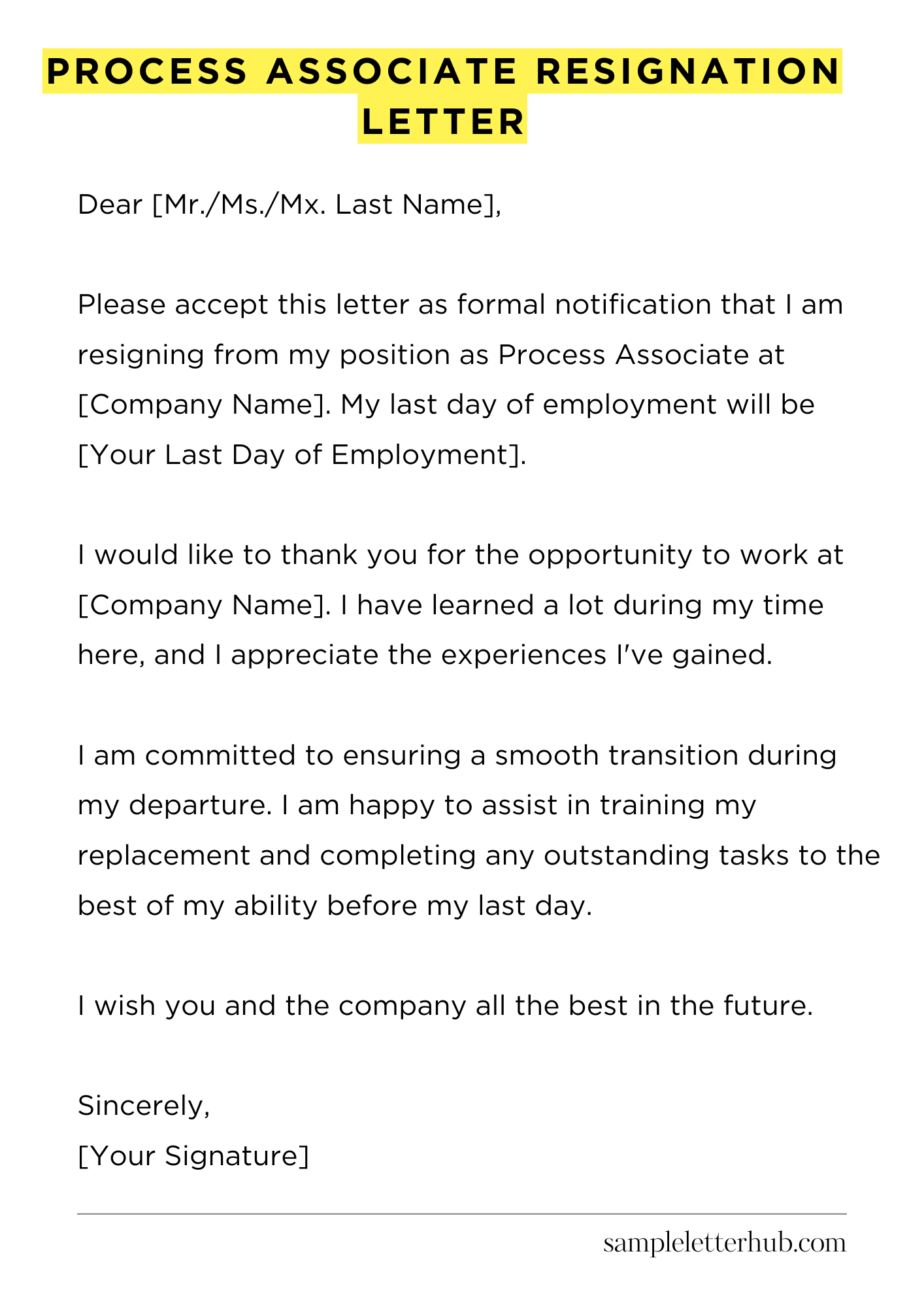
Dear [Mr./Ms./Mx. Last Name],
Please accept this letter as formal notification that I am resigning from my position as Process Associate at [Company Name]. My last day of employment will be [Your Last Day of Employment].
I would like to thank you for the opportunity to work at [Company Name]. I have learned a lot during my time here, and I appreciate the experiences I’ve gained.
I am committed to ensuring a smooth transition during my departure. I am happy to assist in training my replacement and completing any outstanding tasks to the best of my ability before my last day.
I wish you and the company all the best in the future.
Sincerely,
[Your Signature]
How to Write a Process Associate Resignation Letter
Resigning from a job can be a big step. It’s important to do it professionally, leaving a positive impression, even as you move on. One of the key ways to achieve this is through a well-crafted resignation letter.
This is especially true for roles like a Process Associate, where attention to detail and clear communication are often highly valued. So, let’s look at how to write the perfect one.
1. The Essential Elements: What to Include
Your Process Associate resignation letter needs to be clear and concise. Start with your intent to resign. Then, specify the date your resignation takes effect. This is crucial for your employer to plan. Include a formal salutation – “Dear [Manager’s Name]” is generally appropriate.
Keep your tone professional, and show your appreciation for the opportunity. Briefly mention your last day of employment. Don’t forget your contact information. Avoid negativity. This is not the time to air grievances. Keep it simple; this is a straightforward communication.
2. Structure and Formatting: Making It Readable
Format matters! A well-structured letter is easy to understand. Use a standard business letter format. This shows professionalism. Start with your name, address, and the date. Next, include the recipient’s name, title, and company address. Keep the body of the letter brief. Three to four paragraphs are usually sufficient.
Use clear and simple language. Proofread your letter carefully for any spelling or grammatical errors before sending it. Proper formatting demonstrates respect for your employer and the process. This demonstrates attention to detail, a vital skill for any Process Associate.
3. Crafting the Body: Content is Key
In the body of your letter, you’ll express your decision. State your resignation, and specify your last day of work. If you wish, you can express gratitude for the opportunities you’ve been given, or the skills you’ve learned. But, keep it short and sincere. Avoid going into too much detail about why you are leaving.
Offer to assist with the transition. This is very important. This shows your commitment to a smooth handover. It also highlights your professionalism. If you have any projects to finish, you could mention your willingness to wrap them up. Keep the overall tone positive and forward-looking.
4. Keeping it Positive: Avoiding Common Pitfalls
Resignation letters should always be professional and positive. Steer clear of any negative comments about your employer, colleagues, or the company. Criticizing your current job will not help your reputation. Even if you’ve had a negative experience, resist the urge to dwell on it.
Avoid including personal information that isn’t relevant. Don’t discuss your new job or its details. Focus on your resignation and your willingness to assist in a smooth handover. A positive attitude leaves a good impression. You never know when your paths might cross again. You want to leave a good impression for future references.
5. The Final Touches: Proofreading and Delivery
Before sending your letter, proofread it meticulously. Check for any grammatical errors or typos. Ensure your name and contact information are correct. After reviewing the content, send your letter to your manager. It’s usually best to deliver it in person, if possible. If you can’t, email is acceptable.
Make sure you keep a copy of your letter for your records. Remember, your resignation letter is a formal document. It reflects your professionalism. It will be part of your employment history. Make sure you’re proud of it. Good luck with your next endeavor!
FAQs about Process Associate Resignation Letter
What is the primary purpose of a Process Associate resignation letter?
The primary purpose of a resignation letter from a Process Associate is to formally notify their employer of their intent to leave the company. This letter serves as a legal record and outlines the employee’s last working day. It also allows the employee to express their gratitude, provide a reason for leaving (optional), and maintain a professional relationship with the company.
What essential information must be included in a Process Associate resignation letter?
A well-structured Process Associate resignation letter should include: a clear statement of resignation, the effective date of resignation (last working day), the employee’s name and designation, the recipient’s name and designation, and the company’s name.
Optionally, the letter may also include a brief expression of gratitude and/or a reason for leaving, though this is not always mandatory.
How should a Process Associate express their reason for leaving in their resignation letter?
While not mandatory, if a Process Associate chooses to include a reason for leaving, it’s best to keep it concise and professional. Common reasons include pursuing new opportunities, personal reasons, or a desire for career advancement. Avoid negative comments about the company or colleagues. Keep it factual and positive whenever possible.
Can a Process Associate withdraw their resignation after submitting their letter?
Whether a Process Associate can withdraw their resignation depends on company policy and the stage of the resignation process. It’s advisable to speak with their manager or HR representative as soon as possible if they wish to withdraw their resignation.
Withdrawal may not always be guaranteed, especially if the company has already begun the process of filling the position.
What is the typical format and tone expected in a Process Associate resignation letter?
The typical format is a formal business letter. The tone should be professional and courteous. The letter should be clear, concise, and to the point. Expressing gratitude for the opportunity to work at the company is always a positive gesture, and avoiding any negative or inflammatory language is crucial for maintaining a professional image.