

A “Physiotherapist Resignation Letter” is a formal document. It is written by a physiotherapist. Its primary purpose is to inform an employer about leaving a job. The letter officially states the intent to resign. It also clarifies the last day of employment.
Are you a physiotherapist planning to resign? We understand the process can be daunting. We have created some helpful tools to assist you. We’ll share various templates and examples. These examples will cover different scenarios.
Our goal is to make the process easier. You can use these samples as a guide. Customize them to fit your specific needs. Create a professional and clear resignation letter quickly.
Physiotherapist Resignation Letter
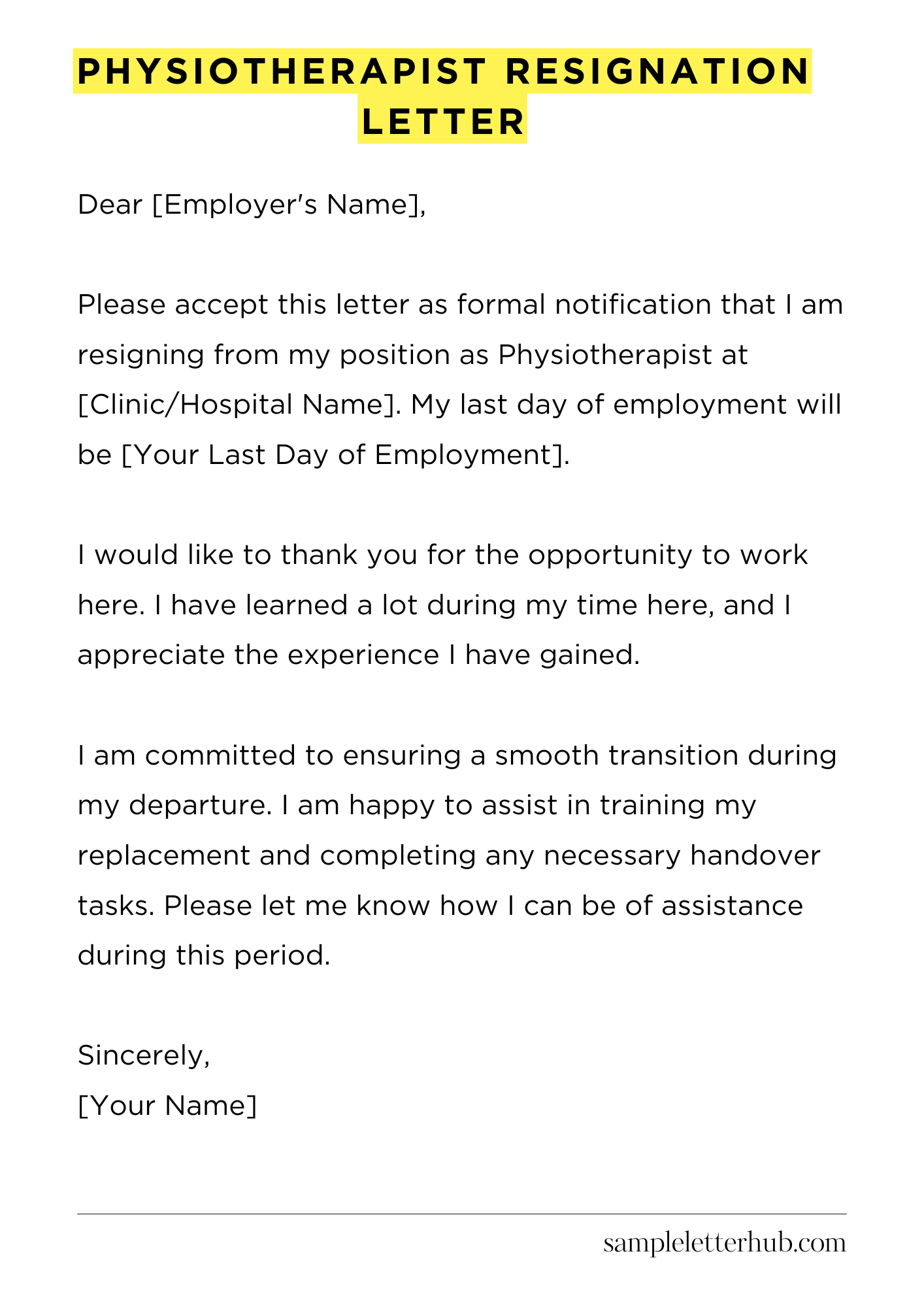
Below is a sample of a Physiotherapist Resignation Letter:
[Your Name]
[Your Address]
[Your Phone Number]
[Your Email Address]
[Date]
[Employer’s Name]
[Clinic/Hospital Name]
[Clinic/Hospital Address]
Dear [Employer’s Name],
Please accept this letter as formal notification that I am resigning from my position as Physiotherapist at [Clinic/Hospital Name]. My last day of employment will be [Your Last Day of Employment].
I would like to thank you for the opportunity to work here. I have learned a lot during my time here, and I appreciate the experience I have gained.
I am committed to ensuring a smooth transition during my departure. I am happy to assist in training my replacement and completing any necessary handover tasks. Please let me know how I can be of assistance during this period.
I wish you and the clinic all the best in the future.
Sincerely,
[Your Name]
How to Write a Physiotherapist Resignation Letter
1. Getting Started: The Basics You Need
Leaving a job is a big decision. Before you even think about putting pen to paper (or fingers to keyboard), you’ll want to have a clear idea of your departure date. This is arguably the most crucial element of your letter, so make sure you’ve figured out when your last day will be.
Then, of course, you will need the basics: your name, the date you’re writing the letter, and the name and address of your employer. Simple, right? Absolutely! But overlooking these small details can undermine professionalism. Keep it formal and direct.
2. The Important First Paragraph: State Your Intent
Your first paragraph is your chance to clearly state your intention to resign. It’s best to keep it concise and to the point. Start with a straightforward declaration. For example, “Please accept this letter as formal notification that I am resigning from my position as Physiotherapist, effective [Your Last Day of Employment].” Be direct; clarity is key. This avoids any room for misinterpretation.
3. Expressing Gratitude: A Touch of Class
While you might be eager to move on, showing gratitude is crucial. It’s a small world and you want to leave a good impression. This is where you can take a moment to thank your employer for the opportunity and the experiences you’ve gained. Mentioning specific aspects of your time there, such as professional growth or positive relationships, can add a genuine touch.
Consider something like, “I am grateful for the opportunities I have been given at [Company Name] and for the experiences I have gained during my time here.” This fosters goodwill and respect. Always stay professional.
4. The Practical Bits: Handover and Assistance
Now, let’s move on to the practicalities. Include a sentence or two about assisting with the transition. Offer your help in training your replacement or completing outstanding tasks. This demonstrates your commitment to a smooth handover.
Something like, “I am committed to ensuring a seamless transition and will do everything I can to assist in the handover process. I am available to train my replacement and complete any outstanding tasks before my departure date.” This will always go a long way towards preserving your professional reputation. Think about it.
5. Closing and Polishing: Finishing Strong
The final paragraph is about a graceful exit. Reiterate your gratitude. End with a professional closing, such as “Sincerely,” or “Respectfully,” followed by your full name. Proofread your letter carefully.
Check for any grammatical errors or typos. Remember, the letter is a reflection of your professionalism. Make sure it looks polished and professional. Consider having a second set of eyes to review it. You only get one chance to make a good final impression!
FAQs about Physiotherapist resignation letter
How do I write a Physiotherapist resignation letter?
When crafting your resignation letter as a physiotherapist, you should include the date, your name, the name of your supervisor or the person you’re reporting to, and the practice or hospital’s name. State your intention to resign clearly. Include your last working day. Express gratitude for the opportunities you received.
Consider briefly stating the reason for your departure (optional), keep it professional and positive. Always finish by offering assistance during the transition period. Finally, sign the letter and print your name. Ensure it is concise, professional, and reflects your gratitude.
What should be the tone of my Physiotherapist resignation letter?
The tone of your resignation letter should be professional, respectful, and positive. Avoid negativity or complaints. Maintain a polite and appreciative tone throughout the letter.
Express gratitude for the experience and opportunities provided. Be clear, concise, and focused on the facts of your resignation. Even if your experience wasn’t ideal, it is important to end on a positive note.
What information must I include in my Physiotherapist resignation letter?
A physiotherapist’s resignation letter must contain the date, your name and job title, the name of your supervisor or the person you are reporting to, and the clinic or hospital’s name.
It should clearly state your intention to resign from your position. Include your last day of employment. Express your gratitude for the opportunity to work there. Offer to assist with the transition, if possible.
Can I give a reason for leaving in my Physiotherapist resignation letter?
While it’s not always necessary, you can briefly mention the reason for leaving in your resignation letter as a physiotherapist. However, it’s generally recommended to keep it brief and positive.
Avoid any negative comments or criticisms about the workplace or your colleagues. Common reasons can include “to pursue other opportunities,” “to focus on professional development,” or “for personal reasons.”
How much notice should I give in my Physiotherapist resignation letter?
The amount of notice required in a physiotherapist’s resignation letter depends on your employment contract and local regulations. Generally, a minimum of two to four weeks’ notice is standard in many regions. However, always refer to your employment contract or consult with your HR department to clarify the specific notice period required by your employer.
Related:
Resignation letter due to rude boss
Resignation letter moving to another state
Resignation letter due to illness of family member
Resignation letter due to study