

An electrical resignation letter is a formal notice. It tells your employer you are quitting. This is essential if you work in the electrical field. It officially ends your employment.
Writing this letter can seem tricky. Don’t worry, we are here to help. We’ve got you covered with some easy-to-use examples. These samples will guide you.
Use these letters as inspiration. You can tailor them to your own situation. Need a quick and easy way to resign? We’ve got the perfect templates!
Electrical Resignation Letter
Below is a sample of a Electrical Resignation Letter:
[Your Name]
[Your Address]
[Your Phone Number]
[Your Email Address]
[Date]
[Employer’s Name]
[Employer’s Title]
[Company Name]
[Company Address]
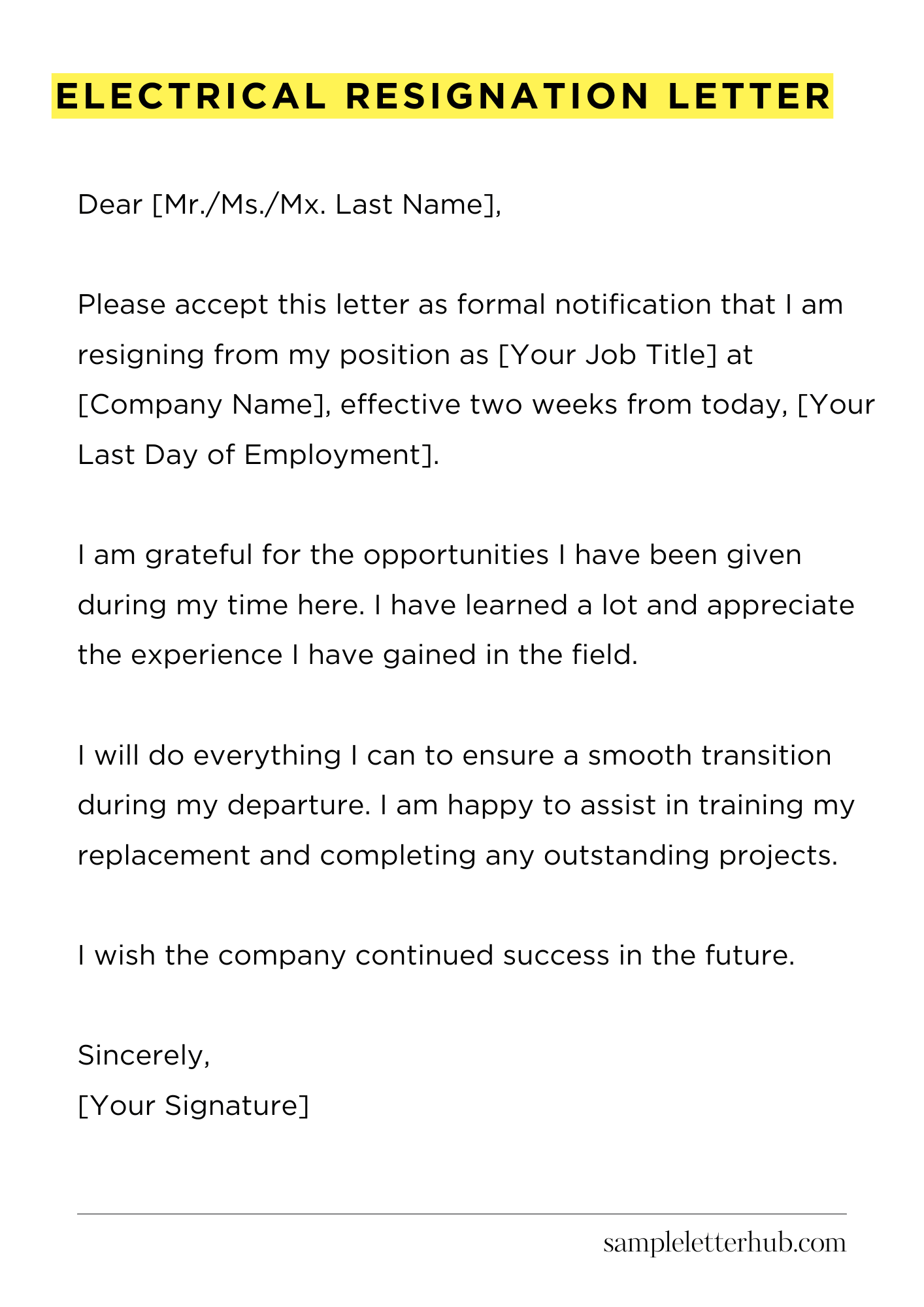
Dear [Mr./Ms./Mx. Last Name],
Please accept this letter as formal notification that I am resigning from my position as [Your Job Title] at [Company Name], effective two weeks from today, [Your Last Day of Employment].
I am grateful for the opportunities I have been given during my time here. I have learned a lot and appreciate the experience I have gained in the field.
I will do everything I can to ensure a smooth transition during my departure. I am happy to assist in training my replacement and completing any outstanding projects.
I wish the company continued success in the future.
Sincerely,
[Your Signature]
How to Write an Electrical Resignation Letter
1. Grasping the Basics: Why Does Your Letter Matter?
So, you’ve made the decision. You’re moving on from your electrical role. Now, you need to resign, and the first step is a well-crafted letter. Why is this letter so important? Well, it’s about professionalism. It’s about leaving on good terms. Think of it as your final professional statement.
A clear and concise letter reflects your attention to detail and respect for your employer. It sets the stage for a smooth transition. Remember, the electrical world is small. You want to maintain a positive reputation. It is always a good idea.
2. Essential Elements: What to Include in Your Letter.
Alright, let’s get down to the nitty-gritty. Your letter needs to cover certain key points. Firstly, you must formally state your intention to resign. Specifically, mention your job title and the date of your last day of employment. Also, keep it brief and to the point; don’t ramble. If you have any projects outstanding, you may want to mention your willingness to assist with the handover.
You may also thank your employer for the opportunity, expressing gratitude. Finally, close with a professional sign-off. Do not make it too informal.
3. Formatting for Success: Structure and Style
Let’s talk about appearance. Presentation is just as crucial as content. Begin with your contact information. Then, address the letter to the appropriate person, usually your supervisor or the HR department. Use a professional font like Times New Roman or Arial, size 12. Keep your paragraphs concise and easy to read.
Proofread your letter meticulously! Typos and grammatical errors are unacceptable. Remember, clarity and readability are key to getting your message across clearly.
4. Tailoring Your Letter: Personalization is Key
While there’s a standard format, tailoring your letter is smart. Did you have a great mentor? Consider briefly mentioning a positive experience or expressing gratitude for a specific opportunity. Avoid negativity or complaints. Even if you’re leaving for a better opportunity, focus on the positive aspects of your experience.
Focus on your growth and contribution. Make your letter authentic and reflect your individual experiences. But keep it professional at all costs.
5. Before You Hit Send: The Final Checklist.
Before you send your resignation letter, run through a final checklist. Do you have the correct date? Is your name and job title correct? Is your last day of employment clearly stated? Have you checked for spelling and grammar errors? Ensure the letter is addressed to the right person. Double-check the formatting.
Consider asking a trusted colleague or friend to review the letter. They might catch something you missed. Finally, send it via email and keep a copy for your records. Good luck with your next endeavor!
FAQs about Electrical Resignation Letter
What is the primary purpose of an electrical resignation letter?
The primary purpose of an electrical resignation letter is to formally notify an employer of an employee’s intent to leave their position within the electrical field. It serves as an official record of the resignation, the effective date, and often includes a brief statement of gratitude or a reason for leaving.
What key elements should an electrical resignation letter include?
A well-crafted electrical resignation letter should include: your name, your job title, the date of the letter, the date of your last day of employment, a clear statement of your resignation, a brief expression of gratitude (optional), and your signature. It’s also helpful to include contact information for any follow-up.
How much notice should I give in my electrical resignation letter?
The amount of notice required typically depends on your employment contract, company policy, and local labor laws. Common practice is to provide two weeks’ notice, but it’s crucial to review your employment agreement to confirm the required notice period. Some senior positions often require more.
Should I provide a reason for resigning in my electrical resignation letter?
While not always mandatory, you can choose to briefly state a reason for resigning in your electrical resignation letter, such as seeking new opportunities or personal reasons. However, it’s generally recommended to keep the reason concise and professional. Avoid negativity or providing excessive detail.
Can an electrical resignation letter affect my future job prospects?
Yes, your electrical resignation letter can potentially influence your future job prospects. A professional and polite letter, even when leaving due to negative circumstances, reflects well on you. Conversely, a letter filled with complaints or unprofessional language may create a negative impression. Your former employer may also be contacted for a reference in the future.
Related:
Resignation letter due to rude boss
Resignation letter moving to another state
Resignation letter due to illness of family member
Resignation letter due to study