

An Associate Partner resignation letter is a formal document. It officially announces your departure from a company. This letter serves several key purposes. It provides a record of your resignation. It also clarifies your last day of employment.
Are you an Associate Partner ready to move on? Writing a resignation letter can be tricky. Don’t worry, we’re here to help. This article provides helpful templates. We’ll offer different examples. You’ll find a variety of samples.
Our goal is to make it easy for you. You can adapt these samples to fit your situation. Craft your perfect letter with confidence. Prepare to take the next step in your career.
Associate Partner Resignation Letter
Below is a sample of a Associate Partner Resignation Letter:
[Your Name]
[Your Address]
[Your Phone Number]
[Your Email Address]
[Date]
[Recipient Name]
[Recipient Title]
[Company Name]
[Company Address]
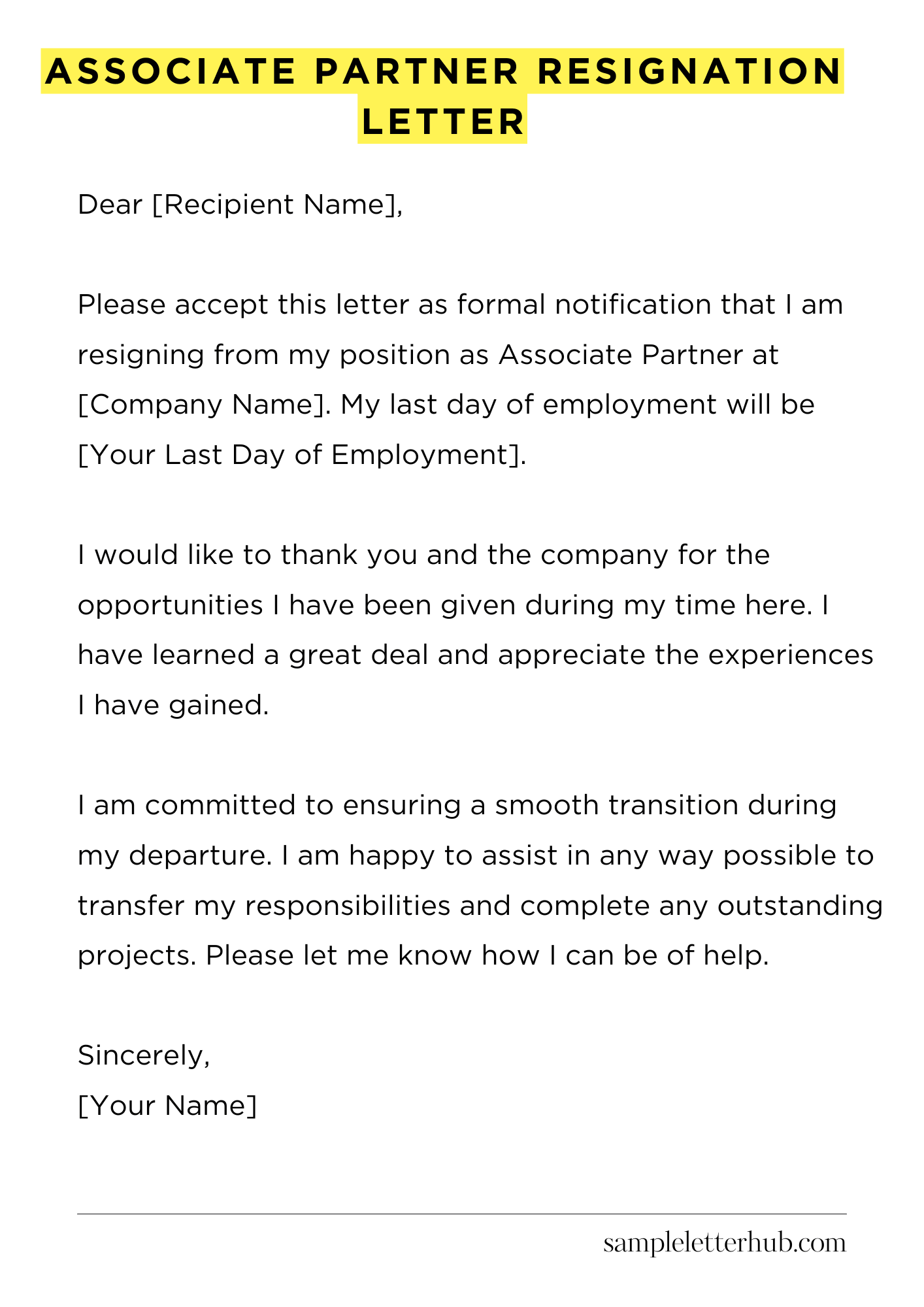
Dear [Recipient Name],
Please accept this letter as formal notification that I am resigning from my position as Associate Partner at [Company Name]. My last day of employment will be [Your Last Day of Employment].
I would like to thank you and the company for the opportunities I have been given during my time here. I have learned a great deal and appreciate the experiences I have gained.
I am committed to ensuring a smooth transition during my departure. I am happy to assist in any way possible to transfer my responsibilities and complete any outstanding projects. Please let me know how I can be of help.
I wish the company continued success in the future.
Sincerely,
[Your Name]
How to Write Associate Partner Resignation Letter
1. Why You Need a Solid Resignation Letter
Leaving a job, especially a position like an Associate Partner, is a big deal. You’ve likely put in a lot of time and effort. Your resignation letter is more than just a formality; it’s a professional statement. It’s the official documentation of your departure and it can have lasting consequences.
Think of it as your final impression on your colleagues and the company. It helps protect you. A well-written letter avoids any potential misunderstandings.
2. What to Include: The Essential Ingredients
Let’s break down the core components you need in your letter. First, you’ll need a clear and concise declaration of your resignation. State the date, and your effective date of resignation. Be specific about your official role, and address the letter to the appropriate person, usually your direct supervisor or a Human Resources representative.
Next, express gratitude for the opportunities you’ve been given. Briefly mention any key accomplishments during your tenure. Show appreciation, even if you’re moving on for personal reasons.
After that, it’s crucial to offer assistance with the transition. State your willingness to help train your replacement, complete any ongoing projects, or provide necessary documentation. This reflects a professional attitude. Finally, end on a positive note, reiterate your thanks, and wish the company continued success. A polite and professional tone sets the right mood.
3. Crafting the Perfect Tone: Professionalism is Key
The tone of your letter should be consistently professional. Avoid venting any frustrations or negativity, even if you have them. Keep it formal. Use clear, direct language. Avoid any slang or casual phrases.
The letter should reflect your maturity and your respect for the company and the colleagues you’ve worked with. Remember, this letter is a reflection of your character. It’s part of your professional brand.
Proofread carefully. Spelling and grammatical errors make a bad impression. Review your letter multiple times before sending it. Consider asking a trusted friend or colleague to read it over as a second pair of eyes. They might catch something you’ve missed.
4. Formatting Your Letter: Making it Look Good
The visual presentation of your letter matters. It should be easy to read and well-organized. Use a standard business letter format. This is the simplest way. Include your contact information at the top.
This includes your name, address, phone number, and email. Then, add the date, the recipient’s name, their title, and the company address. Use a professional font like Times New Roman or Arial. Keep the font size between 10 and 12 points.
Utilize single spacing for the body of the letter, with a blank line between each paragraph. Keep the paragraphs concise and easy to read. A well-formatted letter looks polished and professional, and shows you pay attention to details. It’s a small thing that makes a big difference.
5. Sample Resignation Letter: A Template to Get You Started
Here’s a sample you can adapt to your own situation:
        [Your Name]
        [Your Address]
        [Your Phone Number]
        [Your Email Address]

        [Date]

        [Recipient's Name]
        [Recipient's Title]
        [Company Name]
        [Company Address]

        Dear [Recipient's Name],

        Please accept this letter as formal notification that I am resigning from my position as Associate Partner at [Company Name], effective [Your Last Day of Employment].

        I am grateful for the opportunities I have been given during my time here, and I have learned a great deal. I appreciate the experience, knowledge, and relationships I’ve gained.

        I am happy to assist in the transition process in any way I can, including helping to train my replacement or complete ongoing projects.

        I wish you and [Company Name] all the best in the future.

        Sincerely,

        [Your Signature (if printing)]

        [Your Typed Name]
Remember to customize this template with your own details and make it your own. Good luck with your next endeavor!
FAQs about Associate Partner Resignation Letter
What are the essential elements to include in an Associate Partner resignation letter?
An effective Associate Partner resignation letter should include: a clear and concise statement of resignation, the effective date of resignation, a brief expression of gratitude for the opportunity, a positive and professional tone, confirmation of adherence to any contractual obligations.
How much notice should an Associate Partner provide when resigning?
The notice period required by an Associate Partner is typically specified in their employment contract or partnership agreement. Common notice periods range from two weeks to three months, depending on the seniority of the role, the nature of the firm, and the specific terms of the agreement.
Reviewing the contract carefully is critical to avoid any potential legal or financial repercussions.
What is the proper tone and language to use in an Associate Partner resignation letter?
The tone should be professional, respectful, and positive. Avoid expressing negativity or grievances. Use clear, direct language. Express gratitude for the opportunities provided. Maintain a professional demeanor throughout the letter, reflecting a commitment to a smooth transition and preserving positive relationships with the firm and colleagues.
Should an Associate Partner explain the reason for leaving in the resignation letter?
While not mandatory, briefly mentioning the reason for leaving can be beneficial, particularly if the reason is positive (e.g., pursuing a new opportunity or personal development). Keep the explanation concise and professional. Avoid detailing any negative experiences or criticisms of the firm. Focus on future endeavors rather than past issues.
What are the potential legal and contractual considerations Associate Partners should be aware of when resigning?
Associate Partners should be particularly mindful of non-compete clauses, non-solicitation agreements, and confidentiality agreements. Carefully review the employment contract or partnership agreement to understand these obligations.
Seek legal counsel if necessary to ensure compliance and understand the potential implications of these clauses. Understand your obligations regarding the return of company property and the handling of client information.
Related:
Resignation letter due to rude boss
Resignation letter moving to another state
Resignation letter due to illness of family member
Resignation letter due to study